We use cookies to improve your experience and understand how PatternDesigners is used.
Christian Dior SE is a French luxury conglomerate, the fashion house founded on 16 December 1946 at 30 Avenue Montaigne, Paris. The company is chaired by Bernard Arnault, whose family controls approximately 69.96% of Christian Dior SE stock and 82.86% of its voting rights. Christian Dior SE itself controls approximately 42% of LVMH's shares and 57% of its voting rights, making Dior the holding structure atop the world's largest luxury group. The fashion and couture operations run as Christian Dior Couture (a subsidiary of LVMH), with Delphine Arnault serving as CEO from February 2023. As of April 2026, the company operates 532 retail locations worldwide.
Dior's design identity is anchored in the New Look silhouette and its associated codes: fine dressmaking, volume, femininity, and surface luxe through fabric weight and print. Under Galliano (1997-2011), the house moved toward maximalist print and theatrical costume language. Under Raf Simons (2012-2015), print was used sparingly, with minimal-but-precise surface references. Under Maria Grazia Chiuri (2016-2025), feminist visual text, historical embroidery, and craft motifs were foregrounded alongside cultural reference. Jonathan Anderson, appointed 2025 across all collections, brings a craft-oriented approach; his debut work has already attracted cultural appropriation discussion around Indian mukaish embroidery technique.
The house was founded with FFr 6 million in capital and 80 employees, backed by textile businessman Marcel Boussac. Christian Dior's first collection - presented on 12 February 1947 - launched the "New Look": a nipped waist, full skirt below mid-calf, and rounded shoulders marking a complete break from wartime utility fashion. By the end of 1949, Dior fashions represented 75% of Paris's fashion exports and 5% of France's total export revenue.
Christian Dior died in October 1957. Subsequent creative directors have included Yves Saint Laurent (1957-1960), Marc Bohan (1960-1989), Gianfranco Ferré (1989-1997), John Galliano (1997-2011), Raf Simons (2012-2015), Maria Grazia Chiuri (womenswear, 2016-2025), Kim Jones (menswear, 2018-2025), and Jonathan Anderson (all collections from 2025). Bernard Arnault took control via a one-franc acquisition of the distressed Willot Group in December 1984, repositioned Dior as a holding company, and built its LVMH stake from 32% (1988) to its current majority position.
Dior's retail strategy shifted from extensive franchising (Japan managed via Kanebo until 2002, when the licence expired and Dior took direct control of 13 boutiques) to wholly owned boutiques. Christian Dior Parfums operates within LVMH. The Parisian embroidery firm Maison Vermont was acquired by Dior in 2012. In 2024, Manufactures Dior SRL (Italian subsidiary) was placed under judicial administration for one year following investigation of exploitative sub-contracted labour conditions in its Milan-area supply chain, with subsequent investigation by the Italian Autorità Garante della Concorrenza e del Mercato of potential misleading consumer communications.
Dior operates at the apex of the global luxury market. LVMH consolidated revenue reached €86.2B in 2023 (the Christian Dior SE holding company consolidates LVMH group figures). The brand operates 532 owned-and-operated boutiques worldwide as of April 2026, with strong presence in Paris (30 Avenue Montaigne flagship, reopened March 2022 after Peter Marino renovation), Tokyo (Omotesandō from 2003, Ginza from 2004), and New York (Madison Avenue flagship, which opened Dior Spa New York in August 2025).
Dior's strategy from the early 1990s was deliberate reduction of licensing volume - a reorientation from scale to exclusivity - converting licensed franchises into wholly owned boutiques and reducing third-party licence use by nearly half under Arnault and CEO Sidney Toledano.
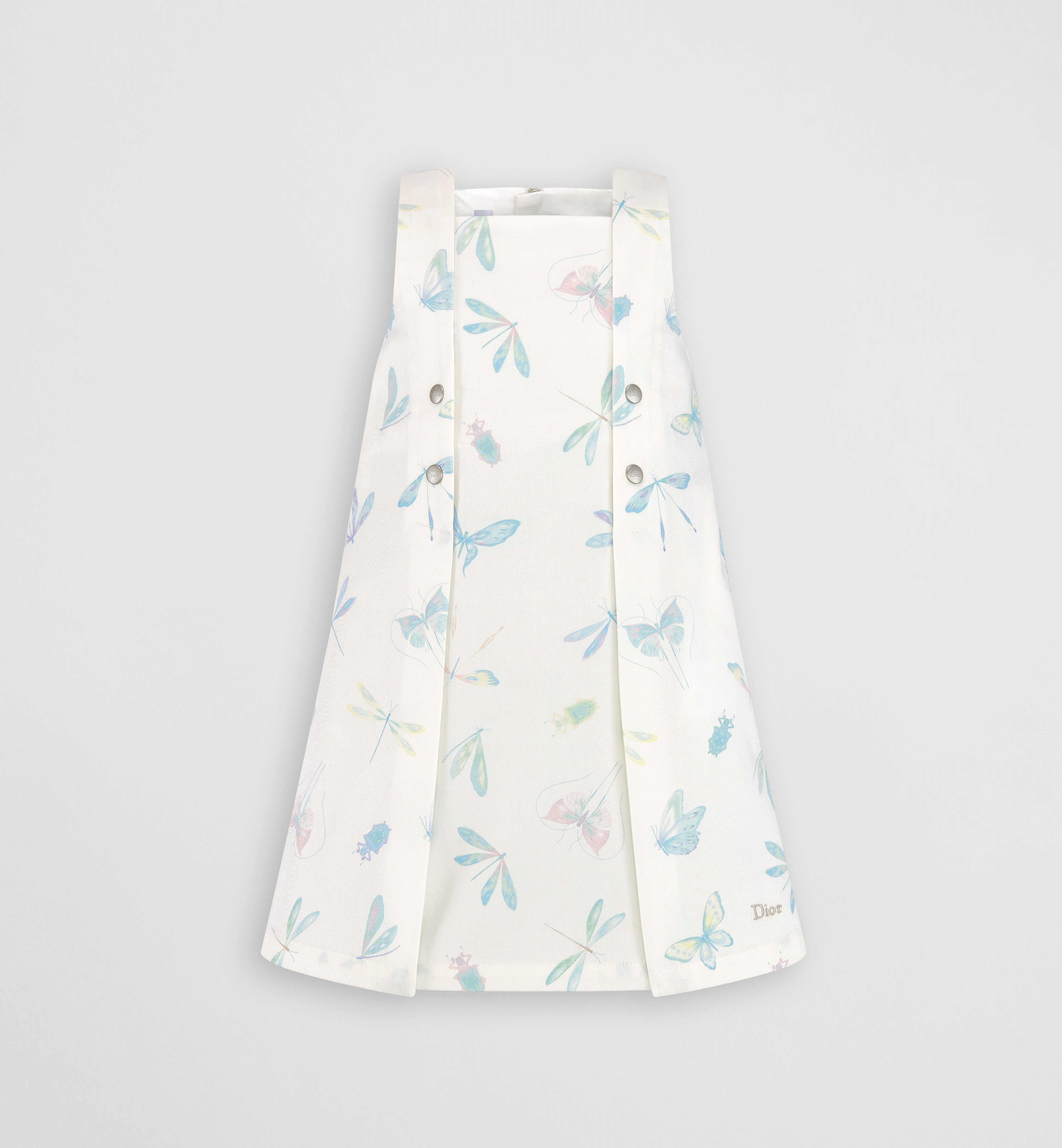
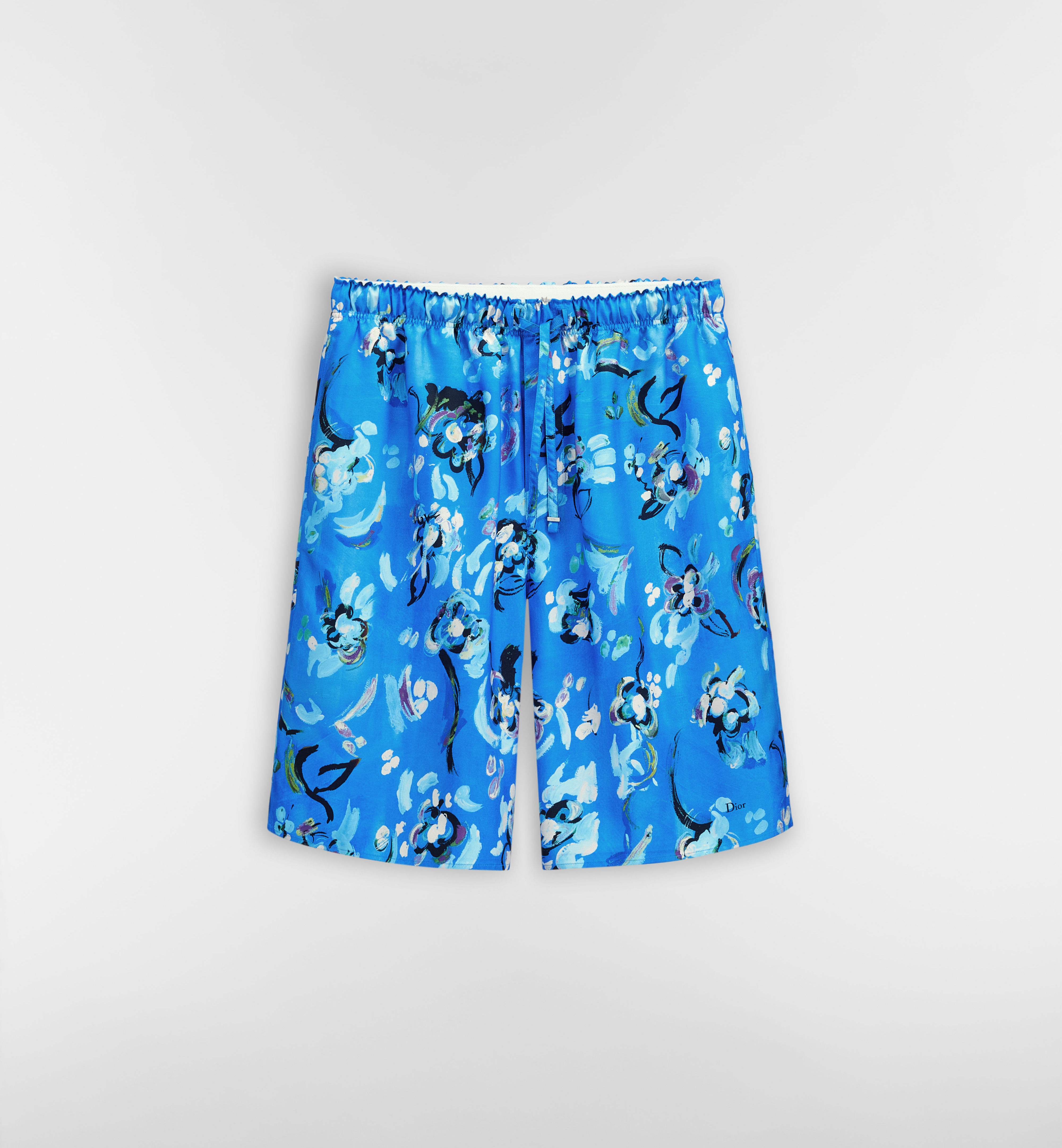
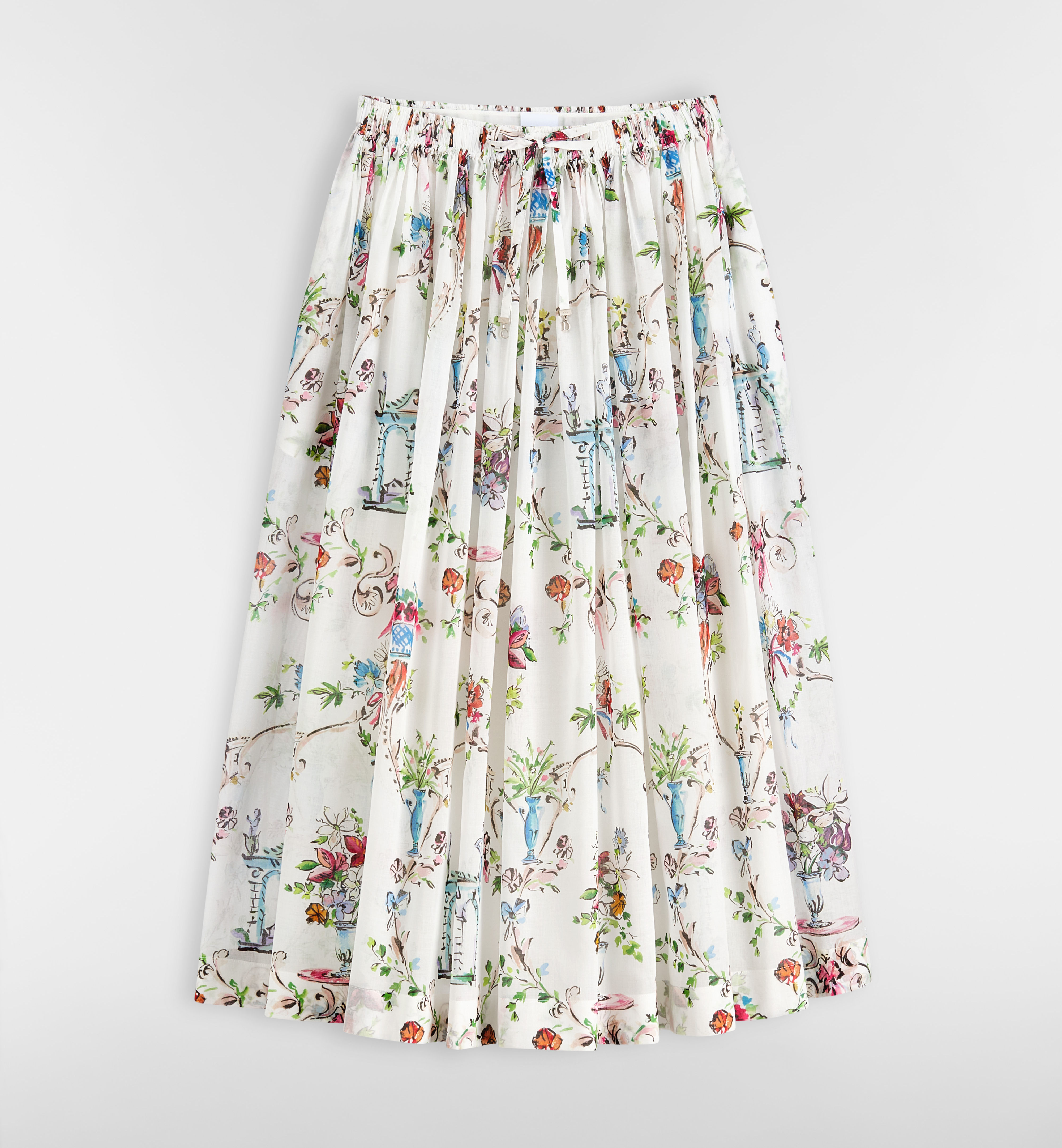
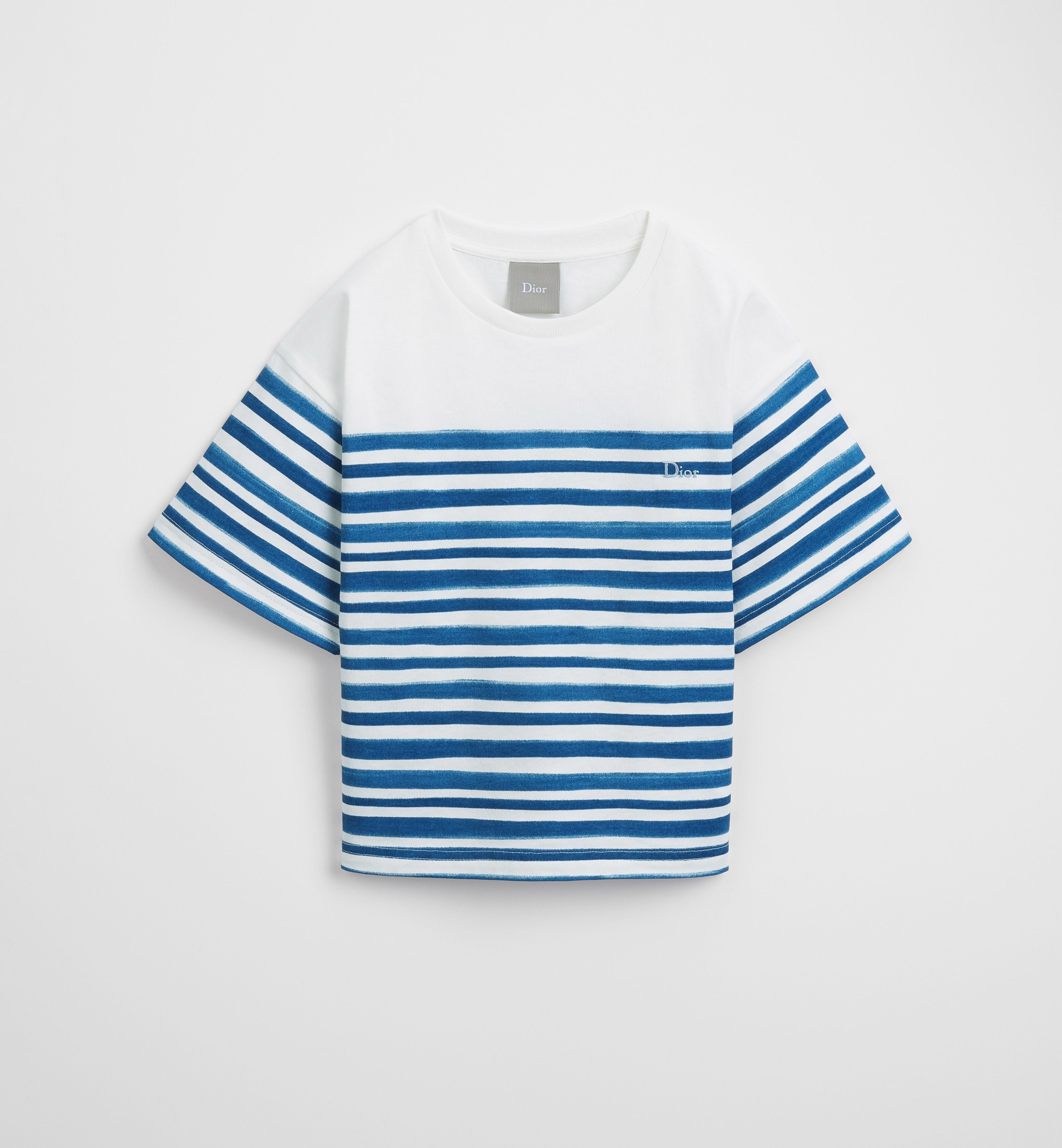
Dior's contribution to surface pattern design operates at two levels: the direct production of printed textiles for runway and retail, and the broader industry significance of its 1950 licensing programme.
Licensing as pattern industry precedent: In 1950, general manager Jacques Rouët initiated Dior's licensing programme - placing the Dior name on neckties first, then hosiery, hats, gloves, handbags, jewellery, lingerie, and scarves. The French Chamber of Couture condemned it as degrading haute couture; it nonetheless became the model all subsequent couture houses followed, embedding designer names into the mass-market textile and accessories economy. This framework still shapes how surface pattern design feeds into luxury product lines.
Key documented print territory:
Menswear print programme: Under Kim Jones (2018-2025), Dior Men built an extensive collaboration-driven graphics programme: KAWS (Jones's debut), Raymond Pettibon, Daniel Arsham, Hajime Sorayama, Sacai, and Shawn Stussy.
Christian Dior SE is a French luxury conglomerate, the fashion house founded on 16 December 1946 at 30 Avenue Montaigne, Paris. 86% of its voting rights.
Dior's contribution to surface pattern design operates at two levels: the direct production of printed textiles for runway and retail, and the broader industry significance of its 1950 licensing programme.
Dior operates at the apex of the global luxury market. 2B in 2023 (the Christian Dior SE holding company consolidates LVMH group figures).
Dior's retail strategy shifted from extensive franchising (Japan managed via Kanebo until 2002, when the licence expired and Dior took direct control of 13 boutiques) to wholly owned boutiques. Christian Dior Parfums operates within LVMH. The Parisian embroidery firm Maison Vermont was acquired by Dior in 2012.
The house was founded with FFr 6 million in capital and 80 employees, backed by textile businessman Marcel Boussac.
France