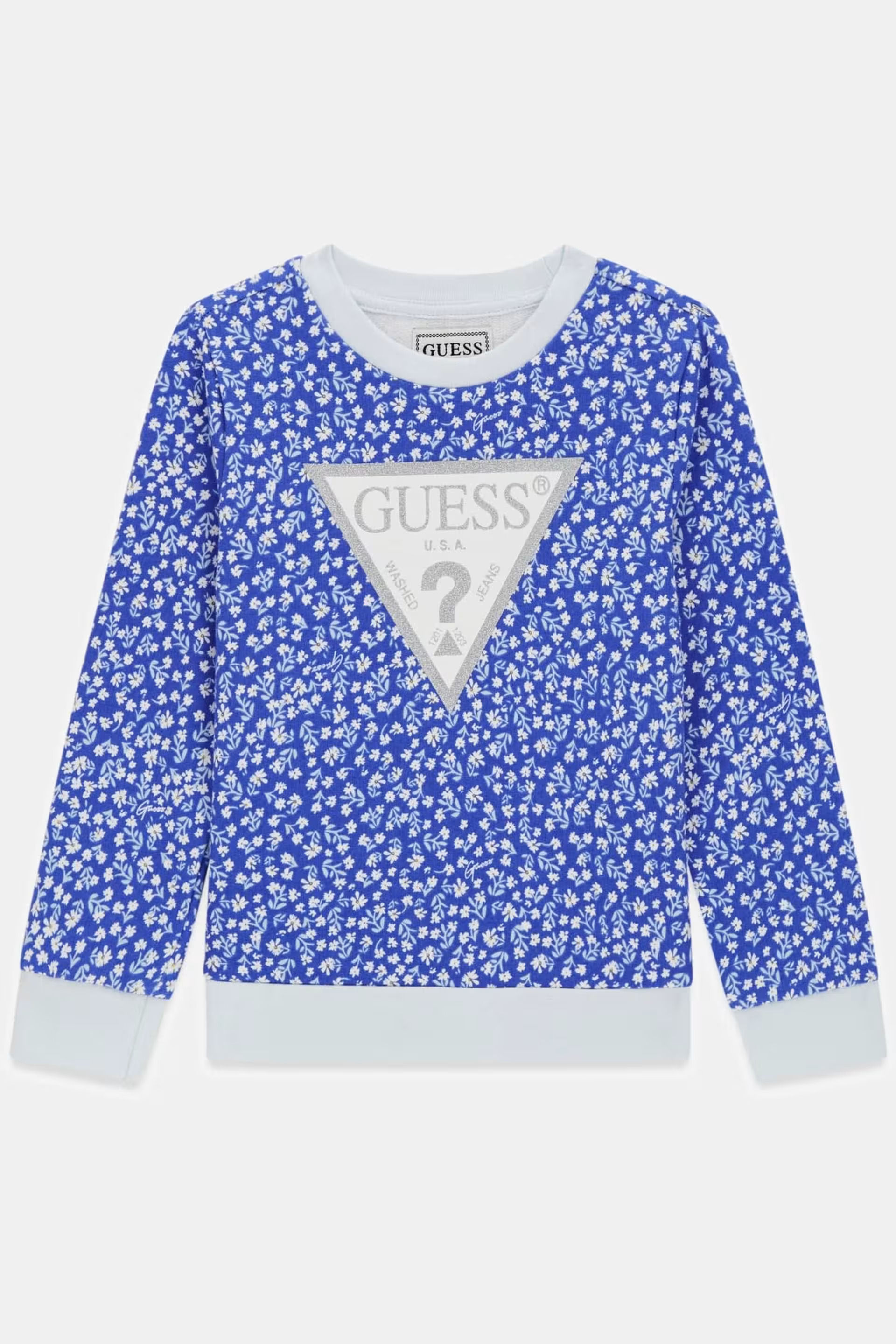
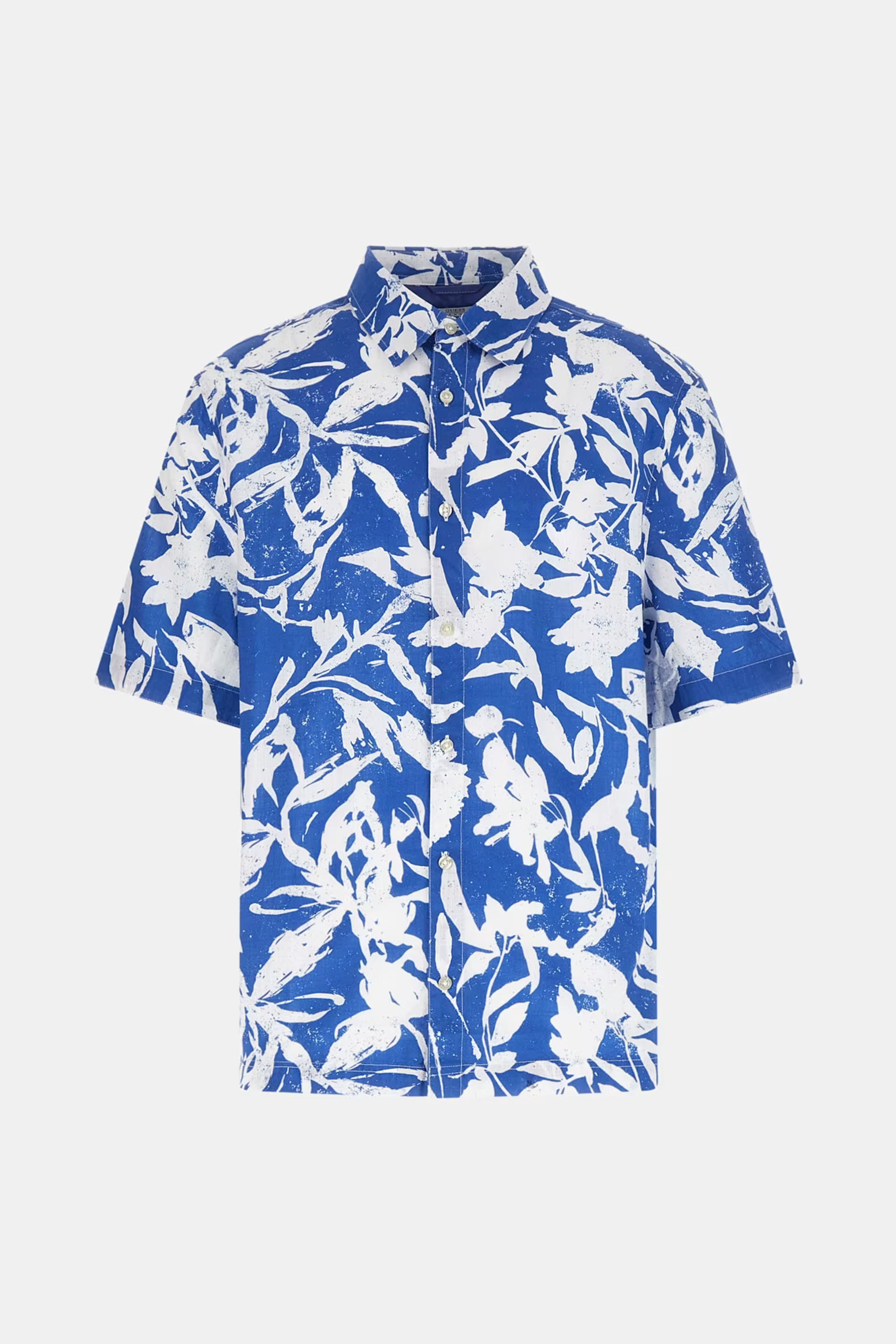
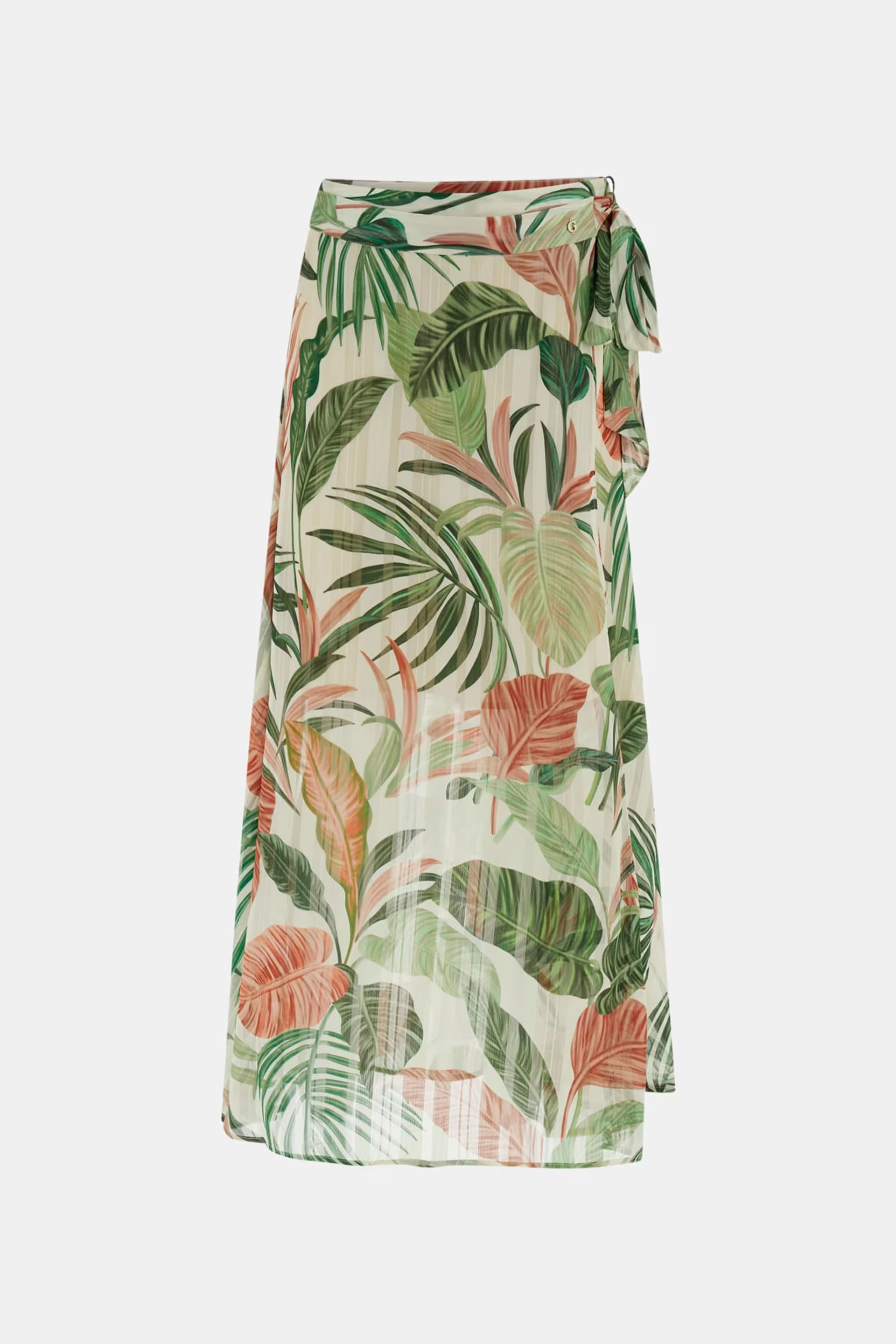
We use cookies to improve your experience and understand how PatternDesigners is used.
Guess?, Inc. is an American clothing company founded in 1981 by Georges, Maurice, Armand, and Paul Marciano, originally from Morocco. The brand launched with light, form-fitting denim jeans with ankle zippers, expanding quickly into licensed accessories and a global advertising campaign. Its black-and-white campaign photography, introduced in 1985, won numerous design awards and defined the brand's visual identity for decades. In August 2025, Authentic Brands Group, the Marciano brothers, and CEO Carlos Alberini agreed to acquire 51% of Guess's IP for $1.4 billion; the transaction completed January 2026 and the company delisted from the NYSE.
Denim heritage with an aspirational American-Californian visual identity, expressed primarily through advertising rather than product surface pattern. Graphic application has extended to licensed accessories and, more recently, street art-referenced graphics on apparel. The Marciano sub-brand operates at a more elevated aesthetic register. The 2026 "Homecoming" West Hollywood concept store signals a return to the brand's Los Angeles origins as a design and retail positioning statement.
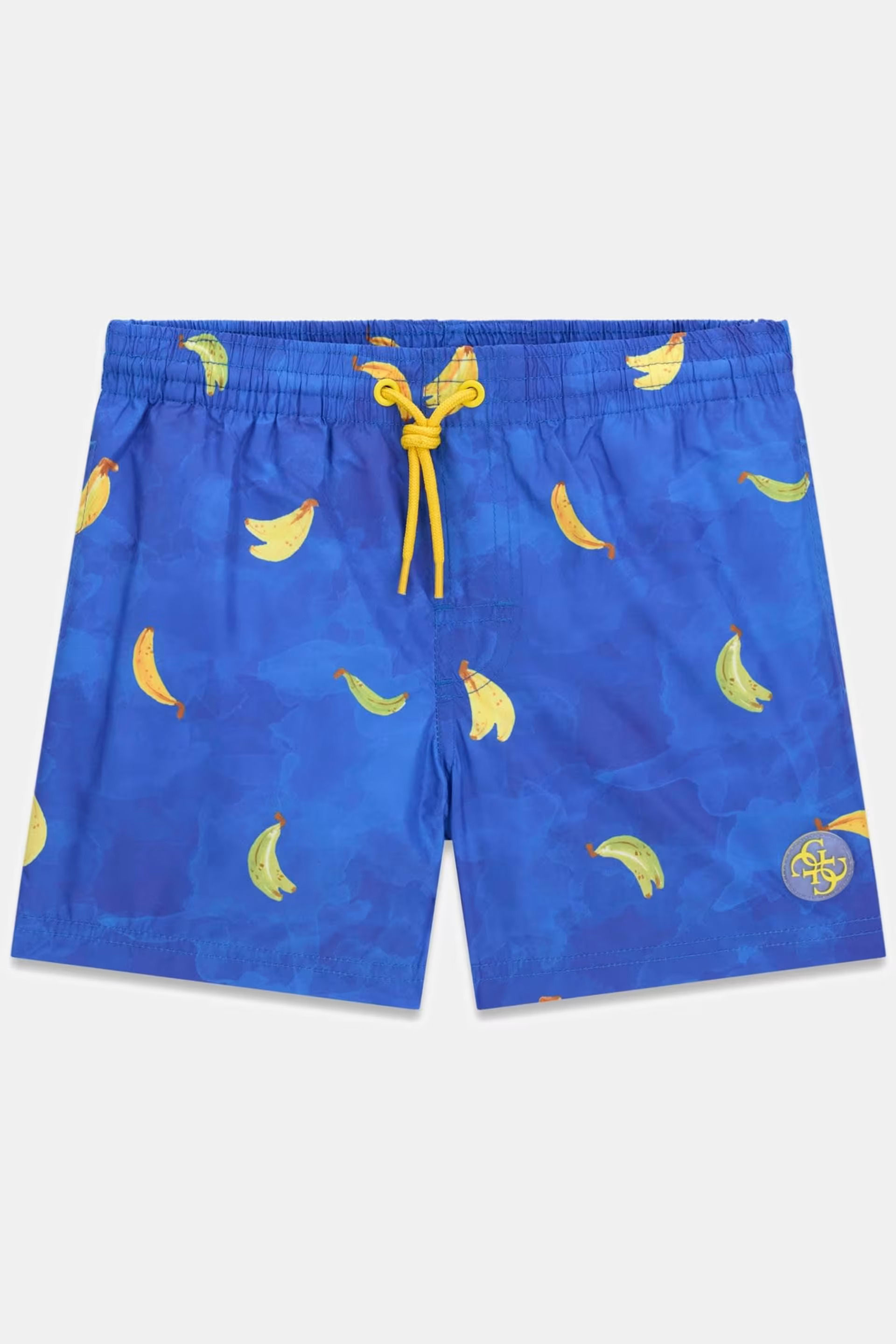
Founded 1981 as a denim-first brand. Licensed products added early: watches, eyewear, fragrances. IPO July 1996. Georges Marciano sold his stake in September 1993 for $214.2M. Accessories expanded significantly in 2004, alongside the launch of the upscale Marciano brand extension (women's clothing and accessories). Guess Kids continued as a separate line. CEO succession: Paul Marciano → Victor Herrero (2015) → Carlos Alberini (February 2019). Went private January 2026; new "Homecoming" concept flagship opened in West Hollywood.
Denim jeans and clothing (core), licensed accessories (watches, eyewear, jewellery, fragrances, bags, shoes), Guess Kids, Marciano (upscale women's). The accessories licensing programme is substantial, extending the Guess brand across multiple product categories manufactured by third-party licensees.
Most stores concentrated in the USA and Canada. Franchise and licensing partners extend the brand internationally - the Israel/Palestine section of the source documents the Delta Galil Industries franchise partnership in the Middle East. Accessories licensing across watches, eyewear, fragrances, bags, and shoes is a core revenue stream, with licensees applying the Guess brand identity across their respective product categories. Post-privatisation under Authentic Brands Group, the brand's IP management and licensing is expected to be further formalised within ABG's portfolio model.
American mid-to-upper fashion brand with a strong accessories licensing business and global retail network concentrated in the USA and Canada. The brand is recognised for its advertising aesthetic as much as its product - the black-and-white photographic campaign style became a brand signature competitive with European luxury imagery. The Marciano sub-brand targets a more upscale female positioning.
Guess has several documented connections to surface pattern and graphic design:
Brand graphic identity: The interlocking G motif used on footwear was the subject of a 2009 trademark infringement case brought by Gucci, which was awarded $4.7 million in damages (2012) for the mark's resemblance to Gucci's double-G logo. This case illustrates the commercial and legal weight of brand graphic identity in the accessories sector.
Street art and graffiti graphics: In 2022, Banksy publicly accused Guess of using his artwork without permission on a clothing collection - the company stated it was produced through Brandalised, a licensing entity for graffiti artists. In 2024, a lawsuit was filed in California's Central District by street artists Sean Griffin ("Nekst") and Robin Ronn ("Bates"), alleging Guess used their graffiti tags on a "graffiti inspired" clothing line without authorisation. These cases indicate Guess actively incorporates street art and graffiti-derived surface graphics into apparel - a documented design direction with IP risks.
Advertising as visual identity: The black-and-white photographic campaign launched in 1985 is a form of graphic brand design that has carried the brand's aesthetic identity across decades. The campaign earned multiple design awards and shaped the visual language of aspirational denim advertising.
, Inc. is an American clothing company founded in 1981 by Georges, Maurice, Armand, and Paul Marciano, originally from Morocco. The brand launched with light, form-fitting denim jeans with ankle zippers, expanding quickly into licensed accessories and a global advertising campaign.
7 million in damages (2012) for the mark's resemblance to Gucci's double-G logo. This case illustrates the commercial and legal weight of brand graphic identity in the accessories sector.
Denim jeans and clothing (core), licensed accessories (watches, eyewear, jewellery, fragrances, bags, shoes), Guess Kids, Marciano (upscale women's). The accessories licensing programme is substantial, extending the Guess brand across multiple product categories manufactured by third-party licensees.
American mid-to-upper fashion brand with a strong accessories licensing business and global retail network concentrated in the USA and Canada.
Most stores concentrated in the USA and Canada. Franchise and licensing partners extend the brand internationally - the Israel/Palestine section of the source documents the Delta Galil Industries franchise partnership in the Middle East.
Founded 1981 as a denim-first brand. Licensed products added early: watches, eyewear, fragrances. IPO July 1996. 2M. Accessories expanded significantly in 2004, alongside the launch of the upscale Marciano brand extension (women's clothing and accessories). Guess Kids continued as a separate line.
United States