We use cookies to improve your experience and understand how PatternDesigners is used.
Max Mara is an Italian fashion business that markets upscale ready-to-wear clothing, founded in 1951 in Reggio Emilia by Achille Maramotti (7 January 1927 - 12 January 2005). Initially named Confezioni Maramotti, it was established with the specific aim of introducing American industrial production processes into European tailoring culture - creating Italian prêt-à-porter. In 1957 the company renamed itself Max Mara ("Max" as superlative, "Mara" as a diminutive of the founder's surname) and moved to new headquarters designed by industrial architect Eugenio Salvarani. In 2003, the company relocated to a new campus in Reggio Emilia on Via Giulia Maramotti, designed by John McAslan & Partners. As of October 2024, Max Mara operates 502 stores in 69 countries.
Founded on the principle of industrialised precision tailoring applied to women's outerwear. No single named creative director is documented across the company's 70+ year history - design has been driven by external collaborators (Anne-Marie Beretta, Karl Lagerfeld, etc.), internal creative studio research (established 1960s), and the founding Maramotti family's editorial direction. Achille Maramotti's central design principle - the men's coat translated into women's fashion - defines the brand's aesthetic identity. The 2003 John McAslan campus in Reggio Emilia signals a continued investment in design infrastructure.
Achille Maramotti built the company around the concept of industrialising fine tailoring. In the 1960s, he identified the men's coat as an iconic garment for women's wardrobes and established a creative studio specifically to research outerwear design and personalisation.
Designer collaborations in the 1970s and 1980s: Anne-Marie Beretta, Emmanuelle Khanh, Karl Lagerfeld, Jean-Charles de Castelbajac, Narciso Rodriguez, and Proenza Schouler. Campaign photographers in the same period: Richard Avedon, Arthur Elgort, Steven Meisel, Sarah Moon, Max Vadukul, Mario Sorrenti, David Sims, Craig McDean.
1981: Anne-Marie Beretta created model 101801 - a camel-coloured wool and cashmere overcoat inspired by the men's Ulster coat, with a "puntino" (small-dot) stitching detail derived from men's tailored suits. The garment became the brand's signature icon. Also in the 1980s: the Manuela coat (pure camel hair, notched collar, side pockets, belt, wrap-around closure).
1989: MM Magazine launched - a biannual fashion and lifestyle publication distributed in Max Mara stores and selected multi-brand retailers.
2013: The Teddy Bear coat debuted on the Autumn/Winter runway - made of alpaca wool and silk with a faux fur effect; described by the New York Times as inspiring a wave of imitations across the industry. 2014: recycled materials introduced into the Weekend New Life collection. 2015: Whitney Bag designed in collaboration with Renzo Piano Building Workshop for the opening of the new Whitney Museum of American Art in New York's Meatpacking District.
Women in Film partnership: Max Mara has presented the "Face of the Future" award annually at the Women in Film pre-Oscar event since at least 2011. Recipients include Katie Holmes (2011), Chloë Moretz (2012), Jennifer Garner (2013, also named new face of the brand), Rose Byrne (2014), Kate Mara (2015), Natalie Dormer (2016), Zoey Deutch (2017), Elizabeth Debicki (2019), Zazie Beetz (2021), Yara Shahidi (2023), Joey King (2024). Max Mara Art Prize for Women supports emerging female artists in partnership with the Whitechapel Gallery, London.
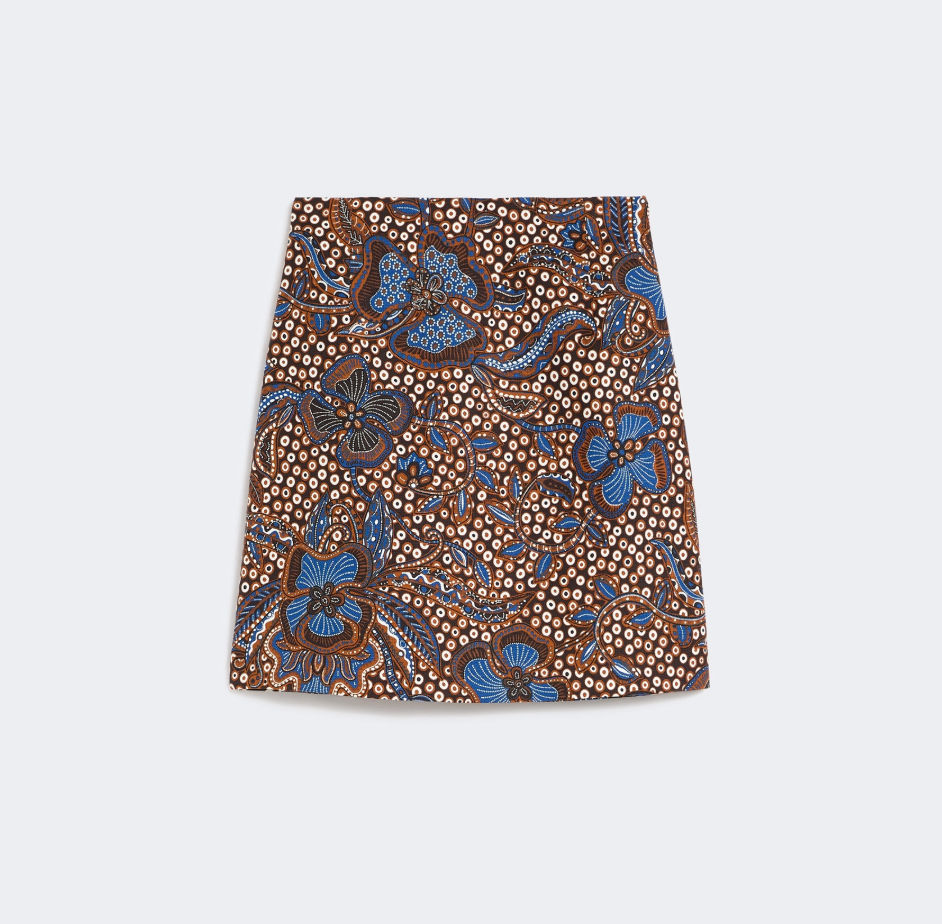
Women's ready-to-wear clothing with a core focus on outerwear: coats, jackets, and structured outerwear. The 101801 camel coat (Anne-Marie Beretta, 1981) and Manuela coat are the two most documented hero pieces. Also produces bags and accessories. The Weekend sub-line introduced recycled materials in 2014. The Teddy Bear coat (alpaca/silk faux fur effect, 2013) is the most widely cited recent hero product. Licensed extensions: eyewear (Sportmax sub-brand licensed to Marcolin, 2019 five-year deal; Max Mara main line terminated with Safilo 2020); fragrance (Shiseido licence signed July 2024). MM Magazine (biannual, stores and multi-brand retailers, since 1989).
502 stores in 69 countries. Own-retail model; no franchise system documented. Licensed extensions: Sportmax sub-brand eyewear (Marcolin, 5-year deal from 2019); Max Mara main line eyewear (Safilo licence terminated 2020); fragrance (Shiseido, signed July 2024). MM Magazine operates as a biannual brand publication distributed in-store - a publishing vehicle for the brand's fashion and lifestyle aesthetic.
Premium Italian RTW brand positioned at the upper-mid to luxury end of the market. Described by The Times as occupying a position of "maximally stylish" reliability. 502 stores in 69 countries. The brand received the "Brand Heritage Award" in 2012. Campaign ambassadors have included Gigi Hadid (accessories, Fall 2016) and Amy Adams (July 2014). The Collezione Maramotti is a private contemporary art collection associated with the founding family.
Max Mara's SPD relevance is grounded primarily in textile surface construction and material selection rather than applied print design:
Camel hair and cashmere as luxury surface design: The 101801 coat (Anne-Marie Beretta, 1981) is a camel-coloured wool and cashmere overcoat with a specific "puntino" stitching detail - a construction detail borrowed from men's tailored suits. Stitching as a surface design element on outerwear is a documented part of the brand's design vocabulary.
Manuela coat surface: Pure camel hair with notched collar, belt, and wrap-around closure - a single-material luxury textile surface object defined entirely by weave quality, drape, and handle.
Teddy Bear coat (2013): Alpaca wool and silk fabric engineered to produce a faux fur effect - a documented example of textile surface treatment achieving a specific visual and tactile result through material combination rather than surface decoration. The coat is described as inspiring "a series of imitations," confirming that the textile surface effect itself was the commercially significant design innovation.
External designer collaboration model (1970s-1980s): Max Mara's practice of bringing in external designers - including Karl Lagerfeld, Anne-Marie Beretta, Emmanuelle Khanh, and Jean-Charles de Castelbajac - to produce collections introduces external design direction into the brand's product range. These collaborations would have included fabric selection, print direction, and surface treatment, though specific pattern details are not documented in the source.
Whitney Bag (2015): A bag designed in collaboration with Renzo Piano Building Workshop, created specifically for the opening of a museum. The translation of architectural design thinking into a product surface object is documented.
Recycled materials direction (Weekend New Life, 2014): Documented introduction of recycled materials into a specific sub-line, relevant to material sourcing in surface design.
Max Mara is an Italian fashion business that markets upscale ready-to-wear clothing, founded in 1951 in Reggio Emilia by Achille Maramotti (7 January 1927 - 12 January 2005).
Women's ready-to-wear clothing with a core focus on outerwear: coats, jackets, and structured outerwear. The 101801 camel coat (Anne-Marie Beretta, 1981) and Manuela coat are the two most documented hero pieces. Also produces bags and accessories. The Weekend sub-line introduced recycled materials in 2014.
Premium Italian RTW brand positioned at the upper-mid to luxury end of the market. Described by The Times as occupying a position of "maximally stylish" reliability. 502 stores in 69 countries. The brand received the "Brand Heritage Award" in 2012.
502 stores in 69 countries. Own-retail model; no franchise system documented. Licensed extensions: Sportmax sub-brand eyewear (Marcolin, 5-year deal from 2019); Max Mara main line eyewear (Safilo licence terminated 2020); fragrance (Shiseido, signed July 2024).
Achille Maramotti built the company around the concept of industrialising fine tailoring. In the 1960s, he identified the men's coat as an iconic garment for women's wardrobes and established a creative studio specifically to research outerwear design and personalisation.
Italy