Types
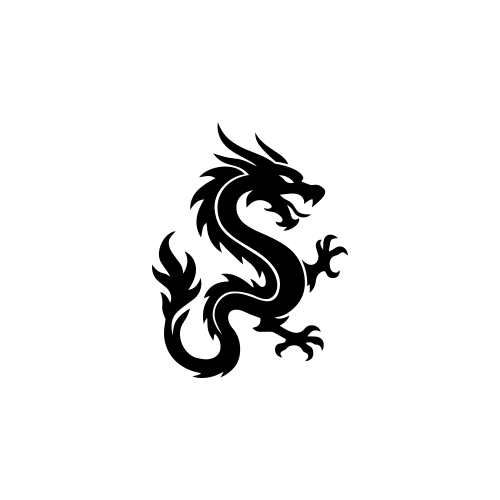 0Dragon pattern in surface design is dominated by East Asian iconographic traditions - particularly the Chinese imperial dragon with its coiled body, five claws, and accompanying symbolic elements (flaming pearl, clouds, waves). This tradition connects to one of the most historically significant applications of surface pattern design: the ceremonial robes of Chinese, Korean, and Japanese imperial courts, in which dragon motifs were encoded symbols of rank and political authority. In contemporary surface design, dragon pattern carries associations with power, mythology, and Asian cultural heritage, and is commercially active across fashion, wallpaper, licensing, and gift products.
 0Ghost pattern is a conversational/novelty print type defined by its motif: the ghost - a simplified, typically friendly or cute figure drawn from Halloween and popular culture iconography. In surface pattern design, ghost patterns appear most actively in seasonal Halloween product ranges: children's apparel, home textiles, wrapping paper, party supplies, and stationery. A separate but related use of "ghost pattern" in graphic and digital design refers to a faint, low-contrast background texture - a subtle pattern using near-matched tones to add visual depth without distracting from foreground content.
 0Halloween pattern is a major commercial category in the seasonal surface design market, ranked alongside Christmas and Easter as one of the three biggest seasonal pattern opportunities. The commercial window runs from August through October, giving designers significant lead time for seasonal product. The market has segmented significantly in recent years - the traditional orange-and-black children's aesthetic is now just one of five recognised commercial directions, with adult-targeted pastel Halloween, vintage, and witchy/cottagecore aesthetics commanding significant and growing market share. Origins in the Celtic festival of Samhain (c. 1st century BC) provide a deep symbolic vocabulary that designers continue to draw from.
 0The unicorn pattern draws on the mythological single-horned horse as a decorative motif, almost exclusively in its contemporary commercial form: a brightly coloured, pastel, or rainbow-palette character with a spiralling horn, flowing mane, and often surrounded by stars, clouds, rainbows, and sparkle elements. The motif reached peak commercial prominence around 2017, driven by social-media-amplified consumer aesthetics across food, beauty, fashion, and homeware. As a surface pattern type, unicorn prints remain commercially active in children's products, gifting, and seasonal novelty lines.
You've reached the end
4 Types