We use cookies to improve your experience and understand how PatternDesigners is used.
Marks and Spencer plc (M&S) is a major British multinational retailer headquartered in London. Founded in 1884 as a penny bazaar on Kirkgate Market in Leeds by Michael Marks (Polish-Jewish immigrant from Slonim, Belarus) and Thomas Spencer (cashier from Skipton, North Yorkshire), M&S grew from market stalls into one of the UK's largest retailers. The company built its reputation on a policy of selling 99% British-made goods, maintained until the 1990s, supported by long-term relationships with British manufacturers. Textiles were first sold in 1926; food followed in 1931. M&S became the first British retailer to make a pre-tax profit of more than £1 billion in 1998. Turnover for the 52 weeks ended 29 March 2025 was £13.8 billion. The company targets a UK estate of 180 full-line and 420 food stores. An April 2025 ransomware cyber attack (attributed to Scattered Spider) caused estimated losses of up to £300 million; online ordering was restored June 2025.
Own-brand clothing design across multiple sub-brands (Per Una, Autograph, Indigo, Best of British, Limited Edition). No single named creative director for clothing is documented; the Per Una range had George Davies as its original designer-director (2001-2004). The 2002 introduction of Per Una is documented as the primary mechanism by which M&S attempted to reintroduce distinct fashion design into its clothing range after womenswear sales hit a 10-year low in 2010. Current CEO Stuart Machin has led a recovery strategy that includes fabric quality and clothing design investment alongside food transformation.
Simon Marks (son of Michael) became chairman in 1916 and transformed penny bazaars into a national retail chain. The "St Michael" own brand was introduced in 1928 and extended to food in 1941, replacing all other brands by 1956. The brand was retired in 2000 and partially restored as an emblem in 2021. By 1950, virtually all goods were sold under the St Michael label.
Key corporate events: Brooks Brothers (American clothing company) acquired 1988; "Per Una" womenswear range launched September 2001 as a joint venture with George Davies (Next founder), bought back by M&S for £125 million in October 2004; Jaeger fashion brand acquired from administrators January 2021 (£5 million, brand IP only - no stores); Thread fashion marketplace IP acquired November 2022 (personalised recommendation technology). Food delivery through Ocado joint venture (50% stake acquired 2019 for up to £750 million). Gist logistics company acquired July 2022 (£145 million). Microsoft AI partnership announced June 2018. Williams F1 Team announced as official travel kit partner February 2026.
CEO succession: Stuart Rose 2004-2010; Marc Bolland 2010-2016; Steve Rowe 2016-2022; Stuart Machin 2022-present.
Clothing (women's, men's, children's - including school uniform and activewear); beauty products; home furnishings; food. Clothing sub-brands include Per Una, Autograph, Indigo, Best of British, and the Holly Willoughby 'Must Have' collection (launched September 2018). Dedicated home furnishings stores launched 2007 (Cheltenham, Royal Tunbridge Wells, Lisburn Sprucefield, Trafford Centre Manchester). Food sold through full-line stores, M&S Foodhall supermarkets, Simply Food convenience format (franchised via SSP Group, Moto, BP, Applegreen), and Ocado online. M&S also provides M&S Bank (operated by HSBC UK), M&S Travel Money (Eurochange), and M&S Opticians.
Own-retail model (full-line stores, Foodhall, Simply Food convenience format) supplemented by franchise in 40+ international markets. Ocado joint venture for online food delivery. No outbound clothing or textile licensing is documented in the source material. The Jaeger brand acquisition (2021) and Thread IP acquisition (2022) are inbound brand/technology acquisitions, not licensing. Sub-brand buying programme: M&S built brand equity through own-brand commissioning rather than external licensing, maintaining the St Michael and subsequent labels as internal design and sourcing marks.
UK's largest standalone clothing and food retailer by a range of measures. Historical reputation for British quality goods, value for money, and long-term supplier relationships (99% British-made goods policy until 1990s). Ongoing strategic shift: closing lower-performing full-line stores while opening food-only and food convenience formats; 150 full-line stores identified for closure by end 2026. International presence through franchise in 40+ overseas markets (Turkey 45 stores; India 85; Hong Kong 22; Greece 27; Saudi Arabia 17). Lingerie notable: lingerie accounts for more than a fifth of M&S sales in the Indian market (as of late 2013). Sub-brands: Per Una (womenswear), Autograph, Limited Edition, Classic Collection, Best of British (launched 2013).
M&S has a directly documented history in textile and fabric design across its clothing and home divisions:
Textile-first retail origin (1926): Textiles were the first category M&S added to its penny bazaar model in 1926. The company's early reputation was built on fabric and clothing quality under the St Michael own brand - establishing M&S as a product design-led textile retailer from the 1920s.
Documented fabric innovations:
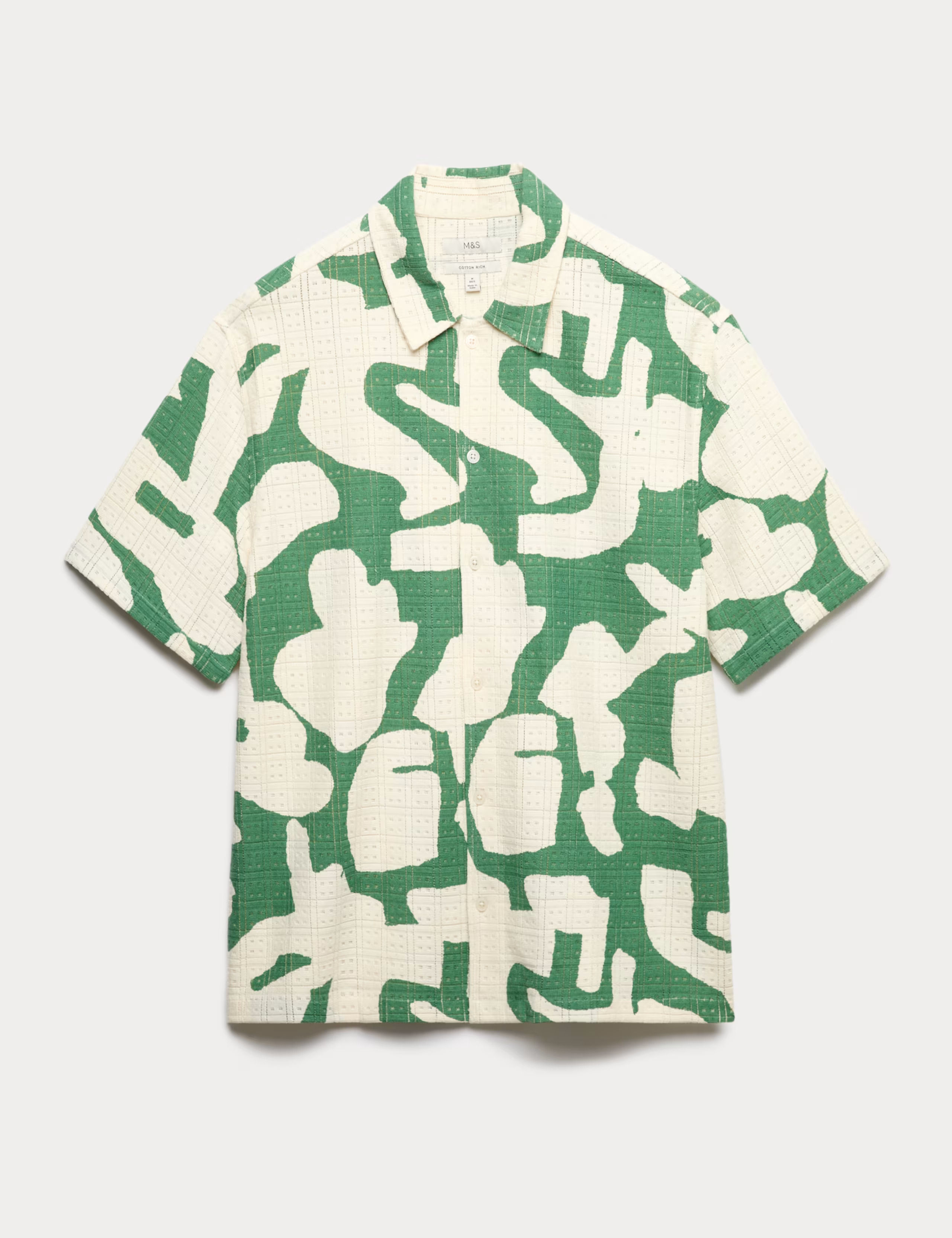
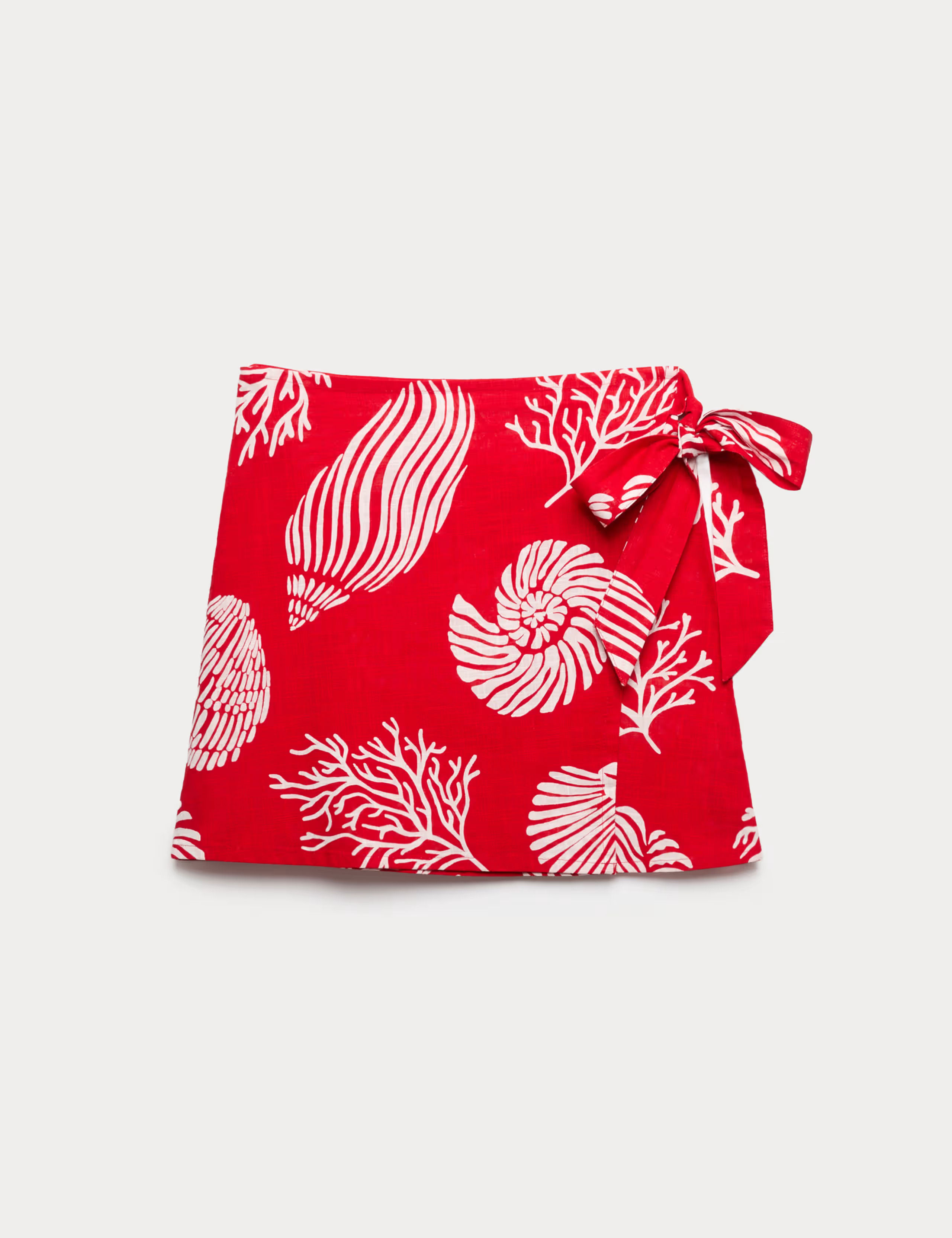
Each represents M&S commissioning or pioneering new fabric technologies as part of its clothing range - directly relevant to the textile surface and material design of garments.
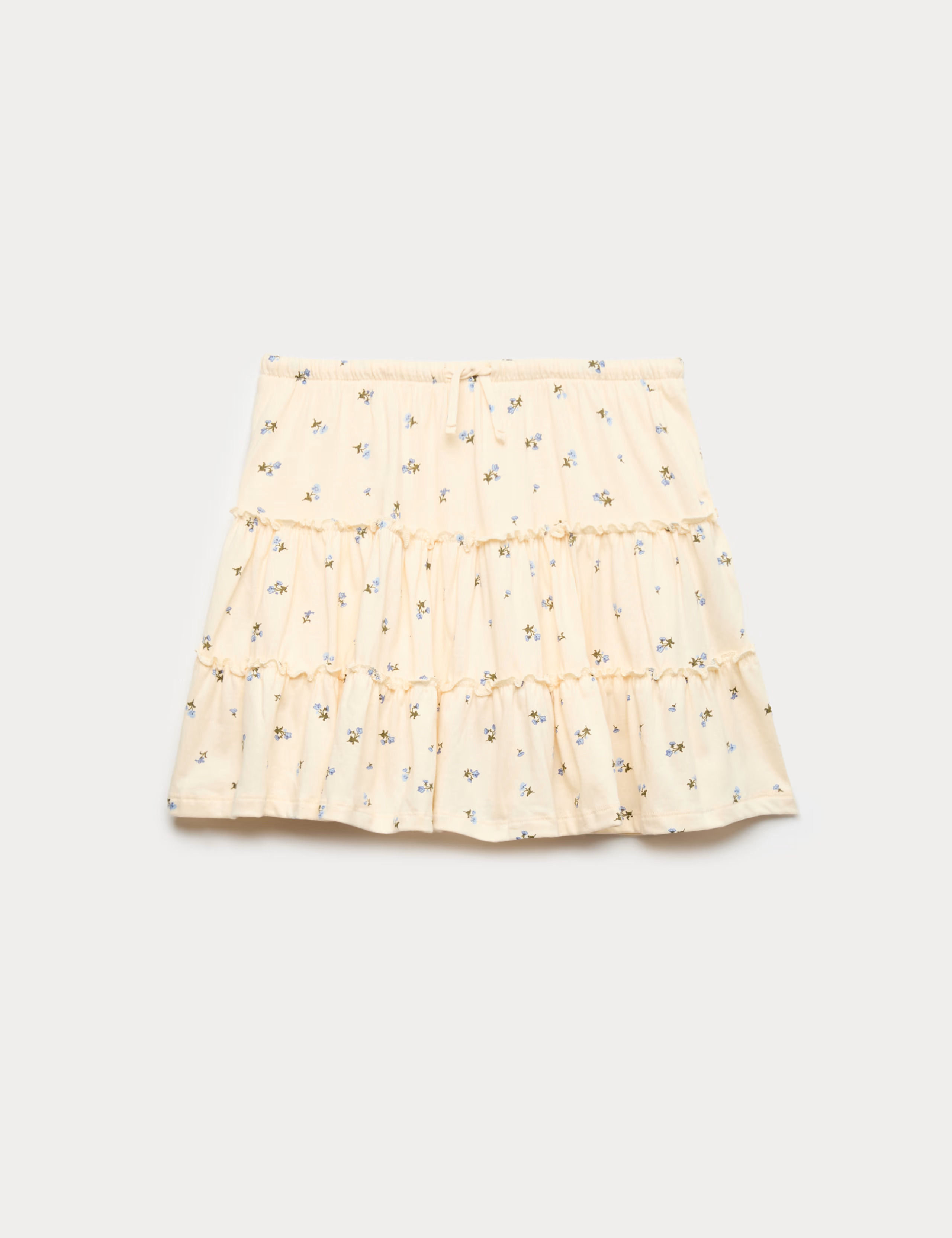
Per Una womenswear sub-brand: Launched September 2001 as a joint venture between M&S and George Davies (founder of Next) with the aim of bringing a distinct design identity to M&S womenswear. Described as a "major success" for the company; bought back for £125 million in 2004. Per Una introduced a more decorative, fashion-forward design language to M&S clothing - with imagery suggesting floral and printed textile directions consistent with Davies's design approach at Next.
Best of British range (May 2013): A specific own-brand range launched alongside the Per Una and Indigo overhaul, signalling a design direction around British provenance and quality.
Jaeger acquisition (January 2021): The £5 million purchase of the Jaeger fashion brand from administrators added a historic British fashion label with documented heritage in tailored women's clothing and fabrics to the M&S portfolio. No stores were included.
Home furnishings division: Dedicated home furnishing stores launched 2007. Home textiles - bedding, towels, curtains, upholstery - are a documented part of the M&S home product range, extending the company's surface design relevance beyond clothing into interiors.
Clothing repairs service (June 2024): M&S announced a partnership with Sojo to offer clothing repairs and alterations in-store - a documented engagement with product longevity and garment quality in the surface design context.
Sourcing offices: M&S maintains overseas sourcing offices in Malaysia, Hong Kong, Thailand, India, Bangladesh, Turkey, mainland China, Ireland, Italy, Indonesia, and Sri Lanka - the complete geography of global textile production, confirming that fabric and garment sourcing is a core operational discipline.
Marks and Spencer plc (M&S) is a major British multinational retailer headquartered in London.
M&S has a directly documented history in textile and fabric design across its clothing and home divisions: Textile-first retail origin (1926): Textiles were the first category M&S added to its penny bazaar model in 1926.
Clothing (women's, men's, children's - including school uniform and activewear); beauty products; home furnishings; food. Clothing sub-brands include Per Una, Autograph, Indigo, Best of British, and the Holly Willoughby 'Must Have' collection (launched September 2018).
UK's largest standalone clothing and food retailer by a range of measures. Historical reputation for British quality goods, value for money, and long-term supplier relationships (99% British-made goods policy until 1990s).
Own-retail model (full-line stores, Foodhall, Simply Food convenience format) supplemented by franchise in 40+ international markets. Ocado joint venture for online food delivery. No outbound clothing or textile licensing is documented in the source material.
Simon Marks (son of Michael) became chairman in 1916 and transformed penny bazaars into a national retail chain. The "St Michael" own brand was introduced in 1928 and extended to food in 1941, replacing all other brands by 1956. The brand was retired in 2000 and partially restored as an emblem in 2021.
United Kingdom