Types
 0Blue is among the most commercially important colours in surface pattern design. It carries strong associations with calmness, trust, and reliability, making it broadly acceptable across consumer markets. The blue-and-white pattern tradition - rooted in Islamic and Chinese ceramics and transmitted through Delftware, Blue Willow transferware, and Toile de Jouy - is one of the most persistent and commercially active motif families in home decor, tableware, and textile design. Monochromatic blue schemes remain commercially reliable across fashion, interiors, and licensing.
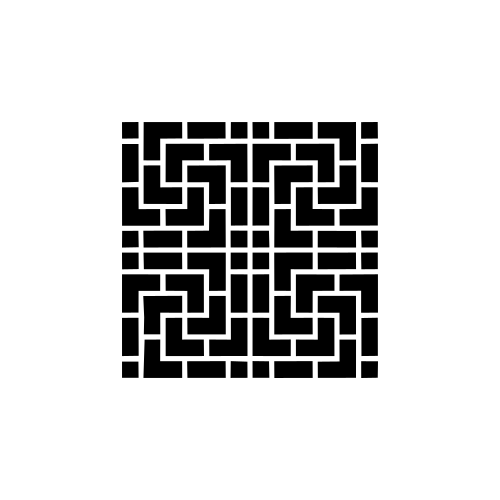 0Chinoiserie is not a direct reproduction of Chinese art but a European fantasy of Chinese aesthetics, filtered through trade goods, diplomatic gifts, and imaginative interpretation. It emerged alongside European fascination with East Asian trade goods and was closely associated with the Rococo movement - sharing Rococo's appetite for exuberance, asymmetry, and decorative invention. In surface pattern design, chinoiserie is particularly active in wallpaper, ceramics, upholstery, and luxury interior textiles, where it carries associations with heritage, grandeur, and sophisticated eccentricity. The style has proven commercially durable from its 17th-century origins through to the present.
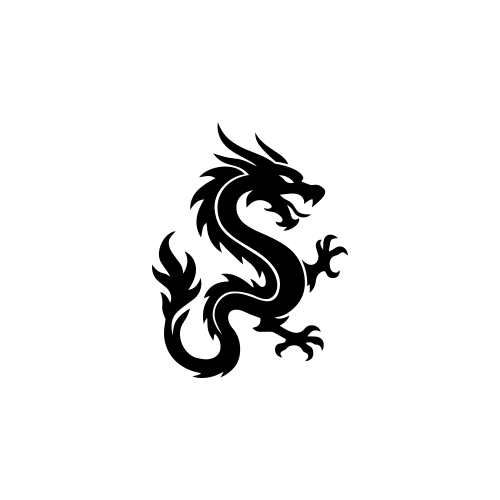 0Dragon pattern in surface design is dominated by East Asian iconographic traditions - particularly the Chinese imperial dragon with its coiled body, five claws, and accompanying symbolic elements (flaming pearl, clouds, waves). This tradition connects to one of the most historically significant applications of surface pattern design: the ceremonial robes of Chinese, Korean, and Japanese imperial courts, in which dragon motifs were encoded symbols of rank and political authority. In contemporary surface design, dragon pattern carries associations with power, mythology, and Asian cultural heritage, and is commercially active across fashion, wallpaper, licensing, and gift products.
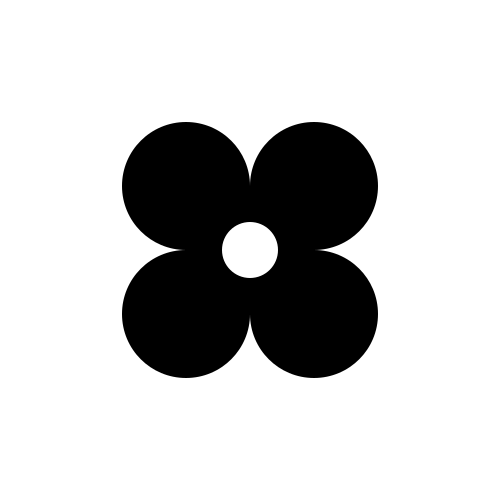 0Floral pattern is the broadest and commercially most active category in surface pattern design. It encompasses any design in which flowers, foliage, stems, and botanical elements constitute the primary visual subject. The category spans a wide range of sub-types - from dense all-over repeats to spaced individual blooms - and includes distinct historical styles with their own visual languages. Floral pattern has been central to textile design across virtually every culture and era, and remains the highest-volume category in wallpaper, fabric, fashion, and home textiles today.
You've reached the end
4 Types