Types
 1Astrology pattern draws on the graphic language astrology uses to represent relationships between celestial bodies: symbolic glyphs for planetary "aspects" (angles between planets in a horoscope), the twelve zodiac signs grouped into four elemental sets, and - notably for surface pattern - the fact that many of these aspect angles correspond directly to regular star polygons (pentagram, heptagram, octagram, decagram, dodecagram, and more). The source is an astrology reference on aspect theory rather than a design source, so this page focuses on the visual/symbolic vocabulary it documents.
 0Ice patterns in surface pattern design take their visual vocabulary from natural frost and ice crystal formations. The branching, fern-like structures that form when water freezes slowly - across glass, on wet surfaces, in the natural environment - produce distinctive geometric forms that have direct application in textile and wallpaper design. These structures sit between the organic and the geometric: they follow mathematical rules (dendritic branching, hexagonal symmetry in ice crystals) but result in forms that appear organic and irregular. The ice pattern category covers a range from literal representations of frost ferns and window ice to stylised geometric interpretations of crystalline forms, blending into the broader winter and snowflake pattern traditions.
 0Rain patterns operate across two distinct design registers. The first is an illustrative or abstract surface pattern tradition: raindrop shapes, falling lines, drip motifs, and weather-associated imagery (clouds, umbrellas, puddle reflections) applied to textiles, stationery, and homeware. The second is the military camouflage tradition, in which broken vertical irregular lines on a muted ground produce patterns colloquially known as "raindrop" camouflage - a category with its own textile and design history. In consumer surface pattern design, rain and drip motifs have consistent commercial applications in children's products (particularly for rainy weather themes), fashion (particularly April/spring collections), and occasion-based stationery (umbrellas and rain for specific greeting card markets).
 0Sea and marine patterns are among the most commercially durable categories in surface pattern design, driven by consistent seasonal demand in summer, resort, and coastal lifestyle markets. The category encompasses both naturalistic underwater imagery and more abstract or graphic nautical references, ranging from illustrated fish and sea creature patterns to simple anchor-and-rope motifs. The breadth of visual material available - from tropical reef systems to cold-water coastal settings - supports a wide range of aesthetic moods.
 0Sky patterns draw on the day and night sky as their primary design source, incorporating cloud formations, stars, celestial bodies, and constellation arrangements as repeating motifs. As a category, sky patterns span a wide tonal and stylistic range: soft pastel daytime cloud compositions for nursery textiles, midnight-blue constellation charts for adult wallpaper, and golden celestial symbols for fashion accessory prints. The astronomical framework of constellations - both the 88 officially recognised IAU groupings and informal asterisms - provides a named and historically grounded motif vocabulary that lends sky patterns an educational and heritage dimension beyond purely decorative use.
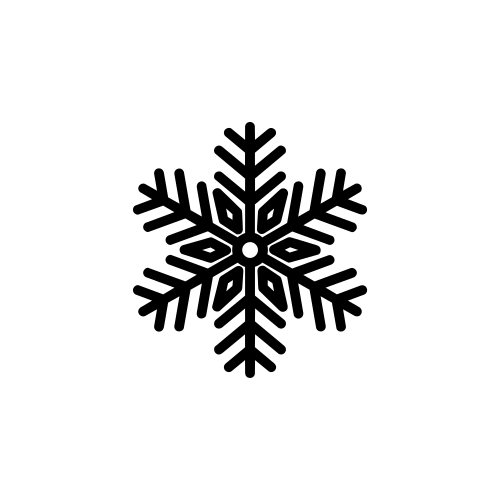 0Snow patterns in surface pattern design are primarily driven by the snowflake motif and its variants. The snowflake is one of the most geometrically distinctive natural forms - its strict sixfold symmetry, intricate branching, and infinite variation within a fixed structural rule make it an enduringly rich source for surface pattern. Snow patterns are strongly seasonal, with commercial demand concentrated in autumn/winter product ranges, Christmas collections, and winter homeware.
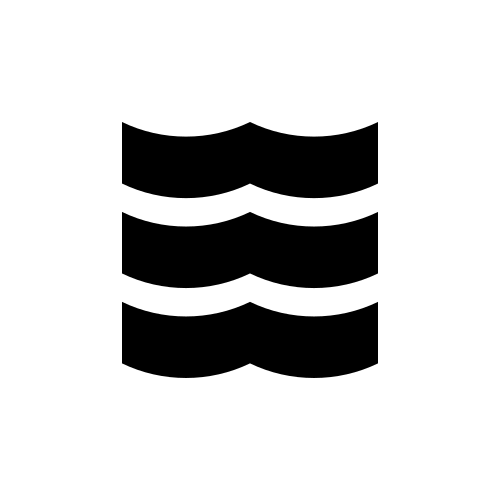 0Wave patterns draw on one of the most universally recognised natural forms: the curved, rising-and-falling profile of a water wave. In surface pattern design, wave structures range from simple sinusoidal line patterns through to complex, layered representations of ocean swells and breaking waves. The category encompasses both highly geometric, abstract wave forms and naturalistic sea imagery. Wave patterns carry consistent psychological associations with movement, rhythm, and the natural world, making them commercially versatile across fashion, home design, and digital applications.
You've reached the end
7 Types