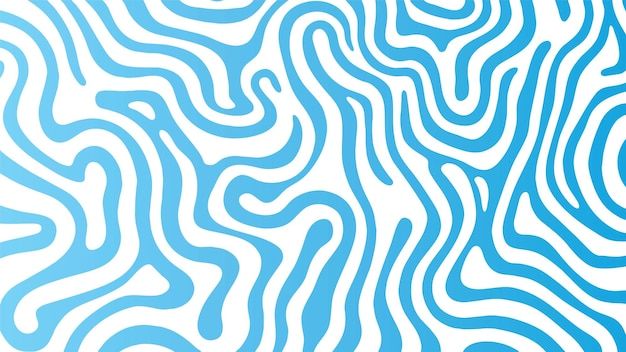
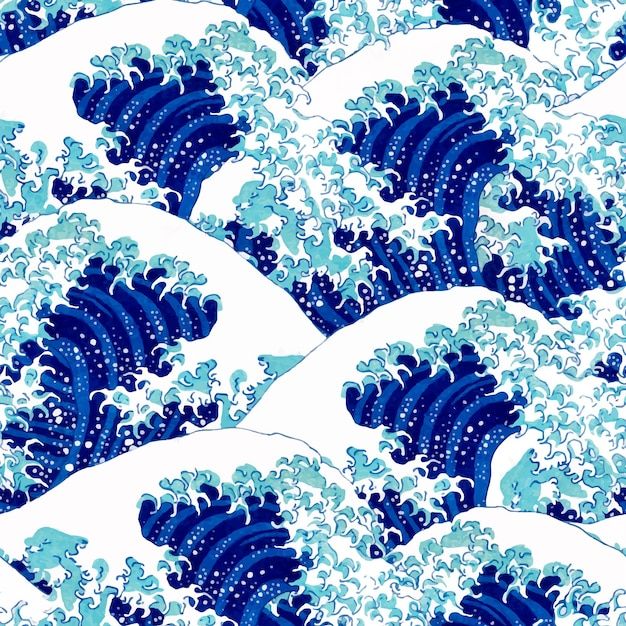
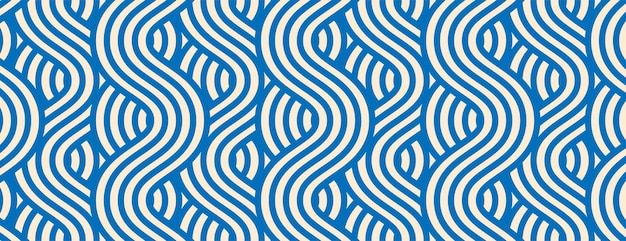
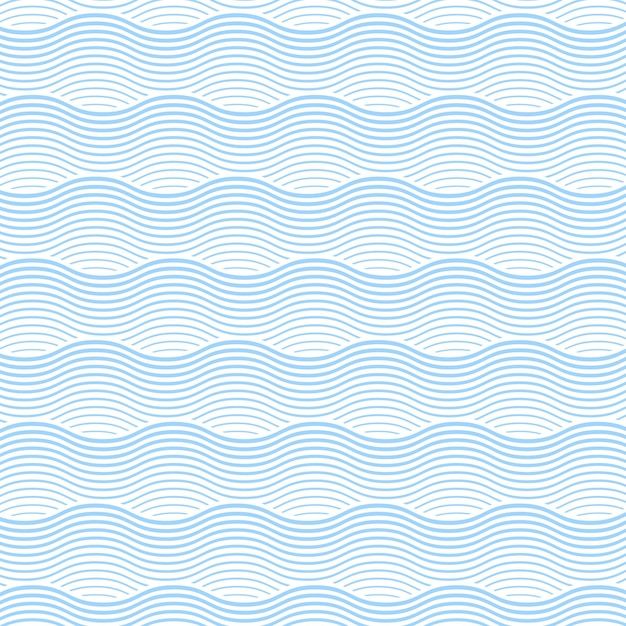
Wave patterns draw on one of the most universally recognised natural forms: the curved, rising-and-falling profile of a water wave. In surface pattern design, wave structures range from simple sinusoidal line patterns through to complex, layered representations of ocean swells and breaking waves. The category encompasses both highly geometric, abstract wave forms and naturalistic sea imagery. Wave patterns carry consistent psychological associations with movement, rhythm, and the natural world, making them commercially versatile across fashion, home design, and digital applications.
We use cookies to improve your experience and understand how PatternDesigners is used.
Wave patterns draw on one of the most universally recognised natural forms: the curved, rising-and-falling profile of a water wave. In surface pattern design, wave structures range from simple sinusoidal line patterns through to complex, layered representations of ocean swells and breaking waves. The category encompasses both highly geometric, abstract wave forms and naturalistic sea imagery. Wave patterns carry consistent psychological associations with movement, rhythm, and the natural world, making them commercially versatile across fashion, home design, and digital applications.
Wave patterns are defined by their continuous curved, undulating movement. Key visual characteristics:
Visual associations include: peace and tranquility (gentle, low-amplitude waves); power and drama (high-amplitude, turbulent forms); cyclical nature and continuity (the regular rhythm of the repeat).
Wave patterns typically tile horizontally, with the wave crest/trough rhythm creating a directional repeat. Common structures include:
The Japanese "Great Wave" (Katsushika Hokusai, c.1831) is the most globally recognised single wave image and has been widely referenced in surface pattern design.
Wave-derived motifs in surface pattern include: cresting wave forms (with foam details at the apex); smooth ocean swells; ripple patterns (concentric semi-circles from a disturbance point); the seigaiha/fish-scale pattern (overlapping semi-circles); and cloud-band patterns (stylised wave forms used in East Asian textile traditions to represent clouds).
Wave patterns are most naturally associated with water colours:
The sinusoidal line wave in a single colour on a contrasting ground reads as clean and contemporary. Layered, textured wave forms in naturalistic palettes read as more illustrative and expressive.
Wave patterns appear in decorative art across virtually all maritime cultures. In Japanese decorative art, wave pattern forms - from the stylised seigaiha (fish-scale/overlapping semicircle) to the dramatically rendered cresting wave - have been central to textile, ceramic, and print traditions for centuries. Hokusai's "The Great Wave off Kanagawa" (c.1831), from his Thirty-six Views of Mount Fuji series, is the most widely reproduced Japanese artwork and one of the most referenced single images in surface pattern design globally. In Chinese decorative textile tradition, the wave and cloud-band pattern is used as a ground fill in formal embroidery and woven silk. In contemporary surface pattern design, wave forms are a standard element in coastal, nautical, and abstract pattern categories.
Wave patterns draw on one of the most universally recognised natural forms: the curved, rising-and-falling profile of a water wave. In surface pattern design, wave structures range from simple sinusoidal line patterns through to complex, layered representations of ocean swells and breaking waves.
Wave patterns are defined by their continuous curved, undulating movement.
Nature
Wave patterns typically tile horizontally, with the wave crest/trough rhythm creating a directional repeat. 1831) is the most globally recognised single wave image and has been widely referenced in surface pattern design.
Marine
Nautical
Wave patterns appear in decorative art across virtually all maritime cultures. In Japanese decorative art, wave pattern forms - from the stylised seigaiha (fish-scale/overlapping semicircle) to the dramatically rendered cresting wave - have been central to textile, ceramic, and print traditions for centuries.