Types
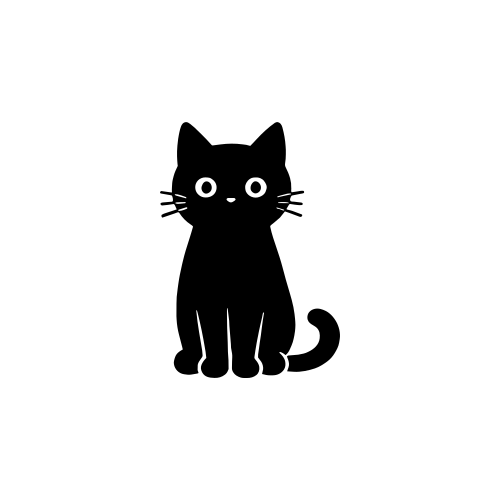 0Cat patterns operate on two levels in surface design: as a figurative motif (cats as characters, poses, or silhouettes) and as a reference to feline coat markings (stripes, spots, and tortoiseshell coloration systems). Feline coat pattern provides a rich, naturally occurring visual vocabulary that directly informs pattern design - particularly tabby stripe, tortoiseshell colour mixing, and calico tricolour arrangements. Domestically, cat-themed surface pattern is commercially active in gifting, stationery, home textiles, and children's products.
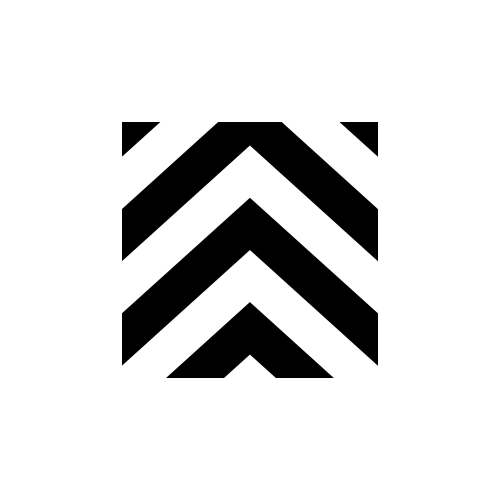 0A chevron is a V-shaped mark or symbol, often shown inverted (point down). Historically the term refers to a fret in architecture, a badge or insignia denoting military or police rank, and a heraldic ordinary - one of the simple geometric figures forming the basis of many coats of arms. As a surface pattern motif, the chevron's appeal lies in this same simple, high-contrast V-shape geometry, repeated to form a zigzag.
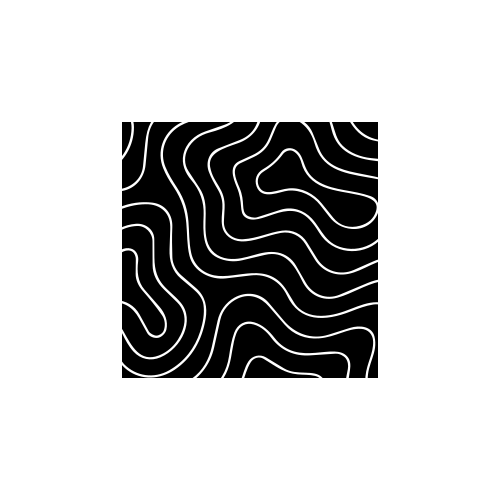 0Contour patterns draw from two distinct visual traditions sharing the same vocabulary of lines: cartographic contour mapping (where curved parallel lines reveal terrain relief) and contour drawing in fine art (where line defines the mass and edges of a subject without shading). Both traditions translate into surface pattern design as linear compositions with a characteristic structural and depth-suggesting aesthetic.
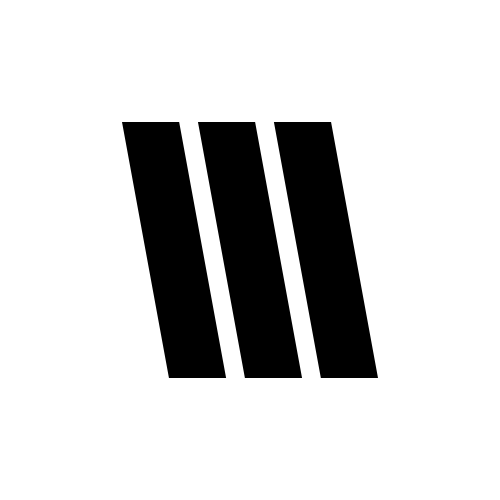 0Diagonal stripes are a foundational stripe variant defined by their angle rather than their colour, width, or spacing. The same striping logic as horizontal and vertical stripes applies - repeating parallel bands of colour - but oriented at a bias, typically 45°. The result is a visually dynamic pattern with an inherent sense of motion and visual flow. As a structure, diagonal stripes are highly versatile: width, colour density, and angle variation each produce substantially different aesthetic registers.
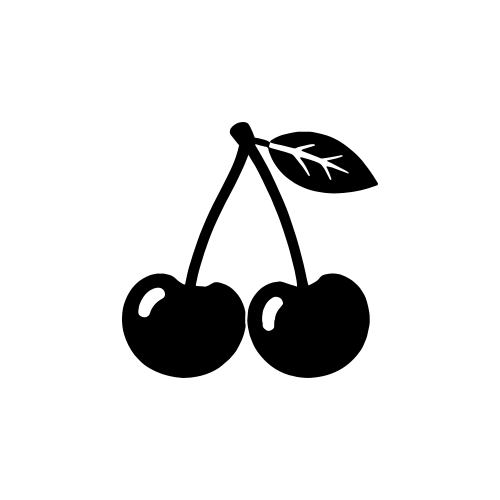 0Fruit pattern uses illustrated or stylised fruit forms as primary repeating motifs. The category sits within the broader Floral Pattern family, drawing on the same botanical illustration tradition as flower and plant patterns. Fruit pattern has a long history in decorative arts - William Morris's block-printed "Fruit" wallpaper of 1862 is among the most significant historic examples - and continues as an active commercial category across interiors, fashion, and licensing. The category ranges from vintage botanical-style illustration through to contemporary graphic and pop-art treatments.
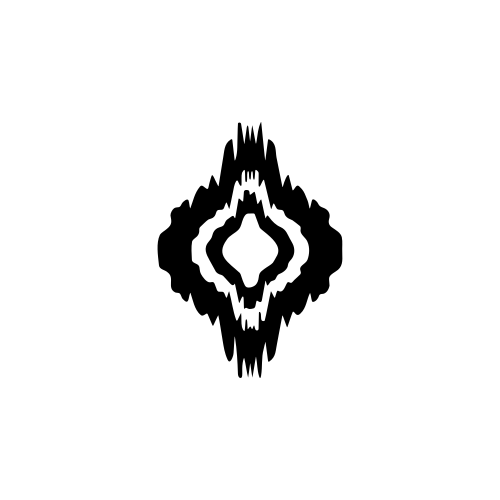 0Ikat is a resist-dyeing technique in which the yarn - warp, weft, or both - is bound and dyed before the fabric is woven. Unlike batik, which applies resist to finished cloth, ikat applies resist to the thread before weaving. The bound portions of yarn resist the dye; when the bindings are removed and the yarn is woven, the pre-dyed pattern appears in the cloth. Because the alignment of dyed yarn sections during weaving is never perfectly precise, ikat produces a characteristic soft-edged or slightly blurred version of the intended pattern - this "ikat blur" or "ikat feathering" is the defining visual characteristic of the technique and a primary aesthetic marker in ikat-inspired surface design. The word "ikat" derives from the Malay-Indonesian mengikat - "to tie" or "to bind."
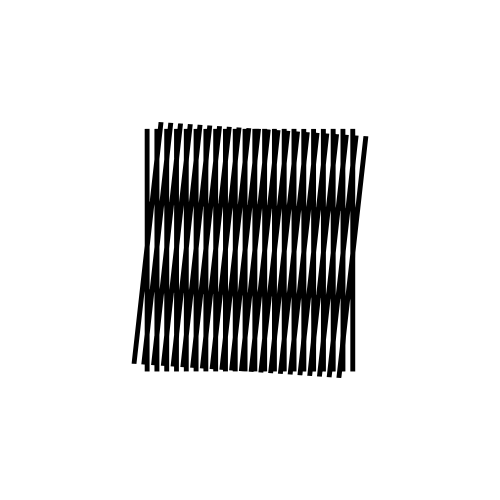 0A moiré pattern is a large-scale visual interference effect that appears when two repeating visual patterns (such as grids, lines, or dots) are overlaid with a slight rotation, offset, or scale difference between them. The visual result is a new, emergent large-scale pattern - typically a series of waves, arcs, or flowing curves - that is not present in either original pattern individually. The moiré effect is both an unintended printing artefact (a problem in halftone printing and digital photography) and a deliberately exploited optical tool in textile production, security printing, and scientific instrumentation. The term derives from the French word for a specific watered-silk textile, which produces a natural moiré effect through its weave structure.
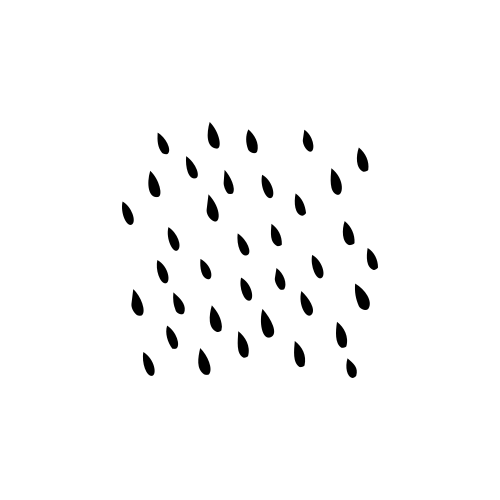 0Rain patterns operate across two distinct design registers. The first is an illustrative or abstract surface pattern tradition: raindrop shapes, falling lines, drip motifs, and weather-associated imagery (clouds, umbrellas, puddle reflections) applied to textiles, stationery, and homeware. The second is the military camouflage tradition, in which broken vertical irregular lines on a muted ground produce patterns colloquially known as "raindrop" camouflage - a category with its own textile and design history. In consumer surface pattern design, rain and drip motifs have consistent commercial applications in children's products (particularly for rainy weather themes), fashion (particularly April/spring collections), and occasion-based stationery (umbrellas and rain for specific greeting card markets).
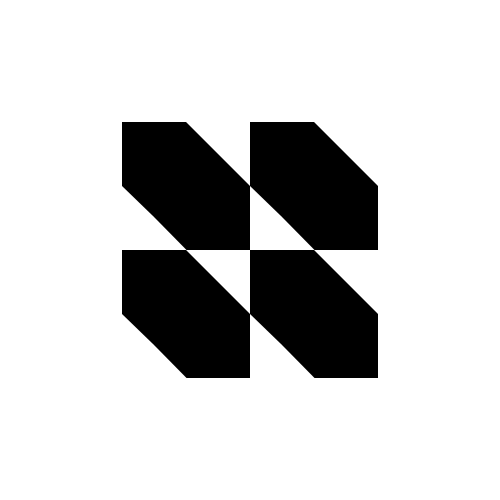 0A simple repeating pattern is a design in which one or more motifs are systematically duplicated to create an infinitely continuous surface. The repeat unit - the smallest tile that contains the complete design - is placed according to a layout rule that governs how tiles relate to each other spatially. Understanding these layout rules is considered one of the core technical competencies of surface pattern design. Once motifs are established, a designer can produce multiple coordinating patterns by applying different repeat layouts to the same elements.
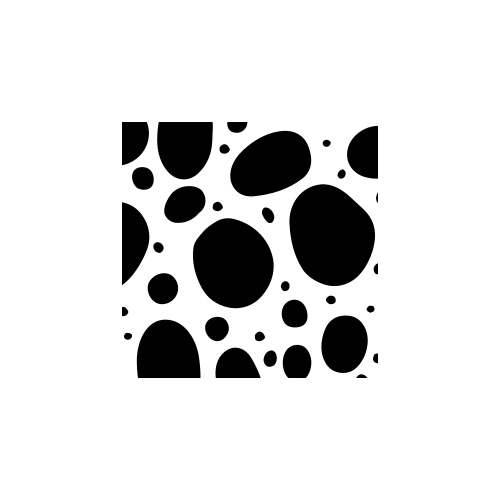 0Stone patterns occupy a dual function in surface design: they appear as decorative motifs referencing stone's aesthetic qualities (texture, grain, natural variation), and as structural patterns derived from the conventions of masonry construction (how stone blocks are cut and laid). In interior design, stone-effect surface pattern is widely used to simulate the appearance of costly or heavy stone materials on printed or laminated surfaces. In decorative pattern, stone textures are drawn on for their tactile visual weight and natural irregularity.
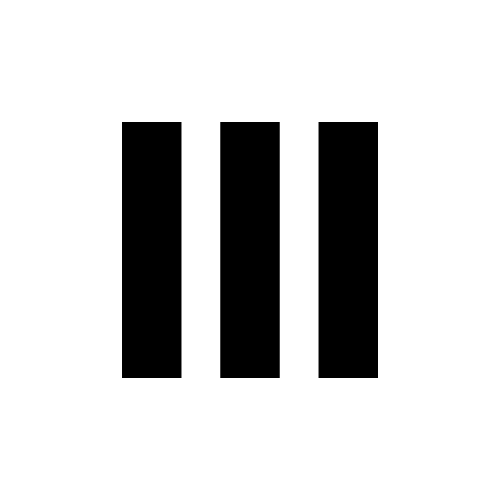 0Stripe patterns reduce surface design to its most fundamental element: parallel bands. Despite (or because of) this simplicity, stripes carry an unusually rich history of social, cultural, and commercial meaning. Their visual properties - extending the eye along a single axis, creating optical effects through proportion and contrast - have been exploited across fashion, home textiles, and decoration for centuries. Stripe patterns are among the highest-volume commercial designs in surface pattern, appearing perennially across every product category.
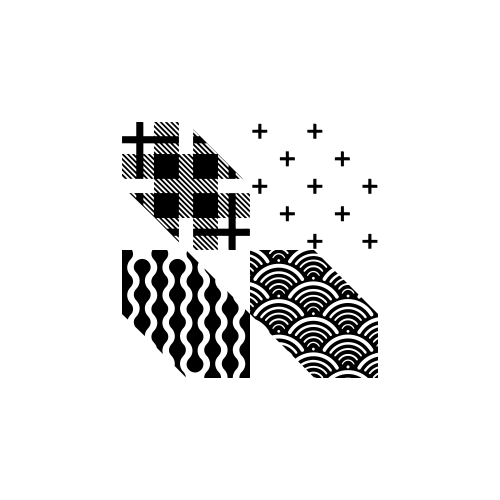 0A repeat pattern is any surface design in which a tile (or repeat unit) tessellates seamlessly across a surface. The type of repeat defines the geometric rule by which tiles relate to each other. Different repeat structures produce distinct visual rhythms and suit different markets and applications. In a pattern collection, multiple repeat types are typically used across the hero pattern and its coordinating designs to create variety and hierarchy within a unified colour and motif vocabulary.
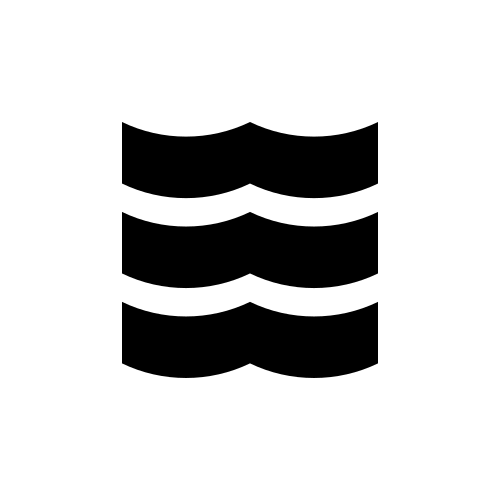 0Wave patterns draw on one of the most universally recognised natural forms: the curved, rising-and-falling profile of a water wave. In surface pattern design, wave structures range from simple sinusoidal line patterns through to complex, layered representations of ocean swells and breaking waves. The category encompasses both highly geometric, abstract wave forms and naturalistic sea imagery. Wave patterns carry consistent psychological associations with movement, rhythm, and the natural world, making them commercially versatile across fashion, home design, and digital applications.
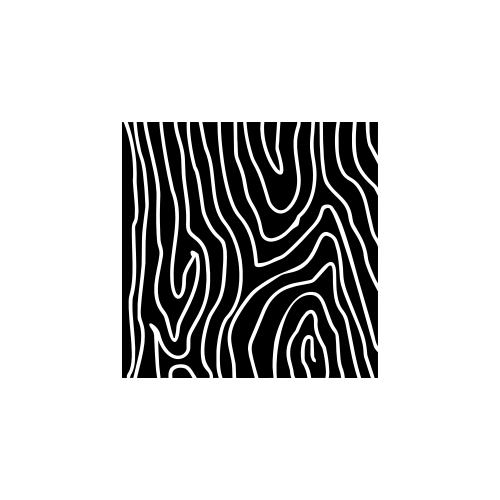 0Wood grain pattern is one of the most commercially significant natural texture categories in surface design. The visual structure of wood - parallel longitudinal fibres producing linear grain, annual growth rings producing concentric patterns in cross-section, and various figure effects (curly grain, bird's eye, tiger grain) produced by unusual growth conditions - provides a rich visual vocabulary for both decorative surface pattern and material simulation. Wood-effect printing on laminates, vinyl flooring, wallpaper, and furniture surfaces is a major commercial application driven by demand for the aesthetic quality of wood at lower cost.
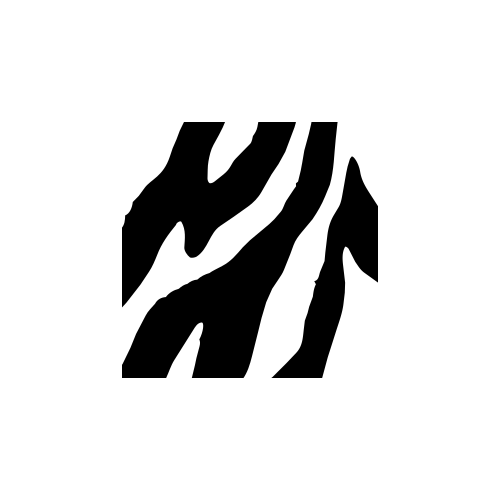 0Zebra print is one of the most commercially durable animal print categories in surface pattern design, distinguished by its extreme simplicity - two colours only, typically black and white - and its bold, organic stripe structure. Unlike tiger print (orange and black, curved organic stripes) or leopard print (spots/rosettes on a tawny ground), zebra print derives its impact from the graphic intensity of the black-white contrast and the flowing, individual character of each stripe. Its commercial appeal is broad, crossing fashion, home design, and accessories markets.
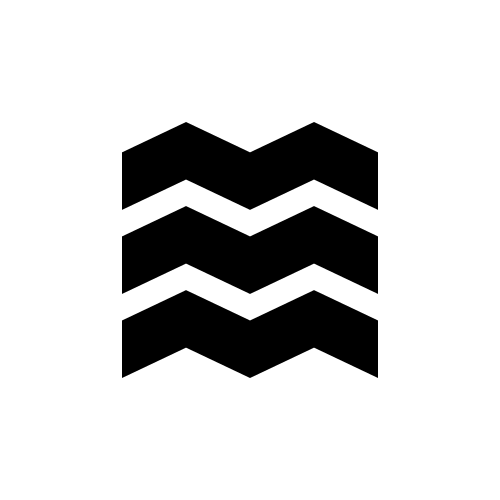 0The zigzag is one of the simplest and most energetically direct structures in surface pattern design. Defined by its sharp alternation between two diagonal directions, the zigzag creates a visual rhythm that is stronger and more angular than a wave and more dynamic than a stripe. The pattern appears across textile design, architectural ornament, graphic design, and everyday objects (pinking shears, seismograph traces) in a remarkably consistent form, reflecting the visual directness of the structure.
You've reached the end
16 Types