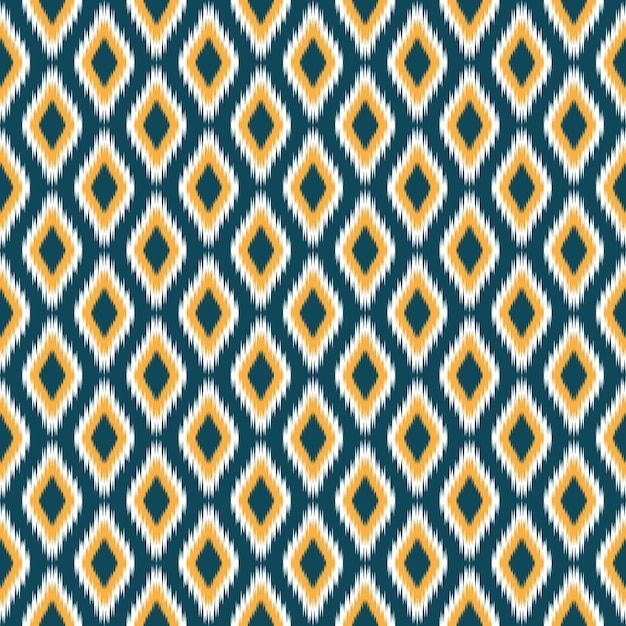
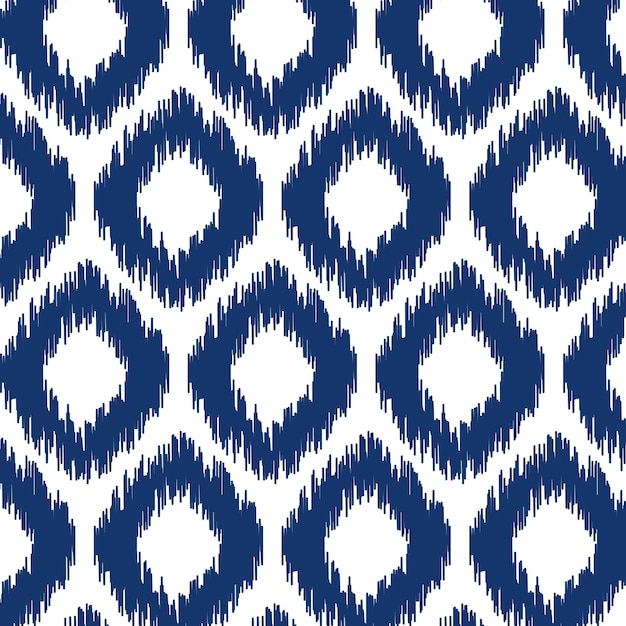
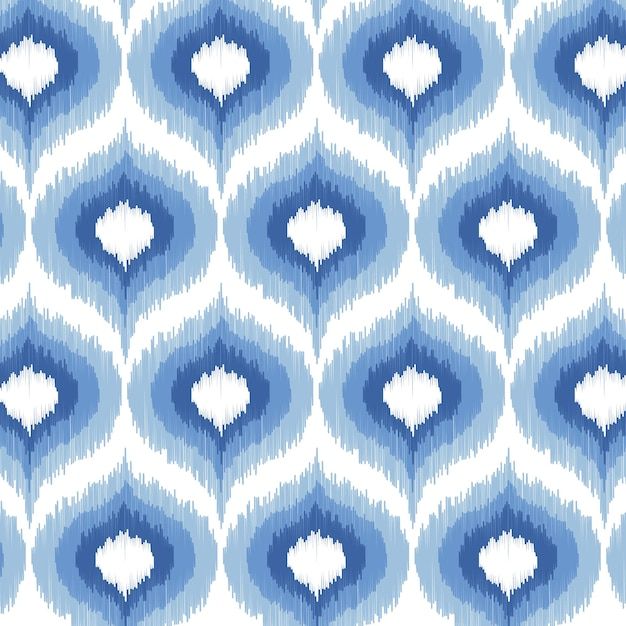
Ikat is a resist-dyeing technique in which the yarn - warp, weft, or both - is bound and dyed before the fabric is woven. Unlike batik, which applies resist to finished cloth, ikat applies resist to the thread before weaving. The bound portions of yarn resist the dye; when the bindings are removed and the yarn is woven, the pre-dyed pattern appears in the cloth. Because the alignment of dyed yarn sections during weaving is never perfectly precise, ikat produces a characteristic soft-edged or slightly blurred version of the intended pattern - this "ikat blur" or "ikat feathering" is the defining visual characteristic of the technique and a primary aesthetic marker in ikat-inspired surface design. The word "ikat" derives from the Malay-Indonesian mengikat - "to tie" or "to bind."
We use cookies to improve your experience and understand how PatternDesigners is used.
Ikat is a resist-dyeing technique in which the yarn - warp, weft, or both - is bound and dyed before the fabric is woven. Unlike batik, which applies resist to finished cloth, ikat applies resist to the thread before weaving. The bound portions of yarn resist the dye; when the bindings are removed and the yarn is woven, the pre-dyed pattern appears in the cloth. Because the alignment of dyed yarn sections during weaving is never perfectly precise, ikat produces a characteristic soft-edged or slightly blurred version of the intended pattern - this "ikat blur" or "ikat feathering" is the defining visual characteristic of the technique and a primary aesthetic marker in ikat-inspired surface design. The word "ikat" derives from the Malay-Indonesian mengikat - "to tie" or "to bind."
The signature visual quality of ikat is the soft, feathered edge produced by slight misalignment of warp and weft during weaving. Rather than sharp-edged geometric forms, ikat produces patterns with a characteristic hazing at the edges - the colour bleeds slightly beyond its intended boundary, creating a soft, organic quality distinct from printed pattern. This blur is inherent to the technique: the more complex the pattern (particularly in double ikat), the more difficult exact alignment becomes. In surface pattern design, this feathered edge is specifically recreated in printed and digital ikat-referencing designs to signal the technique's aesthetic.
Three technical categories define ikat by which element of the yarn is dyed:
Ikat patterns vary widely by regional tradition, but commonly feature:
Ikat colour palette is strongly associated with the natural dye traditions of its producing regions: deep indigo blue, madder red, saffron yellow, and rich earth tones are the classical ikat palette. Indian patola silk ikat uses jewel-tone colours in complex geometric compositions. Uzbek abrbandi (known as "cloud-dyed") ikat uses bold, warm silk colour combinations - orange, red, green, and purple - in larger-scale compositions. Contemporary and commercial ikat-referencing prints reproduce the characteristic blurred-edge pattern in any colourway, though the original natural dye palette associations remain commercially strong.
The origins of ikat are ancient - neolithic evidence of resist-dyeing techniques dates to approximately 6000 years before present. The earliest documented Southeast Asian warp ikat example is the Banton Burial Cloth, dated c. 1200-1300 AD, from the Philippines. Significant regional ikat traditions by geography:
Ikat is a resist-dyeing technique in which the yarn - warp, weft, or both - is bound and dyed before the fabric is woven. Unlike batik, which applies resist to finished cloth, ikat applies resist to the thread before weaving.
The signature visual quality of ikat is the soft, feathered edge produced by slight misalignment of warp and weft during weaving.
Heritage
Stripe and Diamond
Emblem and Geometric
Ikat colour palette is strongly associated with the natural dye traditions of its producing regions: deep indigo blue, madder red, saffron yellow, and rich earth tones are the classical ikat palette. Indian patola silk ikat uses jewel-tone colours in complex geometric compositions.
The origins of ikat are ancient - neolithic evidence of resist-dyeing techniques dates to approximately 6000 years before present. The earliest documented Southeast Asian warp ikat example is the Banton Burial Cloth, dated c. 1200-1300 AD, from the Philippines.
Batik Pattern, Ethnic Pattern, Hawaiian Pattern, and Geometric Pattern