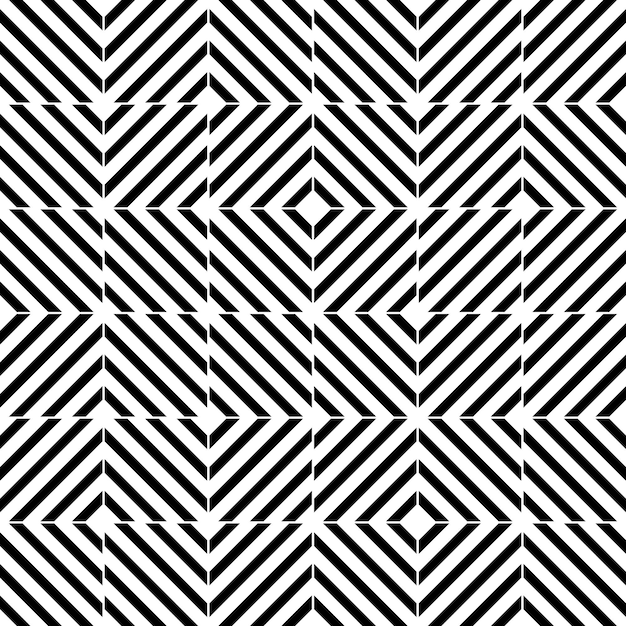
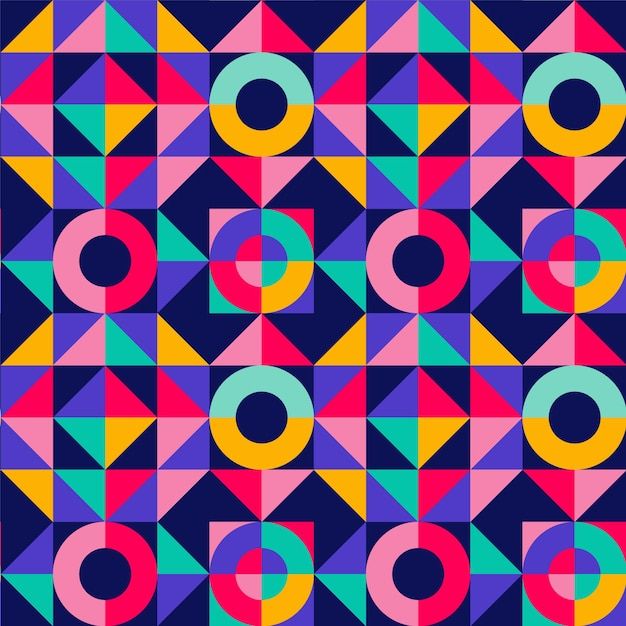
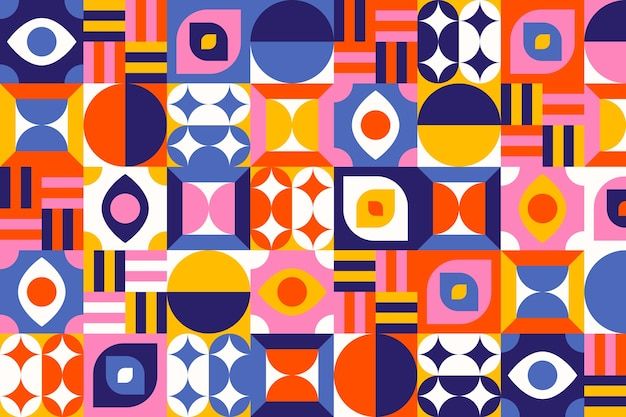
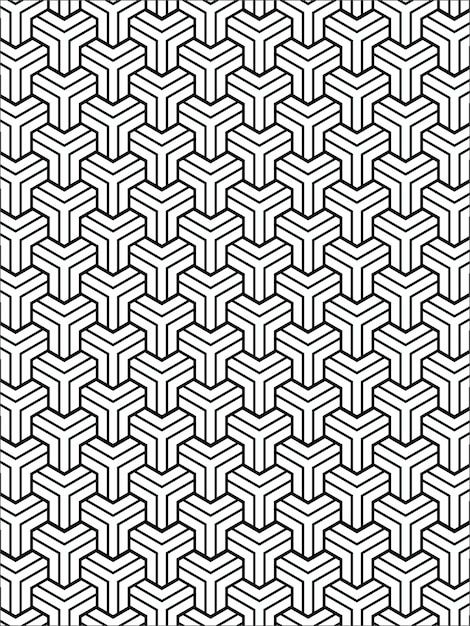
Geometric pattern uses mathematical forms - triangles, squares, hexagons, circles, diamonds, and their combinations - as the primary structural and visual element. It is among the oldest and most widespread pattern categories in human decorative art, with major traditions in Islamic art, pre-Columbian textile design, Japanese textile design, and European architectural ornament. In contemporary surface pattern design, geometric pattern spans the full spectrum from rigorous mathematical tiling systems to loose, hand-drawn geometric aesthetics, and is commercially active across all market sectors.
We use cookies to improve your experience and understand how PatternDesigners is used.
Geometric pattern uses mathematical forms - triangles, squares, hexagons, circles, diamonds, and their combinations - as the primary structural and visual element. It is among the oldest and most widespread pattern categories in human decorative art, with major traditions in Islamic art, pre-Columbian textile design, Japanese textile design, and European architectural ornament. In contemporary surface pattern design, geometric pattern spans the full spectrum from rigorous mathematical tiling systems to loose, hand-drawn geometric aesthetics, and is commercially active across all market sectors.
The defining characteristic of geometric pattern is that its elements are derived from mathematical shapes - regular polygons, regular solids, circles, lines, and their intersections and combinations. The visual effect ranges from strict formal precision (mathematical tessellation, precision vector graphics) to organic geometric (hand-drawn, irregular but geometrically-inspired). Geometric pattern tends toward clarity, structure, and visual order; even complex geometric systems are legible as organised compositions. Scale and density vary enormously - micro-geometric prints use very small repeating units, while large-scale architectural geometric compositions use bold, widely-spaced forms.
Geometric patterns use several distinct structural approaches:
Geometric pattern spans all colour registers. Two-colour (duotone) geometric is commercially dominant - high-contrast black/white, navy/white, and other classic duotone combinations. Multi-colour geometric uses the pattern structure to organise complex colour arrangements. Monochromatic geometric (tonal variations on a single hue) is used in sophisticated interior design contexts. Brand-associated geometric patterns (Marimekko, Burberry) use specific colour combinations as part of their identity.
Geometric pattern traditions predate written history. The Islamic geometric art tradition, developed from the 8th century onwards, produced some of the most mathematically sophisticated tiling systems ever created - the Alhambra in Granada, Spain, contains examples of all 17 wallpaper symmetry groups. Indigenous American textile traditions, including the Navajo rug tradition, developed distinctive geometric vocabularies from specific cultural and symbolic frameworks. Japanese Asanoha (hemp leaf) and other traditional textile patterns use geometric tessellations with specific cultural meaning. In the 20th century, geometric pattern was central to Modernist and De Stijl design; the Bauhaus developed systematic approaches to geometric pattern; Op Art (Vasarely) explored geometric optical effects. Contemporary brands including Marimekko, Issey Miyake (Bao Bao bag), and IBM (8-bar logo) have made geometric pattern central to their visual identity.
Geometric pattern uses mathematical forms - triangles, squares, hexagons, circles, diamonds, and their combinations - as the primary structural and visual element.
The defining characteristic of geometric pattern is that its elements are derived from mathematical shapes - regular polygons, regular solids, circles, lines, and their intersections and combinations.
Geometric
Tessellation and Block
Geometric
Geometric pattern spans all colour registers. Two-colour (duotone) geometric is commercially dominant - high-contrast black/white, navy/white, and other classic duotone combinations. Multi-colour geometric uses the pattern structure to organise complex colour arrangements.
Geometric pattern traditions predate written history. The Islamic geometric art tradition, developed from the 8th century onwards, produced some of the most mathematically sophisticated tiling systems ever created - the Alhambra in Granada, Spain, contains examples of all 17 wallpaper symmetry groups.
Tessellation Pattern, Houndstooth Pattern, Check Pattern, Diamond Pattern, Stripe Pattern, and Lattice Pattern