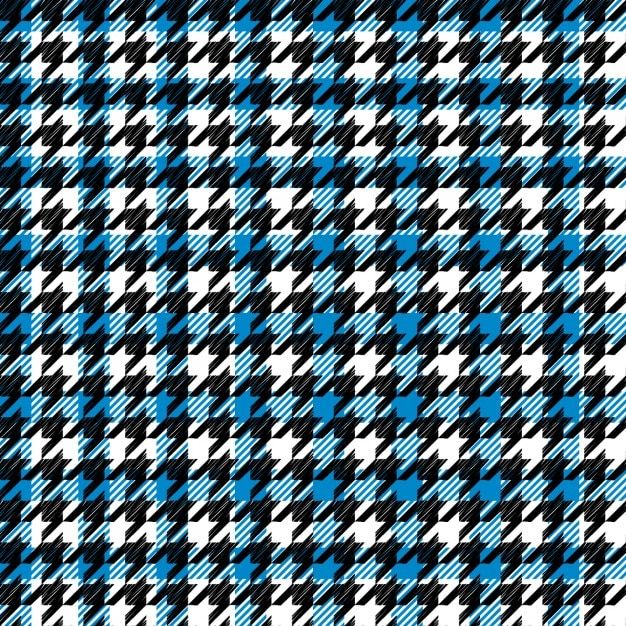
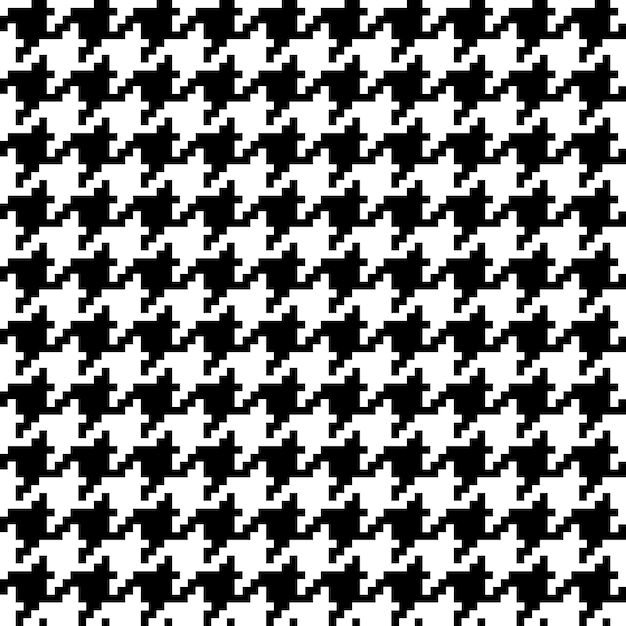
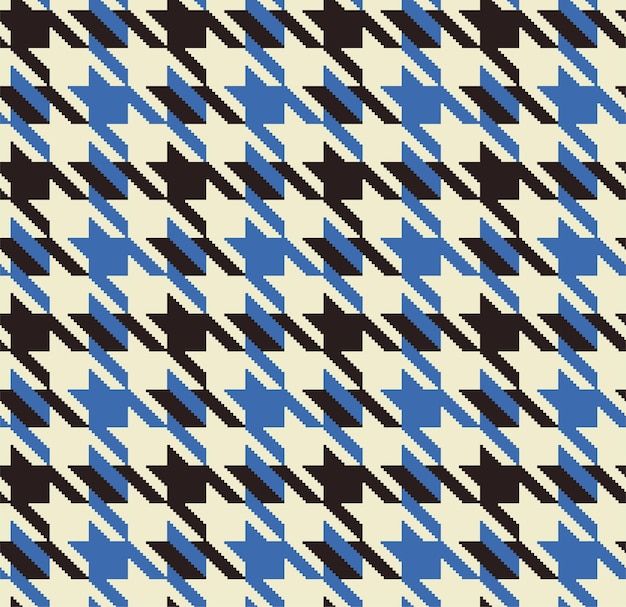
Houndstooth is a duotone geometric pattern in which alternating light and dark check shapes produce a distinctive broken-check or jagged tooth-like surface. Each repeat unit consists of a solid-coloured shape and a diagonally-striped or broken version of the same shape in contrasting colour. The traditional colourway is black and white, but two-tone combinations in any colours are commercial variants. The pattern name dates to 1936 and has no earlier documented recorded use. Houndstooth is one of the most commercially stable and recognised pattern types in fashion - its associations with British tailoring, tweed, and luxury fashion have kept it commercially active for nearly a century.
We use cookies to improve your experience and understand how PatternDesigners is used.
Houndstooth is a duotone geometric pattern in which alternating light and dark check shapes produce a distinctive broken-check or jagged tooth-like surface. Each repeat unit consists of a solid-coloured shape and a diagonally-striped or broken version of the same shape in contrasting colour. The traditional colourway is black and white, but two-tone combinations in any colours are commercial variants. The pattern name dates to 1936 and has no earlier documented recorded use. Houndstooth is one of the most commercially stable and recognised pattern types in fashion - its associations with British tailoring, tweed, and luxury fashion have kept it commercially active for nearly a century.
The houndstooth pattern produces a surface with a characteristic "tooth" or "hound's tooth" visual rhythm - elongated pointed shapes (resembling stylised dog or hound teeth) pointing diagonally in alternating directions across the surface. In the standard view, the pattern reads as interlocking solid and broken angular shapes in two contrasting tones. The solid areas and the broken/striped areas occupy equal proportions of the surface. At viewing distance, the visual effect can read as a diffuse optical mix of the two colours rather than as distinct shapes - producing a characteristic grey-tone optical merge at small scales.
Houndstooth is produced in weaving by a 2:2 twill construction - two picks up, two picks down, in the warp and weft - creating the characteristic diagonal surface texture that underlies the visual pattern. In the standard woven version, a warp of alternating dark/light threads in groups of four, woven with a matching weft arrangement, produces the houndstooth geometry automatically from the weave structure. In printed versions, the same visual structure is reproduced directly as a printed repeat. Scale variants include: standard houndstooth; puppytooth (smaller scale version of the same pattern); and oversized "super houndstooth" (as in the Alexander McQueen Fall 2009 collection, referencing Christian Dior).
Houndstooth is a structural geometric pattern - the motif is the houndstooth check unit itself, not a figurative element. Variation is produced through:
Black and white is the canonical houndstooth colourway - the highest contrast, most commercially recognisable version. Two-tone commercial variants are common: navy/cream, red/cream, grey/white, and seasonal colourways. Multi-colour houndstooth (using more than two colours) disrupts the classic visual character and shifts the aesthetic. Houndstooth is associated with British tailoring, Scottish tweed, autumn/winter fashion, and luxury heritage branding.
The oldest documented example of houndstooth-like construction comes from the Hallstatt salt mine in Austria, where fabric fragments dated to 1500-1200 BC have been found. The Gerum Cloak, found in a Swedish peat bog and dated to 360-100 BC, also shows houndstooth-like woven structure - evidence that this weave construction is one of the oldest surviving in European textile history. The pattern is traditionally associated with the Scottish Lowlands as a woven tweed. The English term "houndstooth" is not recorded before 1936 - prior to that, the pattern was simply identified as a check variant. De Pinna in New York introduced houndstooth in their spring 1933 collection, bringing it into American fashion. Bear Bryant, the University of Alabama football coach, wore a houndstooth hat that became nationally iconic, cementing US associations between houndstooth and American collegiate sport. Alexander McQueen's Fall 2009 collection used an oversized houndstooth referencing Christian Dior's use of the pattern. David Jones, the Australian department store, used houndstooth as their corporate identity from 1967.
Houndstooth is a duotone geometric pattern in which alternating light and dark check shapes produce a distinctive broken-check or jagged tooth-like surface. Each repeat unit consists of a solid-coloured shape and a diagonally-striped or broken version of the same shape in contrasting colour.
The houndstooth pattern produces a surface with a characteristic "tooth" or "hound's tooth" visual rhythm - elongated pointed shapes (resembling stylised dog or hound teeth) pointing diagonally in alternating directions across the surface.
Geometric
Houndstooth is produced in weaving by a 2:2 twill construction - two picks up, two picks down, in the warp and weft - creating the characteristic diagonal surface texture that underlies the visual pattern.
Houndstooth is a structural geometric pattern - the motif is the houndstooth check unit itself, not a figurative element.
Black and white is the canonical houndstooth colourway - the highest contrast, most commercially recognisable version. Two-tone commercial variants are common: navy/cream, red/cream, grey/white, and seasonal colourways.
The oldest documented example of houndstooth-like construction comes from the Hallstatt salt mine in Austria, where fabric fragments dated to 1500-1200 BC have been found.
Herringbone Pattern, Check Pattern, Plaid Pattern, and Geometric Pattern