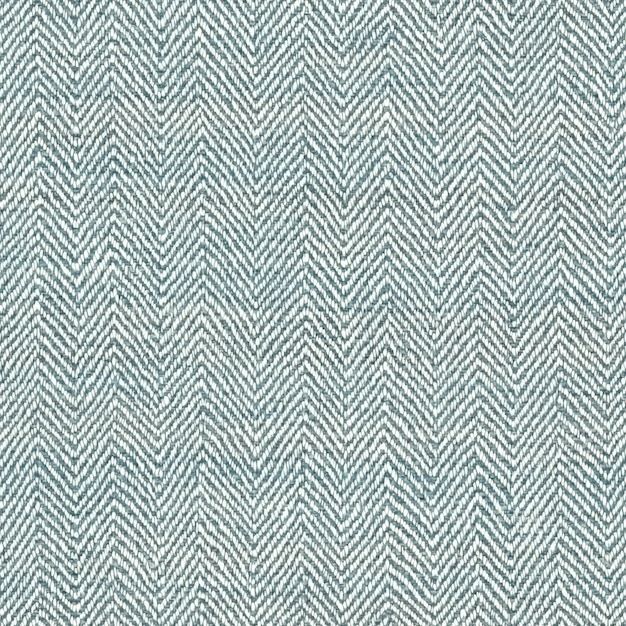
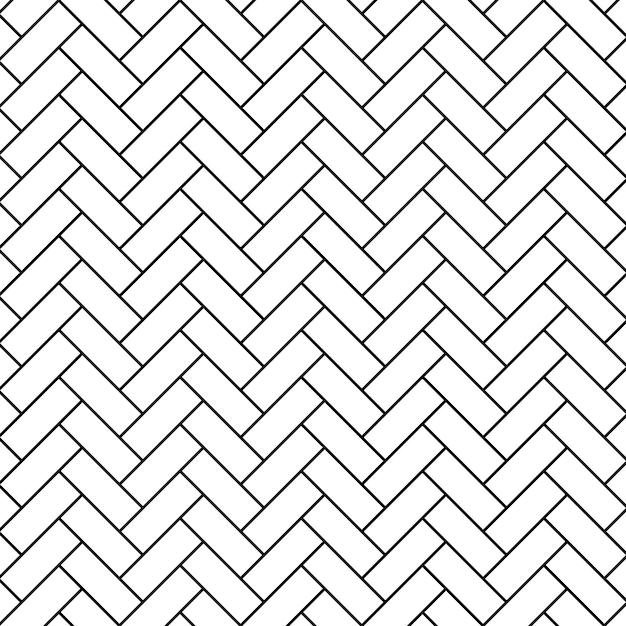
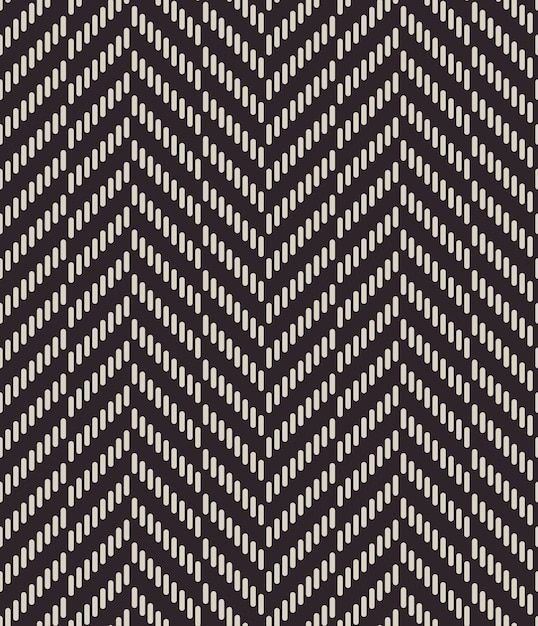
Herringbone is a structured repeat pattern in which rectangular (or parallelogram) blocks are arranged alternately at opposing diagonal angles, creating a continuous broken chevron or V-shaped surface composition. The pattern name derives from its resemblance to the spine and ribs of a herring fish (family Clupeidae). In textile construction, herringbone refers specifically to a twill weave variant where the diagonal direction of the twill alternates at regular intervals, producing the characteristic V-shaped surface texture. As a printed pattern, herringbone uses the same visual structure but is produced by surface printing rather than woven structure.
We use cookies to improve your experience and understand how PatternDesigners is used.
Herringbone is a structured repeat pattern in which rectangular (or parallelogram) blocks are arranged alternately at opposing diagonal angles, creating a continuous broken chevron or V-shaped surface composition. The pattern name derives from its resemblance to the spine and ribs of a herring fish (family Clupeidae). In textile construction, herringbone refers specifically to a twill weave variant where the diagonal direction of the twill alternates at regular intervals, producing the characteristic V-shaped surface texture. As a printed pattern, herringbone uses the same visual structure but is produced by surface printing rather than woven structure.
The herringbone pattern creates a strong directional visual rhythm - the alternating blocks produce a series of V-shapes or interlocked Vs running across the surface. The degree of visual contrast depends on the colour treatment: high-contrast two-tone herringbone (typically dark/light or colour/neutral) reads as bold and graphic; low-contrast or tonal herringbone (where the two colours are close in value) reads as a subtle texture. The wallpaper group classification for herringbone is pgg symmetry - it has glide reflection symmetry in two directions but no mirror symmetry. Mathematically, herringbone is topologically identical to a hexagonal tiling.
Herringbone blocks are rectangles or parallelograms with an edge length ratio of 2:1 or 3:1 (length to width). The blocks are set alternately at 45° angles - one set running northeast-to-southwest, the adjacent set running northwest-to-southeast - creating the zigzag composition. In flooring and tiling applications, herringbone and the closely related chevron pattern are the two dominant directional laying patterns for rectangular materials (brick, parquet, tile). The distinction between herringbone and chevron is structural: in herringbone, the ends of the rectangles are cut at 90° (producing a stepwise join); in chevron, the ends are cut at 45° (producing a perfect V join).
Herringbone is a structural/geometric pattern - its visual element is the repeated V or zigzag form created by the block arrangement. Design variation comes from:
Traditional textile herringbone uses the natural colour range of wool and tweed - charcoal/grey, navy/cream, black/white, and earthy tweedy colour combinations. Two-tone herringbone in high contrast is the most commercially recognisable format. Contemporary fashion and interior design also use multi-colour herringbone (multiple block colours rotating through the repeat) and single-colour embossed or tonal herringbone (where the pattern reads as surface texture rather than colour contrast).
Herringbone structural patterns in hard materials have ancient origins - Egyptian floor matting using herringbone weave-like arrangements has been documented. European examples in stone paving and floor mosaic are widespread: Salzburg and Budapest both have documented historic herringbone pavement examples. The Brooklyn Nets use a maple herringbone parquet floor at Barclays Center - a notable contemporary example of herringbone in a large public interior. In clothing, herringbone twill has been standard in British tailoring (suits, overcoats) from the 19th century. The Viyella tradition and Scottish/Irish woollen mills are closely associated with herringbone textile production. In flooring and tile, herringbone has been commercially dominant as a prestige installation pattern from the Victorian era through to contemporary interior design.
Herringbone is a structured repeat pattern in which rectangular (or parallelogram) blocks are arranged alternately at opposing diagonal angles, creating a continuous broken chevron or V-shaped surface composition. The pattern name derives from its resemblance to the spine and ribs of a herring fish (family Clupeidae).
The herringbone pattern creates a strong directional visual rhythm - the alternating blocks produce a series of V-shapes or interlocked Vs running across the surface.
Geometric
Herringbone blocks are rectangles or parallelograms with an edge length ratio of 2:1 or 3:1 (length to width). The blocks are set alternately at 45° angles - one set running northeast-to-southwest, the adjacent set running northwest-to-southeast - creating the zigzag composition.
Herringbone is a structural/geometric pattern - its visual element is the repeated V or zigzag form created by the block arrangement.
Traditional textile herringbone uses the natural colour range of wool and tweed - charcoal/grey, navy/cream, black/white, and earthy tweedy colour combinations. Two-tone herringbone in high contrast is the most commercially recognisable format.
Herringbone structural patterns in hard materials have ancient origins - Egyptian floor matting using herringbone weave-like arrangements has been documented. European examples in stone paving and floor mosaic are widespread: Salzburg and Budapest both have documented historic herringbone pavement examples.
Chevron Pattern, Houndstooth Pattern, Geometric Pattern, Zigzag Pattern, and Plaid Pattern