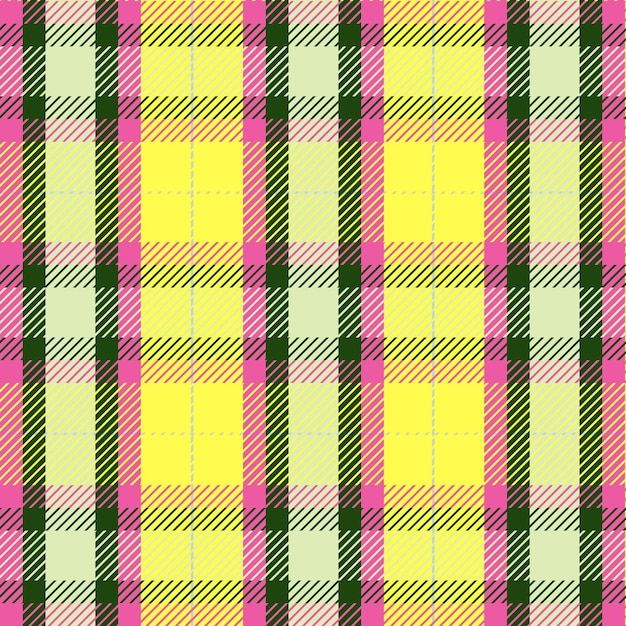
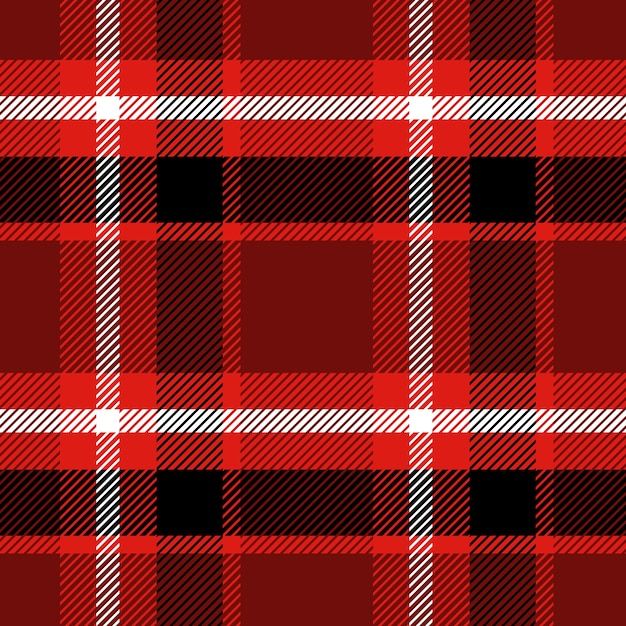
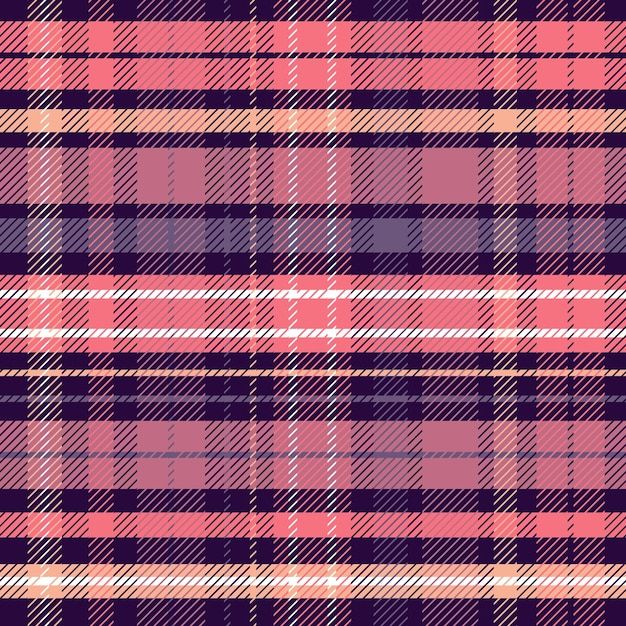
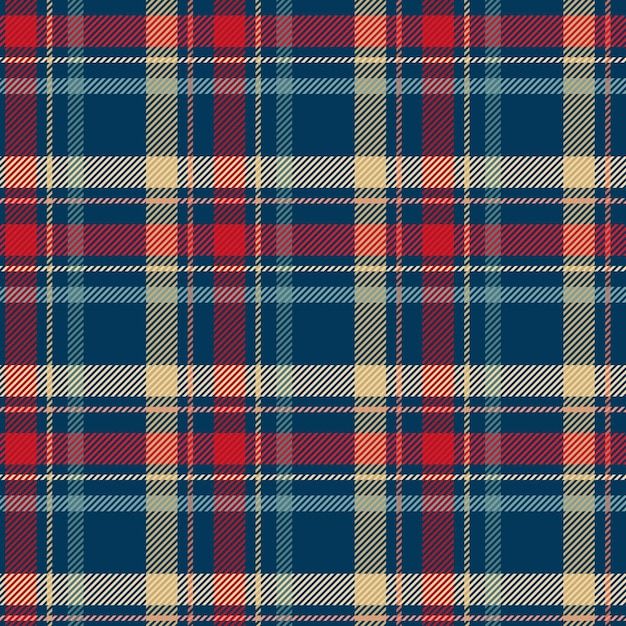
Plaid is a surface pattern consisting of horizontal and vertical stripes crossing at right angles to form a grid of coloured boxes. The term is defined in textile design literature (Textile Designs by Susan Meller and Joost Elffers) as: "a box layout of stripes, usually horizontal and vertical, crossing at right angles." In woven fabric, the plaid pattern is determined by the warp layout (the colours of threads running lengthwise) and the weft layout (the colours of threads running crosswise) - the warp and weft together generate the characteristic colour combinations and crossing effects. Plaid is related to but broader than Check Pattern (which uses equal-width bands) and specifically includes Tartan (the Scottish clan-specific colour-and-sett system) as its most historically significant sub-type. In print design, the plaid structure can be freely varied without the loom constraints of woven production.
We use cookies to improve your experience and understand how PatternDesigners is used.
Plaid is a surface pattern consisting of horizontal and vertical stripes crossing at right angles to form a grid of coloured boxes. The term is defined in textile design literature (Textile Designs by Susan Meller and Joost Elffers) as: "a box layout of stripes, usually horizontal and vertical, crossing at right angles." In woven fabric, the plaid pattern is determined by the warp layout (the colours of threads running lengthwise) and the weft layout (the colours of threads running crosswise) - the warp and weft together generate the characteristic colour combinations and crossing effects. Plaid is related to but broader than Check Pattern (which uses equal-width bands) and specifically includes Tartan (the Scottish clan-specific colour-and-sett system) as its most historically significant sub-type. In print design, the plaid structure can be freely varied without the loom constraints of woven production.
A plaid pattern reads as a regular or semi-regular grid of coloured rectangles or squares formed by the intersection of horizontal and vertical bands. The crossing points where warp and weft colours overlap create mixed-tone areas - a standard feature of woven plaids that is also reproduced in printed versions using overprinting or blended colour treatment. The overall composition is typically one of strong directional rhythm and colour variety within a structured grid. Scale ranges from fine glen plaid (small, dense crossing) to bold overcheck (large, widely-spaced crossing bands).
In woven construction, the plaid pattern structure is determined by:
In print design, the plaid grid is reproduced as a flat or layered print - the designer is free to specify any stripe widths, colour combinations, and crossing treatments without loom constraints.
Key structural terms:
Plaid is structural - it has no figurative motif content. The visual elements are entirely composed of stripe bands and their crossing intersections. Design variation comes from:
Plaid colour range is unrestricted, but key commercial conventions include:
The oldest known plaid-construction fabric was buried with the "Cherchen Man" - a mummified individual found in western China and dated approximately 3,000 years ago, demonstrating that plaid-structure woven fabric predates Scottish tartan by millennia. Scottish tartan - the most historically specific and culturally significant plaid system - is a precisely coded system of thread colours and proportions (the sett) that identifies individual Highland clans. The commercial codification of clan tartans accelerated significantly from the early 19th century, particularly following Sir Walter Scott's organisation of the visit of King George IV to Scotland in 1822, which generated enormous interest in Scottish clan culture and Highland dress. In contemporary surface pattern design, print-version plaid allows pattern designers to recreate and reinterpret woven plaid structures without loom limitations - varying stripe width, colour, and crossing effects freely for fashion print, wallpaper, and home textile applications.
Plaid is a surface pattern consisting of horizontal and vertical stripes crossing at right angles to form a grid of coloured boxes.
A plaid pattern reads as a regular or semi-regular grid of coloured rectangles or squares formed by the intersection of horizontal and vertical bands.
Geometric
Check
Plaid is structural - it has no figurative motif content. The visual elements are entirely composed of stripe bands and their crossing intersections.
Tartan
The oldest known plaid-construction fabric was buried with the "Cherchen Man" - a mummified individual found in western China and dated approximately 3,000 years ago, demonstrating that plaid-structure woven fabric predates Scottish tartan by millennia.
Check Pattern, Tartan Pattern, Houndstooth Pattern, Herringbone Pattern, Stripe Pattern, and Madras Pattern