Types
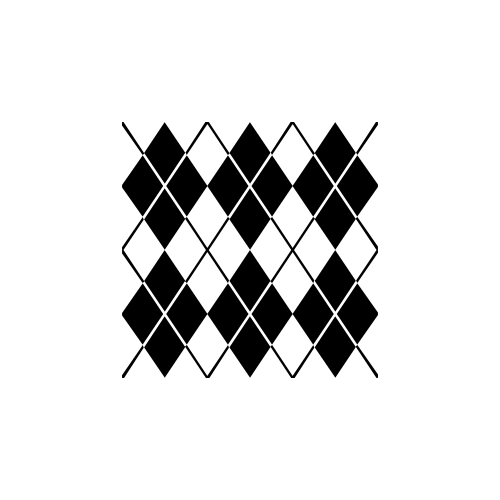 0Argyle is one of the most commercially durable geometric patterns in British textile design. It is foundational to sock, jumper, and golf knitwear, and cycles regularly through fashion and sports apparel. The pattern has strong heritage associations - Scotland, golf culture, preppy dress - but adapts readily to contemporary colourways and scaled-up fashion interpretations.
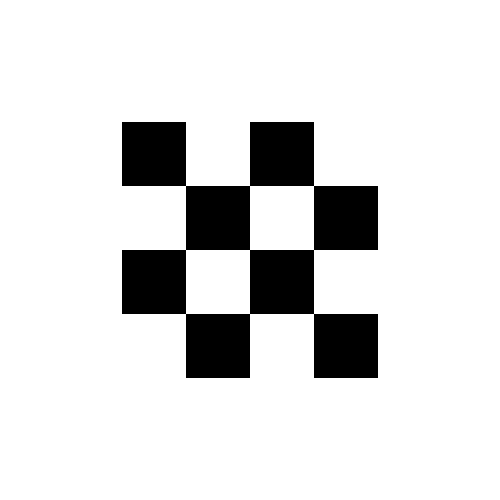 0Check is a fundamental geometric structure in textiles and surface design. Its simplicity - a regular grid of alternating colour squares - makes it infinitely adaptable: the same underlying structure produces tartan, gingham, buffalo check, windowpane plaid, tattersall, and shepherd's check by varying scale, colour count, and line weight. Check patterns are commercially active across fashion, accessories, homeware, and stationery, carrying market associations ranging from rural/preppy (gingham, tattersall) through luxury heritage (Burberry, Louis Vuitton Damier) to streetwear and subculture references (ska music, keffiyeh).
 0Christmas pattern is one of the most commercially reliable seasonal pattern categories in surface design. The seasonal and gift-driven purchasing cycle creates consistent demand for Christmas pattern across wrapping paper, fabric, stationery, homeware, and holiday apparel - with new designs produced annually by retailers and pattern designers. The category is characterised by a stable core motif vocabulary with significant variation in style, from traditional and heritage treatments through to contemporary, minimal, and novelty approaches.
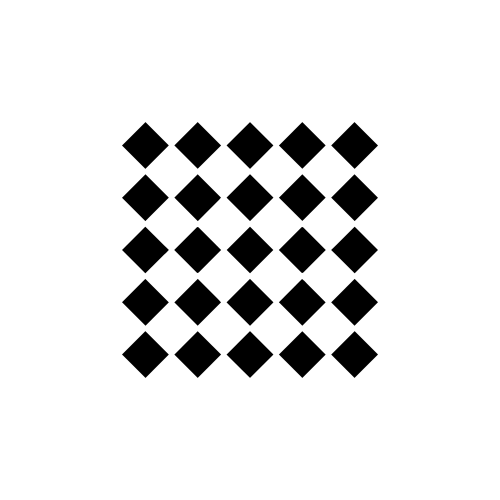 0Diamond pattern is a structural term in surface pattern design: it describes any composition in which the primary visual elements are aligned along 45° diagonal axes rather than horizontal and vertical ones. The diamond (rotated square) is among the most versatile geometric forms in surface design - equally present in architectural stonework, woven textiles, stained glass, playing cards, and fashion print. As a structural category it encompasses both the simple single-colour diamond grid and complex multicolour arrangements such as argyle, harlequin, and lozenge compositions.
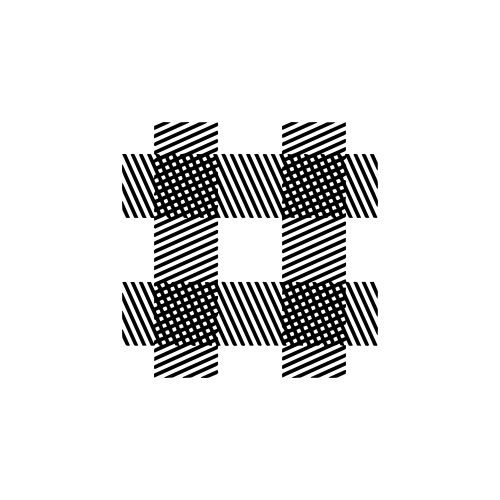 0Gingham is a woven fabric (not a printed motif) - a medium-weight, balanced plain weave typically woven from dyed cotton or cotton-blend yarn in a bright colour against white, using carded, medium, or fine yarns. It is now most closely identified with its checked pattern, though it was originally a striped fabric before checked variants became dominant. Gingham is also known as Vichy check (English) and estampado vichy / cuadro vichy (Spanish).
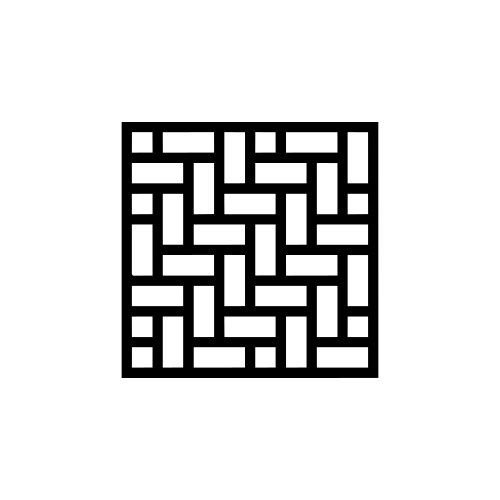 0Herringbone is a structured repeat pattern in which rectangular (or parallelogram) blocks are arranged alternately at opposing diagonal angles, creating a continuous broken chevron or V-shaped surface composition. The pattern name derives from its resemblance to the spine and ribs of a herring fish (family Clupeidae). In textile construction, herringbone refers specifically to a twill weave variant where the diagonal direction of the twill alternates at regular intervals, producing the characteristic V-shaped surface texture. As a printed pattern, herringbone uses the same visual structure but is produced by surface printing rather than woven structure.
 0Houndstooth is a duotone geometric pattern in which alternating light and dark check shapes produce a distinctive broken-check or jagged tooth-like surface. Each repeat unit consists of a solid-coloured shape and a diagonally-striped or broken version of the same shape in contrasting colour. The traditional colourway is black and white, but two-tone combinations in any colours are commercial variants. The pattern name dates to 1936 and has no earlier documented recorded use. Houndstooth is one of the most commercially stable and recognised pattern types in fashion - its associations with British tailoring, tweed, and luxury fashion have kept it commercially active for nearly a century.
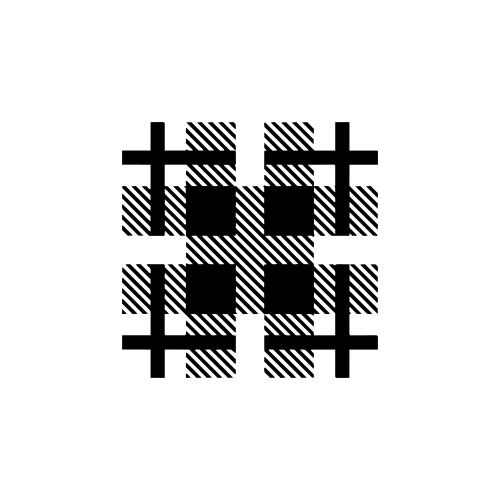 0Madras is both a fabric and a pattern: a lightweight, breathable 100% cotton textile woven from short-staple cotton fibres, and the bold intersecting check-and-stripe pattern woven into its structure. Authentic Madras is handwoven, evidenced by characteristic slubs - irregular thick spots in the yarn caused by the short, uncombable cotton fibre - and by the slight variations in each piece that result from individual hand-weaving. The pattern takes its name from the former name of Chennai, the city in Tamil Nadu, South India, where the fabric originated. It is considered the definitive summer plaid: lighter weight and more breathable than traditional woollen tartan or heavier cotton checks, and distinguished by its use of brighter, more tropical colours.
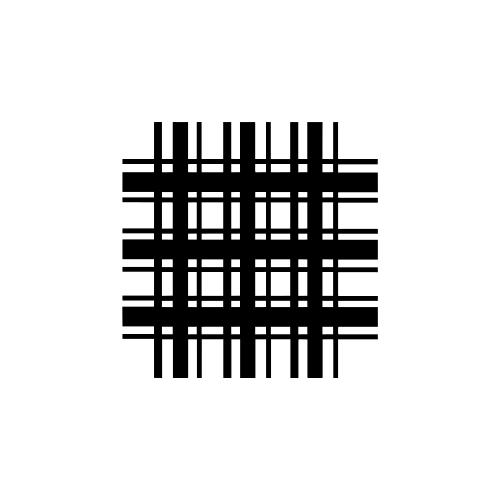 0Plaid is a surface pattern consisting of horizontal and vertical stripes crossing at right angles to form a grid of coloured boxes. The term is defined in textile design literature (Textile Designs by Susan Meller and Joost Elffers) as: "a box layout of stripes, usually horizontal and vertical, crossing at right angles." In woven fabric, the plaid pattern is determined by the warp layout (the colours of threads running lengthwise) and the weft layout (the colours of threads running crosswise) - the warp and weft together generate the characteristic colour combinations and crossing effects. Plaid is related to but broader than Check Pattern (which uses equal-width bands) and specifically includes Tartan (the Scottish clan-specific colour-and-sett system) as its most historically significant sub-type. In print design, the plaid structure can be freely varied without the loom constraints of woven production.
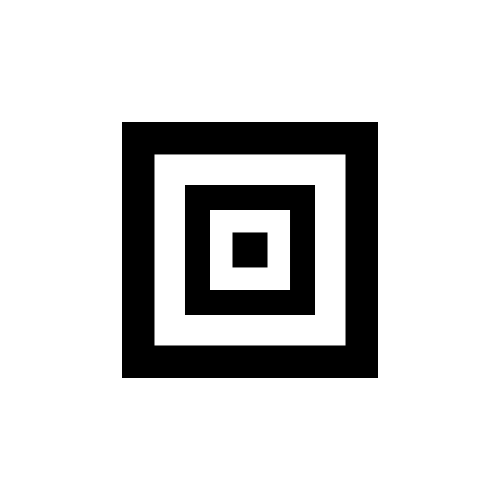 0Square-based patterns exploit the square's perfect equality of sides and right-angle corners to create patterns with strong structural clarity. The square is the basis of the most fundamental repeat structure in surface pattern (the block repeat), and as a motif it underpins an enormous range of well-established commercial pattern traditions: checkerboards, tartan checks, gingham, tattersall, windowpane, and others. It also forms the structural unit of granny square crochet textile patterning and tessellating tile designs.
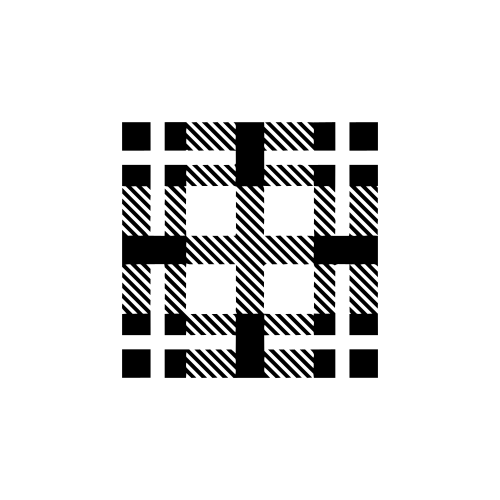 0Tartan is one of the most historically specific and culturally regulated pattern types in surface design. Defined by the crossing of coloured warp and weft threads in a 2/2 twill weave, it creates a distinctive appearance where the intersecting bands produce a predictable colour mixing effect at their crossing points. Originally a woven cloth construction, tartan is now reproduced in print form across fashion, homeware, stationery, and licensing. The pattern carries strong Scottish cultural associations, is formally registered, and has become one of the most globally recognised heritage pattern categories.
You've reached the end
11 Types