Tartan is one of the most historically specific and culturally regulated pattern types in surface design. Defined by the crossing of coloured warp and weft threads in a 2/2 twill weave, it creates a distinctive appearance where the intersecting bands produce a predictable colour mixing effect at their crossing points. Originally a woven cloth construction, tartan is now reproduced in print form across fashion, homeware, stationery, and licensing. The pattern carries strong Scottish cultural associations, is formally registered, and has become one of the most globally recognised heritage pattern categories.
We use cookies to improve your experience and understand how PatternDesigners is used.
Tartan is one of the most historically specific and culturally regulated pattern types in surface design. Defined by the crossing of coloured warp and weft threads in a 2/2 twill weave, it creates a distinctive appearance where the intersecting bands produce a predictable colour mixing effect at their crossing points. Originally a woven cloth construction, tartan is now reproduced in print form across fashion, homeware, stationery, and licensing. The pattern carries strong Scottish cultural associations, is formally registered, and has become one of the most globally recognised heritage pattern categories.
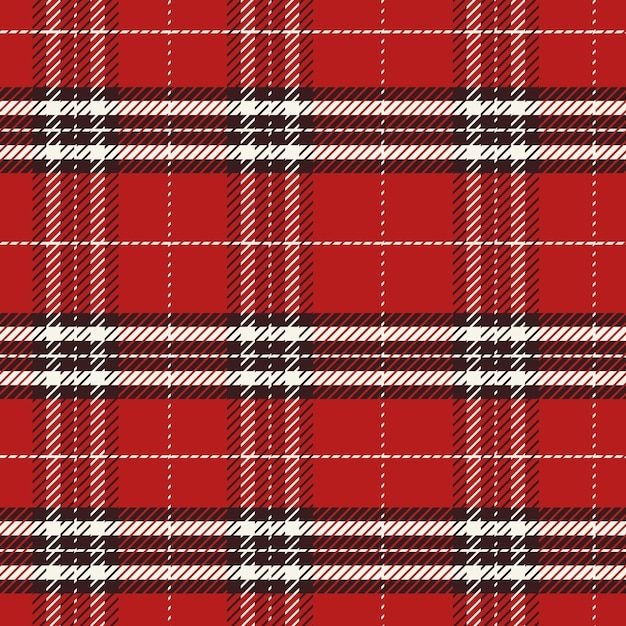
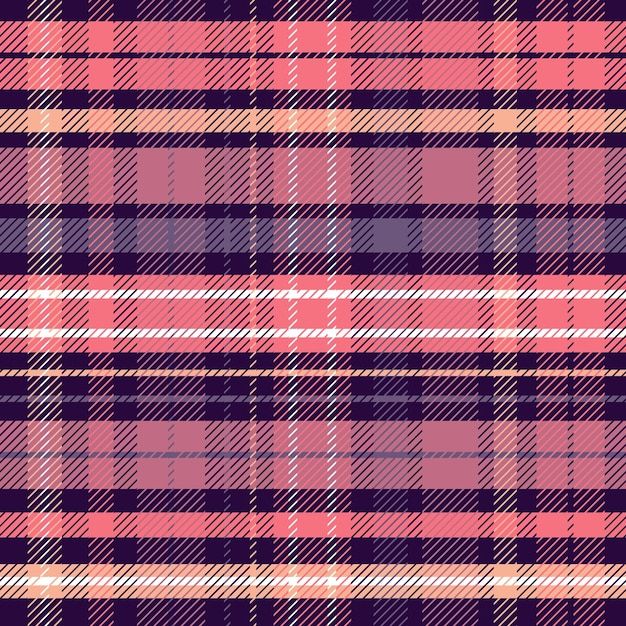
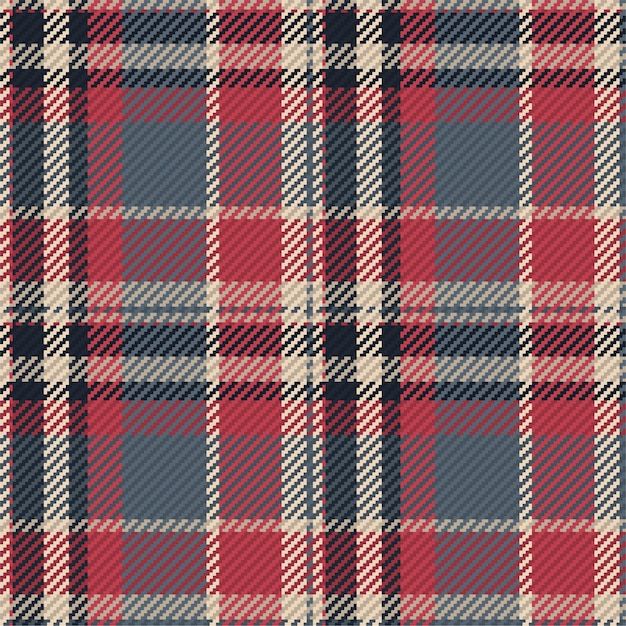
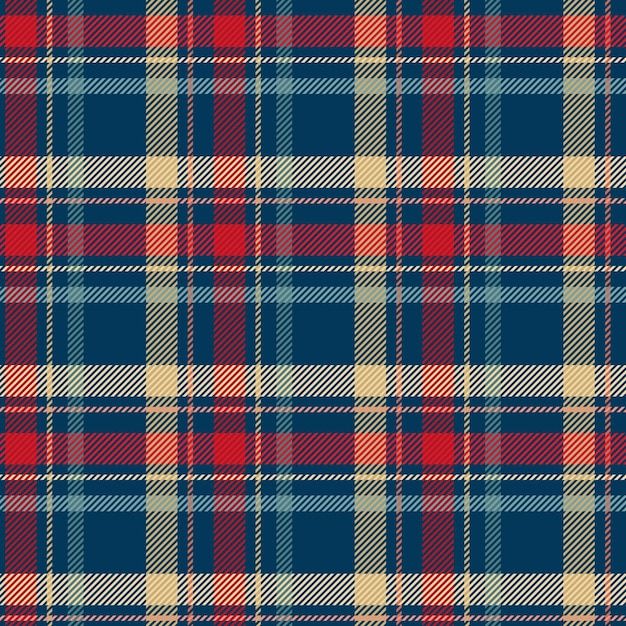
Tartan is immediately recognisable from its grid of crossing coloured bands. The key structural characteristics:
The visual effect at thread crossings in woven tartan is a colour blend produced by the 2/2 twill - each crossing shows a mix of the two band colours. In printed versions this effect must be simulated.
Tartan's structure is defined mathematically by its thread count - the number of threads of each colour in the sett sequence. The sett is reflective (palindromic): it reads the same forwards and backwards from a pivot point, creating the bilateral symmetry that characterises all traditional tartan designs. Simplified, regular tartan (equal bands of two or three colours) is widely used as a commercial check pattern in fashion. Complex multi-colour tartans with many thin and thick bands require higher production precision.
Tartan itself is entirely structural - it carries no figurative motifs. The design elements are colour sequence, band width proportion, and the contrast between dominant bands and thin over-check lines. In applied contexts, tartan cloth is sometimes combined with figurative embellishment (embroidery, appliqué), but the tartan structure itself is abstract.
Traditional tartan palettes are described in three historical dye conventions:
In contemporary fashion and home design, tartan is used in both traditional palettes (heritage positioning) and recoloured in non-traditional palettes (fashion-forward or seasonal applications). Preppy, Ivy League, and punk aesthetics have all adopted and reinterpreted tartan at different points in the 20th century.
The word tartan derives from the Scottish Gaelic breacan (variegated). The basic structure of crossed coloured bands in woven cloth is ancient, but the specifically Scottish Highland tartan tradition developed from the 16th century onward. The Dress Act of 1746 - passed after the Jacobite Rising - banned Highland dress including tartan for approximately two generations, suppressing the tradition. The 19th-century Highland Revival, driven in part by the romantic nationalism of Sir Walter Scott and the patronage of King George IV's visit to Scotland in 1822, led to the systematic codification of clan tartans and a global popularisation of the pattern. The Scottish Register of Tartans now holds thousands of registered designs. In North America, tartan is commonly referred to as "plaid" - a term that in Scotland refers to the garment, not the pattern.
Tartan is one of the most historically specific and culturally regulated pattern types in surface design. Defined by the crossing of coloured warp and weft threads in a 2/2 twill weave, it creates a distinctive appearance where the intersecting bands produce a predictable colour mixing effect at their crossing points.
Tartan is immediately recognisable from its grid of crossing coloured bands.
Geometric
Tartan's structure is defined mathematically by its thread count - the number of threads of each colour in the sett sequence. The sett is reflective (palindromic): it reads the same forwards and backwards from a pivot point, creating the bilateral symmetry that characterises all traditional tartan designs.
Tartan itself is entirely structural - it carries no figurative motifs. The design elements are colour sequence, band width proportion, and the contrast between dominant bands and thin over-check lines.
Tartan
The word tartan derives from the Scottish Gaelic breacan (variegated). The basic structure of crossed coloured bands in woven cloth is ancient, but the specifically Scottish Highland tartan tradition developed from the 16th century onward.