Types
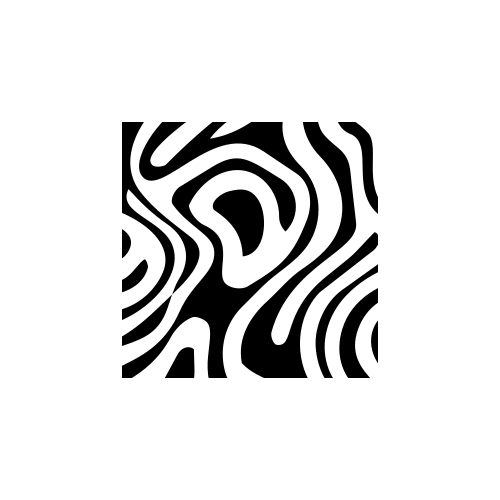 14Abstract pattern spans from rigorous geometric systems to spontaneous painterly marks. In surface pattern design, it is one of the broadest commercially active categories, encompassing geometric abstraction, lyrical/painterly abstraction, op art, colour field, and hard-edge minimalism. Because abstract pattern carries no cultural or representational specificity, it is among the most broadly licensable pattern types across markets.
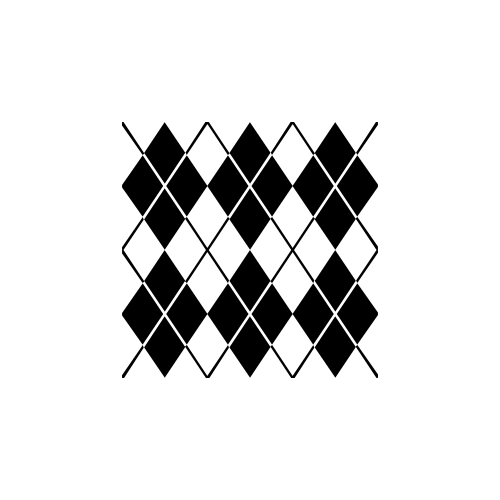 0Argyle is one of the most commercially durable geometric patterns in British textile design. It is foundational to sock, jumper, and golf knitwear, and cycles regularly through fashion and sports apparel. The pattern has strong heritage associations - Scotland, golf culture, preppy dress - but adapts readily to contemporary colourways and scaled-up fashion interpretations.
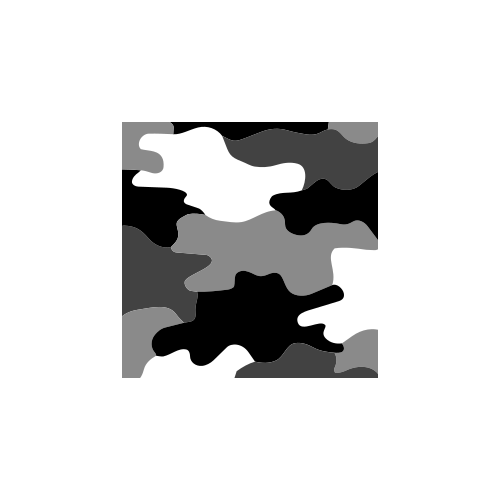 2Army pattern (camouflage) originated as a military concealment technology and has become one of the most commercially active print categories in streetwear, fashion, and licensed product design. The pattern carries persistent cultural associations with military identity, subcultural rebellion, and anti-establishment positioning. It cycles reliably through mainstream fashion while maintaining a permanent baseline presence in workwear, sportswear, and streetwear.
 0The bullseye is one of the simplest geometric pattern structures: a filled central circle surrounded by successive alternating rings. The result is a form with perfect radial symmetry that, under certain colour conditions, creates strong optical illusions - depth, pulsation, or apparent movement. Commercially positioned within the graphic, bold, and Op Art aesthetic registers.
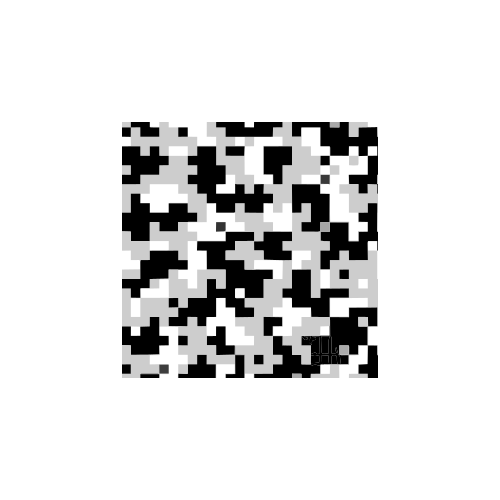 0Camouflage pattern entered surface pattern design from military application. In its civilian form it functions as a graphic aesthetic rather than a functional concealment system - the pattern carries connotations of military history, outdoor/utility culture, streetwear, and counter-cultural fashion. It is commercially active across casual apparel, accessories, homeware, and stationery, and has undergone repeated fashion revivals since the 1970s. The source confirms directly: "patterns derived from military camouflage are frequently used in fashion clothing."
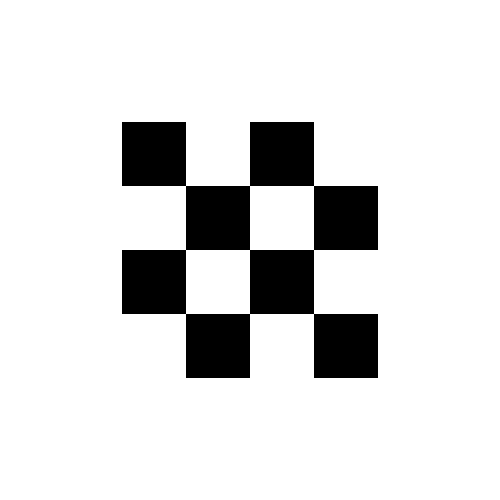 0Check is a fundamental geometric structure in textiles and surface design. Its simplicity - a regular grid of alternating colour squares - makes it infinitely adaptable: the same underlying structure produces tartan, gingham, buffalo check, windowpane plaid, tattersall, and shepherd's check by varying scale, colour count, and line weight. Check patterns are commercially active across fashion, accessories, homeware, and stationery, carrying market associations ranging from rural/preppy (gingham, tattersall) through luxury heritage (Burberry, Louis Vuitton Damier) to streetwear and subculture references (ska music, keffiyeh).
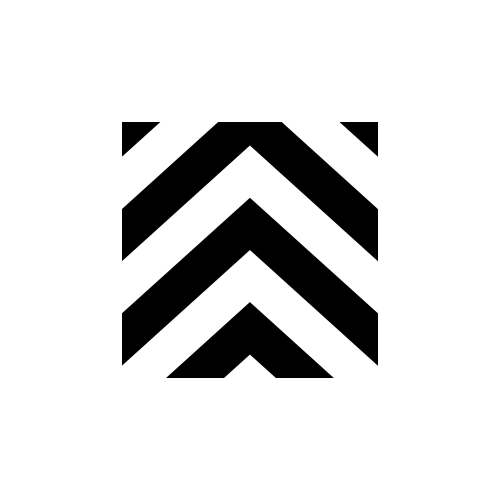 0A chevron is a V-shaped mark or symbol, often shown inverted (point down). Historically the term refers to a fret in architecture, a badge or insignia denoting military or police rank, and a heraldic ordinary - one of the simple geometric figures forming the basis of many coats of arms. As a surface pattern motif, the chevron's appeal lies in this same simple, high-contrast V-shape geometry, repeated to form a zigzag.
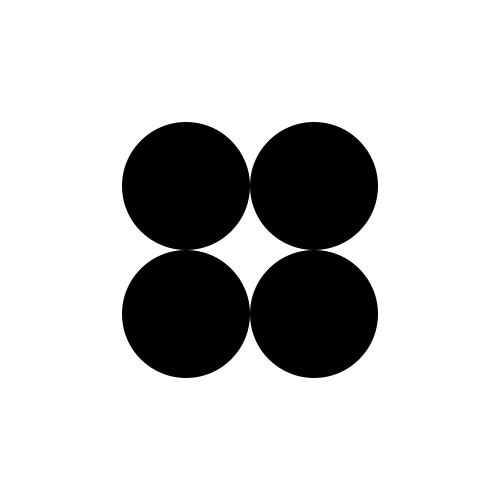 0Circle pattern is a broad geometric category in surface design, encompassing everything from the commercial simplicity of the polka dot to the sacred geometry associations of the Flower of Life overlapping-circles grid. The circle as a design element is commercially universal - it appears in children's textiles, modernist fashion prints, home decor, jewellery, and stationery. The overlapping circles grid specifically carries documented use from ancient Assyrian decoration through Roman Empire architecture, Islamic geometric art, and Gothic stonework - giving it both deep historical roots and active contemporary market relevance.
 0Collage as a surface pattern approach is both a historical fine art lineage and a current digital workflow. In physical practice it involves cutting, tearing, and combining paper, photographs, fabric, or found material into a compositional surface. In digital design the same visual logic applies: layering scanned textures, photographs, hand-drawn elements, and type into a single assembled image. Both versions translate into repeating surface patterns with a characteristically layered, eclectic visual texture.
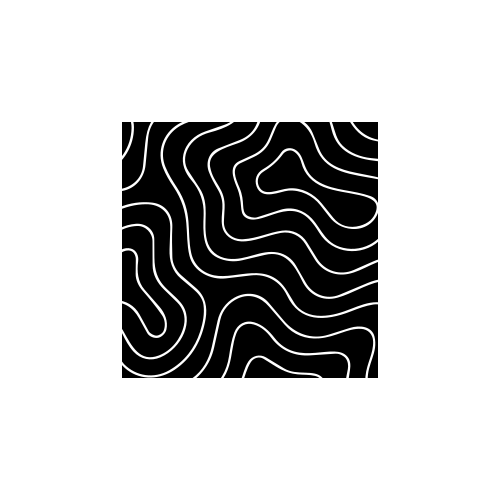 0Contour patterns draw from two distinct visual traditions sharing the same vocabulary of lines: cartographic contour mapping (where curved parallel lines reveal terrain relief) and contour drawing in fine art (where line defines the mass and edges of a subject without shading). Both traditions translate into surface pattern design as linear compositions with a characteristic structural and depth-suggesting aesthetic.
 0Diagonal stripes are a foundational stripe variant defined by their angle rather than their colour, width, or spacing. The same striping logic as horizontal and vertical stripes applies - repeating parallel bands of colour - but oriented at a bias, typically 45°. The result is a visually dynamic pattern with an inherent sense of motion and visual flow. As a structure, diagonal stripes are highly versatile: width, colour density, and angle variation each produce substantially different aesthetic registers.
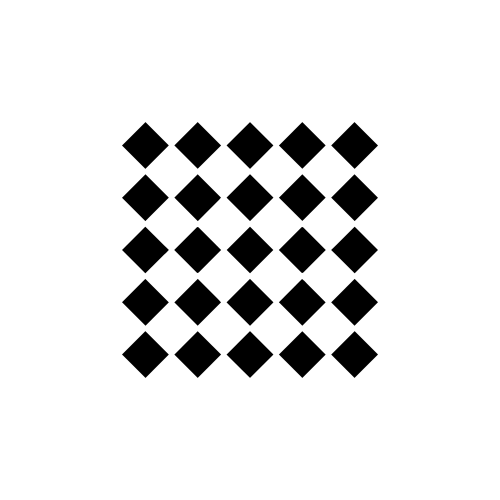 0Diamond pattern is a structural term in surface pattern design: it describes any composition in which the primary visual elements are aligned along 45° diagonal axes rather than horizontal and vertical ones. The diamond (rotated square) is among the most versatile geometric forms in surface design - equally present in architectural stonework, woven textiles, stained glass, playing cards, and fashion print. As a structural category it encompasses both the simple single-colour diamond grid and complex multicolour arrangements such as argyle, harlequin, and lozenge compositions.
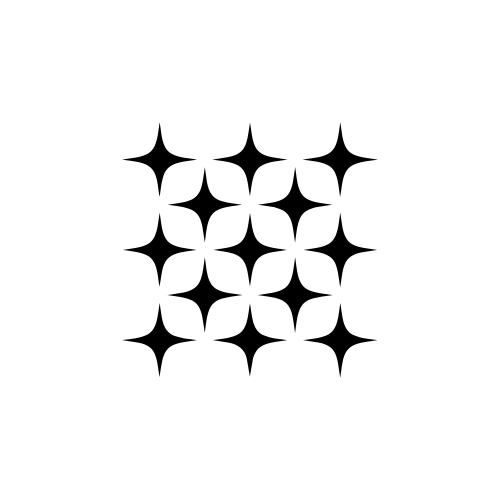 0The diaper pattern is defined by the regular repetition of a simple geometric unit - typically a diamond or lozenge - spaced evenly to create an unbroken field across the fabric. The pattern belongs to the damask family of woven cloth but is distinguished by the small scale of its repeat unit and the simplicity of its geometric form. It has been a consistent presence in European and South Asian textile traditions for centuries, produced in silk, linen, and cotton across distinct cultural weaving practices.
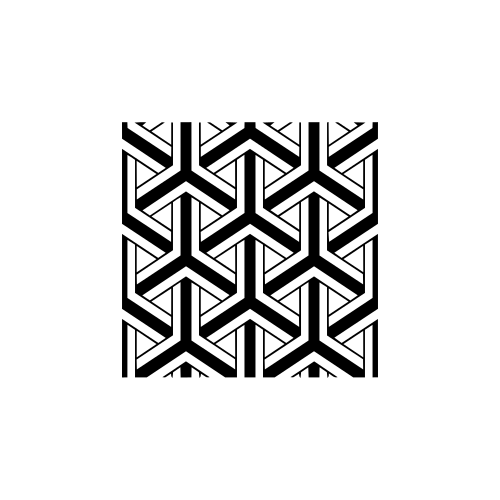 0Geometric pattern uses mathematical forms - triangles, squares, hexagons, circles, diamonds, and their combinations - as the primary structural and visual element. It is among the oldest and most widespread pattern categories in human decorative art, with major traditions in Islamic art, pre-Columbian textile design, Japanese textile design, and European architectural ornament. In contemporary surface pattern design, geometric pattern spans the full spectrum from rigorous mathematical tiling systems to loose, hand-drawn geometric aesthetics, and is commercially active across all market sectors.
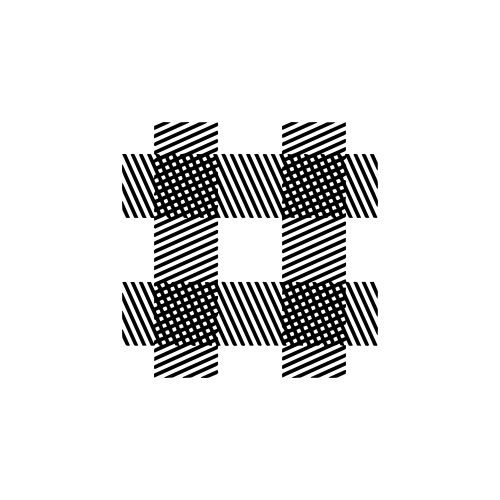 0Gingham is a woven fabric (not a printed motif) - a medium-weight, balanced plain weave typically woven from dyed cotton or cotton-blend yarn in a bright colour against white, using carded, medium, or fine yarns. It is now most closely identified with its checked pattern, though it was originally a striped fabric before checked variants became dominant. Gingham is also known as Vichy check (English) and estampado vichy / cuadro vichy (Spanish).
 0Graphic pattern refers to surface designs with a strong visual clarity derived from graphic design principles: flat colour, high contrast, clean edges, and bold compositional structure. It is a stylistic descriptor rather than a motif category - a floral, geometric, or abstract pattern can all be "graphic" in treatment. In the surface pattern industry, "graphic pattern" commonly signals a design suitable for commercial print applications where clarity of reproduction and visual impact at scale are priorities. It overlaps with Geometric Pattern and Abstract Pattern but is defined by its design approach rather than its motif content.
 0The harlequin pattern is composed of repeating diamonds (or elongated diamond shapes standing on point) in alternating contrasting colours or values. Its origin lies specifically in the costume of the Harlequin (Arlecchino) character from the Italian Commedia dell'arte tradition, whose distinctive patchwork of multi-coloured diamond or lozenge-shaped fabric became one of the most recognised costume motifs in European popular culture. The pattern is a subset of the broader Diamond Pattern and Check Pattern family, distinguished by its theatrical origin and its characteristic use of high contrast, multiple colours, or bold two-tone compositions.
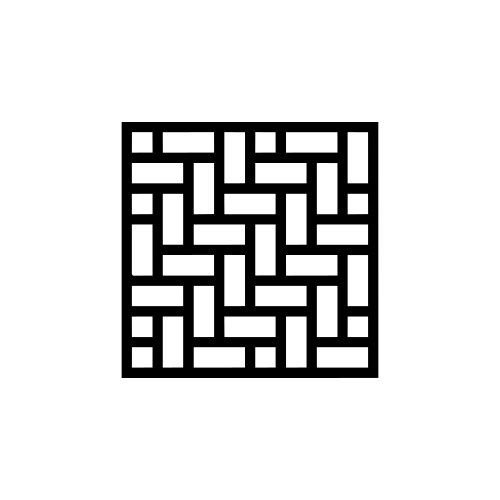 0Herringbone is a structured repeat pattern in which rectangular (or parallelogram) blocks are arranged alternately at opposing diagonal angles, creating a continuous broken chevron or V-shaped surface composition. The pattern name derives from its resemblance to the spine and ribs of a herring fish (family Clupeidae). In textile construction, herringbone refers specifically to a twill weave variant where the diagonal direction of the twill alternates at regular intervals, producing the characteristic V-shaped surface texture. As a printed pattern, herringbone uses the same visual structure but is produced by surface printing rather than woven structure.
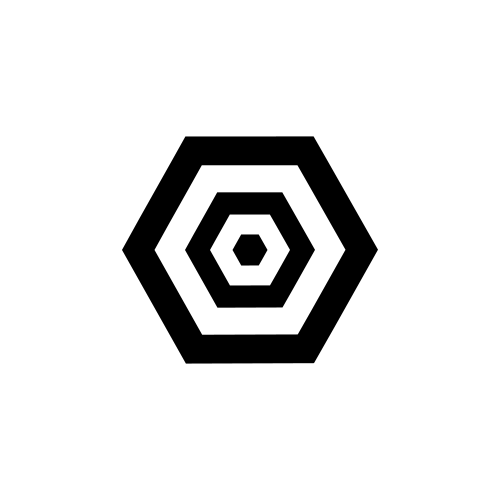 0The hexagon pattern is built from regular hexagons - six-sided polygons with equal sides and 120-degree internal angles. Three hexagons meet at each vertex, which accounts for the full 360 degrees and produces a mathematically stable, gapless tessellation. In surface pattern design, this structure appears in two primary forms: the pure geometric grid, and the nature-referencing honeycomb, where the hexagonal cells evoke beeswax construction. The hexagonal tessellation has mathematical properties that make it widely useful: it covers a plane surface with the least total perimeter for a given area (the honeycomb theorem), and circles inscribed within hexagonal cells achieve the densest possible two-dimensional packing. These structural efficiencies have contributed to the form's persistence across many decorative and applied design traditions.
 0Houndstooth is a duotone geometric pattern in which alternating light and dark check shapes produce a distinctive broken-check or jagged tooth-like surface. Each repeat unit consists of a solid-coloured shape and a diagonally-striped or broken version of the same shape in contrasting colour. The traditional colourway is black and white, but two-tone combinations in any colours are commercial variants. The pattern name dates to 1936 and has no earlier documented recorded use. Houndstooth is one of the most commercially stable and recognised pattern types in fashion - its associations with British tailoring, tweed, and luxury fashion have kept it commercially active for nearly a century.
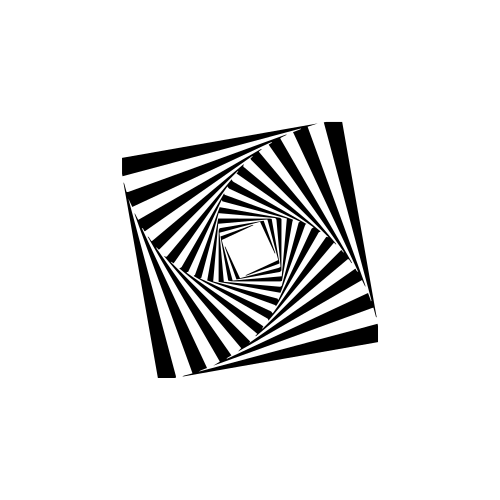 0Illusion patterns exploit the perceptual mechanisms of human vision. By carefully arranging shapes, contrasts, and line orientations, a designer can make a flat 2D surface appear three-dimensional, appear to be in motion, or appear to contain spatial depth. The technique is distinct from representational trompe l'oeil (painted imitation of objects) in that illusion patterns typically use abstract geometric forms rather than pictorial imagery. The commercial territory covers a range from bold Op Art-influenced fashion prints to subtle structural depth effects in wallpaper and interior textiles. The key technical elements are: strong tonal contrast (often black and white), precise geometric structure, and controlled spatial organisation.
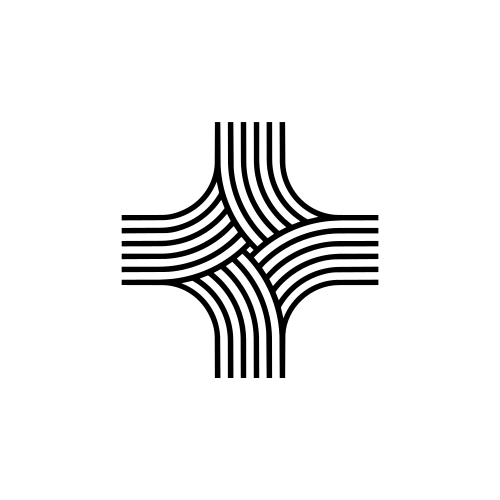 0Interlocking patterns are built on the principle that changing or removing one element disrupts the whole composition. Individual units - circles, squares, organic shapes, or custom forms - combine with their neighbour's negative space to produce a continuous, gap-free surface. The pattern depends on the designed relationship between every element rather than on any single isolated motif. This compositional principle is closely related to tessellation but extends beyond strict geometric tiling to include organic or custom-shaped elements that interlock through deliberate design. The result is a surface with no visible background: the entire field is occupied by the interlocking units.
 0A logo pattern (also called a brand pattern or monogram repeat) uses a company's logo, monogram, or other brand identifier as the primary repeating element in an all-over surface design. The most commercially established examples - Louis Vuitton's LV monogram, Burberry's chequered check, Gucci's GG pattern, and Adidas's three-stripe mark - demonstrate how a consistently applied repeat pattern can become a brand identity asset as powerful as the logo itself. In surface pattern design, logo patterns represent the intersection of graphic design, brand identity, and textile/product design, and are commercially relevant both as aspirational references for surface designers and as a category for designers working in brand identity and licensing.
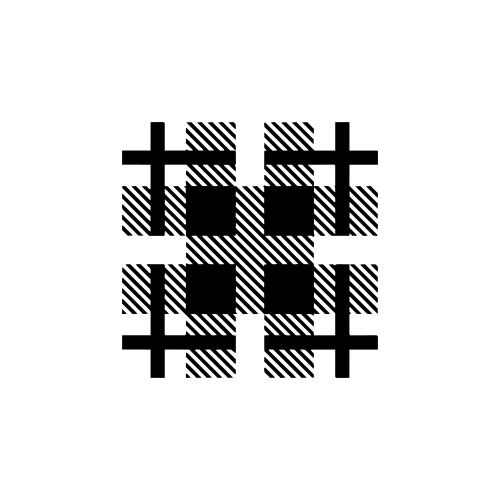 0Madras is both a fabric and a pattern: a lightweight, breathable 100% cotton textile woven from short-staple cotton fibres, and the bold intersecting check-and-stripe pattern woven into its structure. Authentic Madras is handwoven, evidenced by characteristic slubs - irregular thick spots in the yarn caused by the short, uncombable cotton fibre - and by the slight variations in each piece that result from individual hand-weaving. The pattern takes its name from the former name of Chennai, the city in Tamil Nadu, South India, where the fabric originated. It is considered the definitive summer plaid: lighter weight and more breathable than traditional woollen tartan or heavier cotton checks, and distinguished by its use of brighter, more tropical colours.
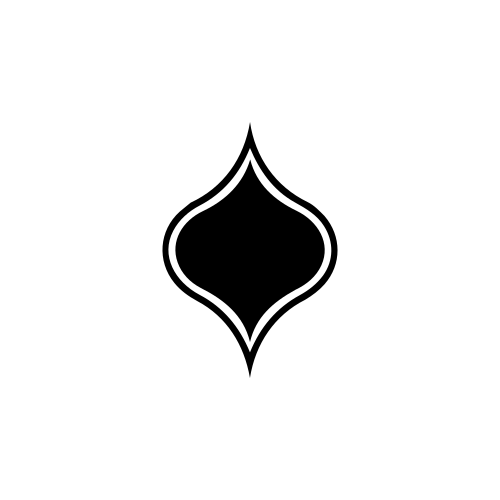 0The ogee is defined geometrically as a double curve in which a concave arc flows smoothly into a convex arc (or vice versa), forming an elongated S-shape. In surface pattern design, the ogee motif is deployed as a repeating unit that interlocks with its neighbours to cover a plane seamlessly - producing the characteristic field of pointed oval or onion-dome shapes. The ogee pattern appears in textiles as early as the 12th century and has been a continuous feature of decorative arts through the Gothic and Renaissance periods to the present day. It is commercially associated with wallpaper, damask fabric, furnishing textiles, and high-end interior design. The shape's elegant proportions and historical pedigree give it a luxury and heritage positioning across markets.
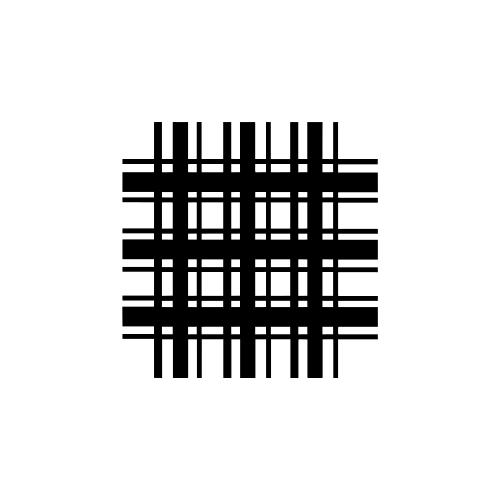 0Plaid is a surface pattern consisting of horizontal and vertical stripes crossing at right angles to form a grid of coloured boxes. The term is defined in textile design literature (Textile Designs by Susan Meller and Joost Elffers) as: "a box layout of stripes, usually horizontal and vertical, crossing at right angles." In woven fabric, the plaid pattern is determined by the warp layout (the colours of threads running lengthwise) and the weft layout (the colours of threads running crosswise) - the warp and weft together generate the characteristic colour combinations and crossing effects. Plaid is related to but broader than Check Pattern (which uses equal-width bands) and specifically includes Tartan (the Scottish clan-specific colour-and-sett system) as its most historically significant sub-type. In print design, the plaid structure can be freely varied without the loom constraints of woven production.
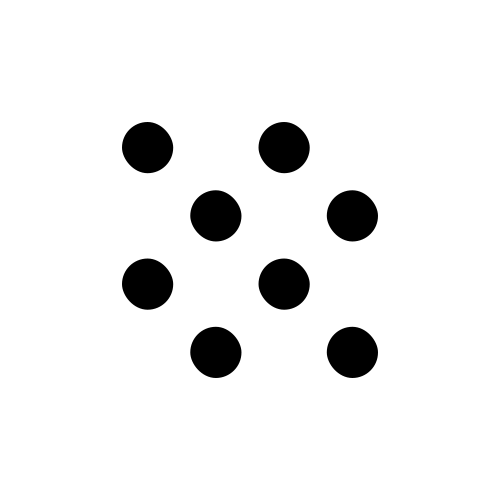 0The polka dot is defined by its simplicity: equal-diameter circles at regular intervals against a contrasting ground. The pattern depends entirely on the interplay of dot size, spacing, and colour contrast rather than any figurative detail. It reads clearly at multiple scales and translates across virtually every product category, from fashion and childrenswear to home textiles and stationery.
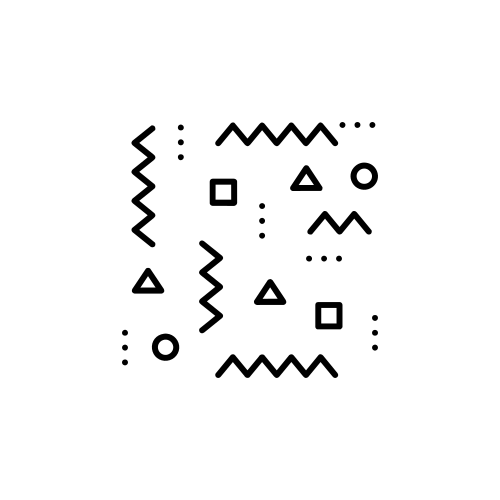 0Pop art as a pattern aesthetic borrows directly from the fine art movement that emerged in Britain and the United States in the 1950s and 1960s. It translates the movement's core visual strategies - advertising imagery, comic strip graphics, repeated consumer objects, mechanical print effects - into surface pattern. Pop art patterns are high-contrast, deliberately commercial, and intended to read as instantly recognisable graphic statements rather than decorative backgrounds.
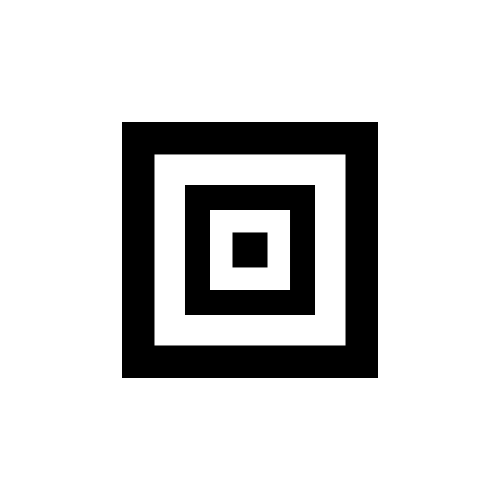 0Square-based patterns exploit the square's perfect equality of sides and right-angle corners to create patterns with strong structural clarity. The square is the basis of the most fundamental repeat structure in surface pattern (the block repeat), and as a motif it underpins an enormous range of well-established commercial pattern traditions: checkerboards, tartan checks, gingham, tattersall, windowpane, and others. It also forms the structural unit of granny square crochet textile patterning and tessellating tile designs.
 0The star is a radial geometric motif formed from a star polygon or polygonal compound, named for its resemblance to the diffraction spikes of astronomical stars. Stars appear across heraldry, religious iconography, flags, and badges, with different point-counts carrying distinct and often unrelated symbolic meanings depending on the culture and context. As a surface pattern motif, the star's appeal comes from this combination of simple, highly legible geometry and layered symbolic weight.
 0Stripe patterns reduce surface design to its most fundamental element: parallel bands. Despite (or because of) this simplicity, stripes carry an unusually rich history of social, cultural, and commercial meaning. Their visual properties - extending the eye along a single axis, creating optical effects through proportion and contrast - have been exploited across fashion, home textiles, and decoration for centuries. Stripe patterns are among the highest-volume commercial designs in surface pattern, appearing perennially across every product category.
 0Swirl and spiral patterns draw on one of the most fundamental geometric structures in mathematics and nature. The spiral - a curve that emanates from a point and moves progressively further away as it rotates - appears across natural forms (nautilus shells, sunflower seed heads, unfurling ferns) and across cultures and millennia of decorative art (Celtic triple-spirals, Islamic arabesque scrollwork, Art Nouveau organic curves). In surface pattern design, swirl and spiral forms create a sense of dynamic flow and movement, and are particularly associated with fluid, organic, or energetic aesthetic directions.
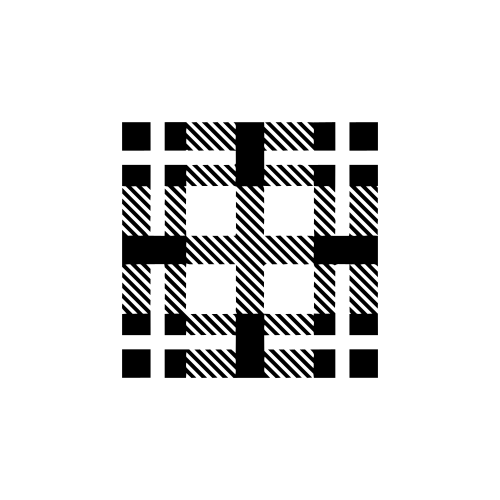 0Tartan is one of the most historically specific and culturally regulated pattern types in surface design. Defined by the crossing of coloured warp and weft threads in a 2/2 twill weave, it creates a distinctive appearance where the intersecting bands produce a predictable colour mixing effect at their crossing points. Originally a woven cloth construction, tartan is now reproduced in print form across fashion, homeware, stationery, and licensing. The pattern carries strong Scottish cultural associations, is formally registered, and has become one of the most globally recognised heritage pattern categories.
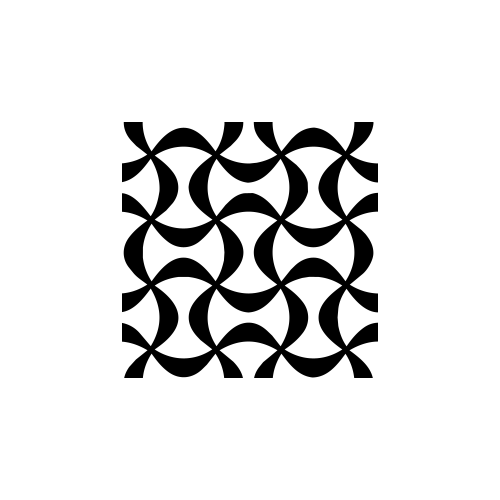 0Tessellation is the covering of a surface with one or more geometric shapes so that they fit together with no gaps and no overlaps. A periodic tiling repeats regularly; a regular tessellation uses identical regular-polygon tiles meeting identically at every corner. Only three shapes can tile a plane on their own this way: the equilateral triangle, the square, and the regular hexagon. Semi-regular tessellations combine more than one regular polygon while keeping the same arrangement at every vertex - there are eight of these. Beyond regular and semi-regular tiling, tessellations can also be built from irregular polygons, pentagons, or almost any interlocking shape, as popularised by M. C. Escher's animal- and figure-shaped tiles.
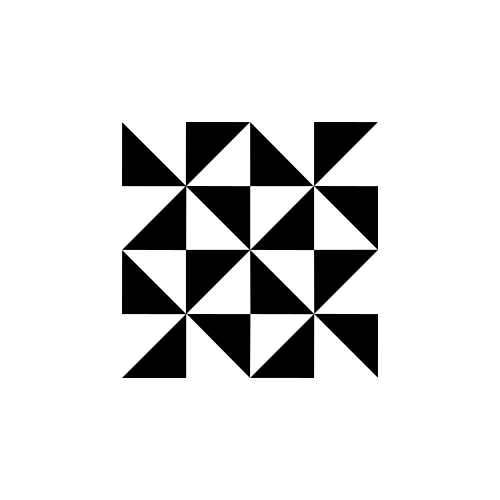 0Triangle patterns exploit the fundamental visual properties of the three-sided polygon: directionality (a triangle always points somewhere), the visual contrast between its flat base and sharp apex, and its ability to tile surfaces perfectly with no gap or overlap. In surface pattern, triangles function both as individual repeated motifs and as the structural unit of more complex geometric arrangements. The motif's associations - with stability, power, hierarchy, and dynamic energy - make it a versatile tool across a wide range of design contexts.
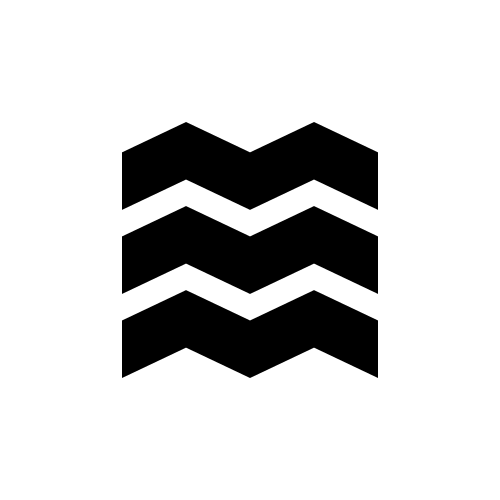 0The zigzag is one of the simplest and most energetically direct structures in surface pattern design. Defined by its sharp alternation between two diagonal directions, the zigzag creates a visual rhythm that is stronger and more angular than a wave and more dynamic than a stripe. The pattern appears across textile design, architectural ornament, graphic design, and everyday objects (pinking shears, seismograph traces) in a remarkably consistent form, reflecting the visual directness of the structure.
You've reached the end
36 Types