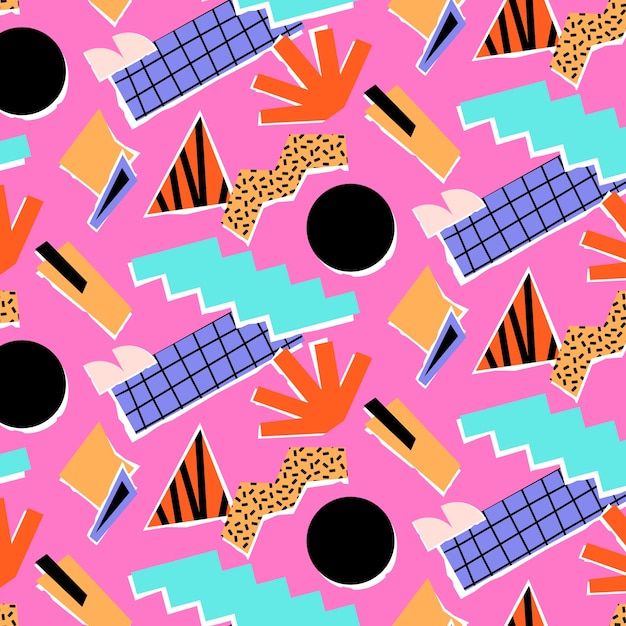
Pop art as a pattern aesthetic borrows directly from the fine art movement that emerged in Britain and the United States in the 1950s and 1960s. It translates the movement's core visual strategies - advertising imagery, comic strip graphics, repeated consumer objects, mechanical print effects - into surface pattern. Pop art patterns are high-contrast, deliberately commercial, and intended to read as instantly recognisable graphic statements rather than decorative backgrounds.
We use cookies to improve your experience and understand how PatternDesigners is used.
Pop art as a pattern aesthetic borrows directly from the fine art movement that emerged in Britain and the United States in the 1950s and 1960s. It translates the movement's core visual strategies - advertising imagery, comic strip graphics, repeated consumer objects, mechanical print effects - into surface pattern. Pop art patterns are high-contrast, deliberately commercial, and intended to read as instantly recognisable graphic statements rather than decorative backgrounds.
Pop art patterns are characterised by bold, flat colour with minimal tonal variation; hard edges and strong outlines; and imagery drawn from popular culture - comics, brand labels, celebrities, consumer products. Ben-Day dots (the mechanical halftone dot system used in commercial printing and associated particularly with Roy Lichtenstein) are a defining visual element. Colour palettes are primary and vivid, often with black outlines and restricted palettes of red, yellow, blue, and white.
Pop art patterns typically use either a straight block repeat or a deliberately grid-like serialised layout, referencing the mechanical repetition of mass-production processes. The serialised arrangement - a single object repeated in rows - is a direct reference to Andy Warhol's screen-print technique and the aesthetic of commercial production. Layouts may also incorporate deliberately misaligned registration, referencing imperfections in cheap print processes.
Motifs drawn from the Pop Art visual canon include: comic strip panels and speech bubbles; celebrity portraits; consumer product labels and packaging; everyday objects (cans, bottles, telephones); and abstract graphic shapes. Ben-Day dot fields are used both as background texture and as the primary structural element. Text and typographic elements are also common.
Primary and secondary colour palettes are the norm: red, yellow, blue, black, white, occasionally with acid green or hot pink. The palette references cheap commercial printing and mass-market graphic design. Flat, unshaded colour fills are used throughout; shading is rendered through dots or hatching rather than gradients.
Pop Art emerged in the UK in the mid-1950s and simultaneously in the US, with artists including Richard Hamilton, Eduardo Paolozzi, Roy Lichtenstein, and Andy Warhol drawing on advertising, comics, and consumer culture as source material. The movement was a direct response to post-war consumer society and the proliferation of mass media imagery. Its visual strategies translated readily into printed textiles and surface design, particularly in the 1960s, when pop art-inspired prints became widely associated with youth culture, Mod fashion, and mass-market clothing. The style has seen periodic revivals, consistently associated with bold graphic commercial aesthetics.
Pop art as a pattern aesthetic borrows directly from the fine art movement that emerged in Britain and the United States in the 1950s and 1960s. It translates the movement's core visual strategies - advertising imagery, comic strip graphics, repeated consumer objects, mechanical print effects - into surface pattern.
Pop art patterns are characterised by bold, flat colour with minimal tonal variation; hard edges and strong outlines; and imagery drawn from popular culture - comics, brand labels, celebrities, consumer products.
Geometric
Pop art patterns typically use either a straight block repeat or a deliberately grid-like serialised layout, referencing the mechanical repetition of mass-production processes.
Motifs drawn from the Pop Art visual canon include: comic strip panels and speech bubbles; celebrity portraits; consumer product labels and packaging; everyday objects (cans, bottles, telephones); and abstract graphic shapes. Ben-Day dot fields are used both as background texture and as the primary structural element.
Primary and secondary colour palettes are the norm: red, yellow, blue, black, white, occasionally with acid green or hot pink. The palette references cheap commercial printing and mass-market graphic design.
Pop Art emerged in the UK in the mid-1950s and simultaneously in the US, with artists including Richard Hamilton, Eduardo Paolozzi, Roy Lichtenstein, and Andy Warhol drawing on advertising, comics, and consumer culture as source material.