Types
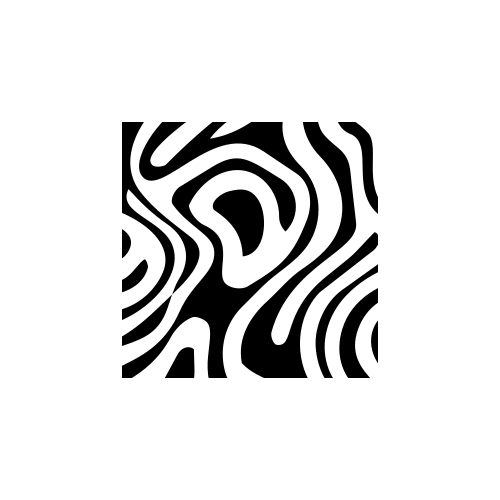 14Abstract pattern spans from rigorous geometric systems to spontaneous painterly marks. In surface pattern design, it is one of the broadest commercially active categories, encompassing geometric abstraction, lyrical/painterly abstraction, op art, colour field, and hard-edge minimalism. Because abstract pattern carries no cultural or representational specificity, it is among the most broadly licensable pattern types across markets.
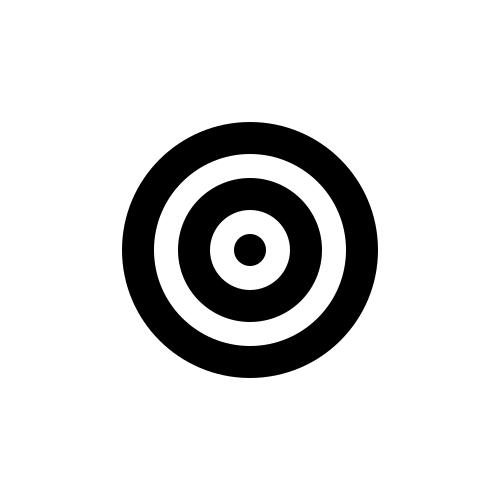 0The bullseye is one of the simplest geometric pattern structures: a filled central circle surrounded by successive alternating rings. The result is a form with perfect radial symmetry that, under certain colour conditions, creates strong optical illusions - depth, pulsation, or apparent movement. Commercially positioned within the graphic, bold, and Op Art aesthetic registers.
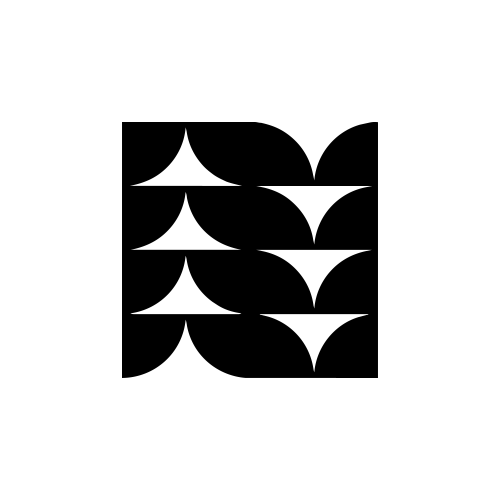 0Graphic pattern refers to surface designs with a strong visual clarity derived from graphic design principles: flat colour, high contrast, clean edges, and bold compositional structure. It is a stylistic descriptor rather than a motif category - a floral, geometric, or abstract pattern can all be "graphic" in treatment. In the surface pattern industry, "graphic pattern" commonly signals a design suitable for commercial print applications where clarity of reproduction and visual impact at scale are priorities. It overlaps with Geometric Pattern and Abstract Pattern but is defined by its design approach rather than its motif content.
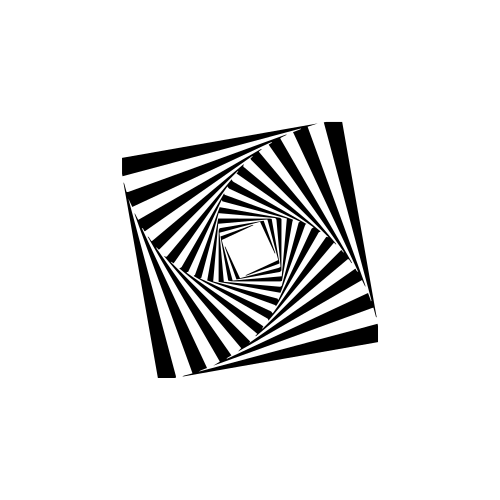 0Illusion patterns exploit the perceptual mechanisms of human vision. By carefully arranging shapes, contrasts, and line orientations, a designer can make a flat 2D surface appear three-dimensional, appear to be in motion, or appear to contain spatial depth. The technique is distinct from representational trompe l'oeil (painted imitation of objects) in that illusion patterns typically use abstract geometric forms rather than pictorial imagery. The commercial territory covers a range from bold Op Art-influenced fashion prints to subtle structural depth effects in wallpaper and interior textiles. The key technical elements are: strong tonal contrast (often black and white), precise geometric structure, and controlled spatial organisation.
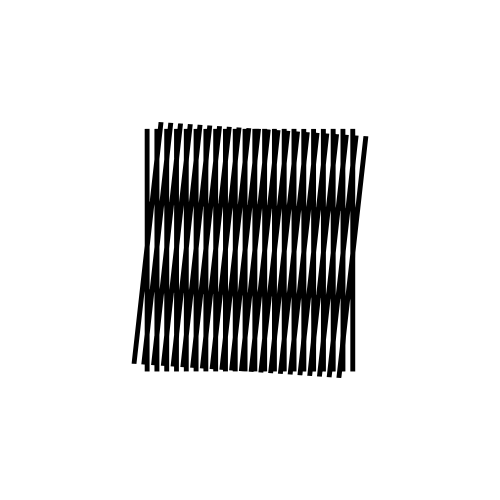 0A moiré pattern is a large-scale visual interference effect that appears when two repeating visual patterns (such as grids, lines, or dots) are overlaid with a slight rotation, offset, or scale difference between them. The visual result is a new, emergent large-scale pattern - typically a series of waves, arcs, or flowing curves - that is not present in either original pattern individually. The moiré effect is both an unintended printing artefact (a problem in halftone printing and digital photography) and a deliberately exploited optical tool in textile production, security printing, and scientific instrumentation. The term derives from the French word for a specific watered-silk textile, which produces a natural moiré effect through its weave structure.
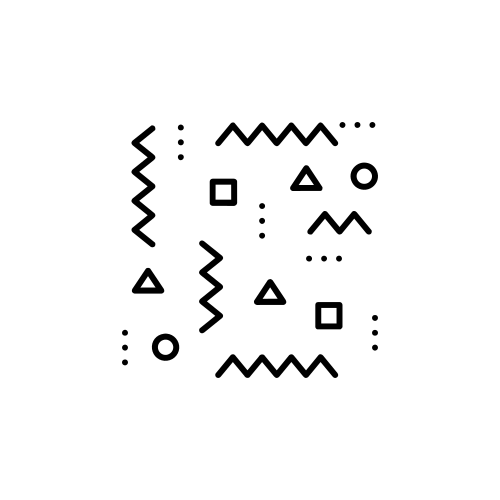 0Pop art as a pattern aesthetic borrows directly from the fine art movement that emerged in Britain and the United States in the 1950s and 1960s. It translates the movement's core visual strategies - advertising imagery, comic strip graphics, repeated consumer objects, mechanical print effects - into surface pattern. Pop art patterns are high-contrast, deliberately commercial, and intended to read as instantly recognisable graphic statements rather than decorative backgrounds.
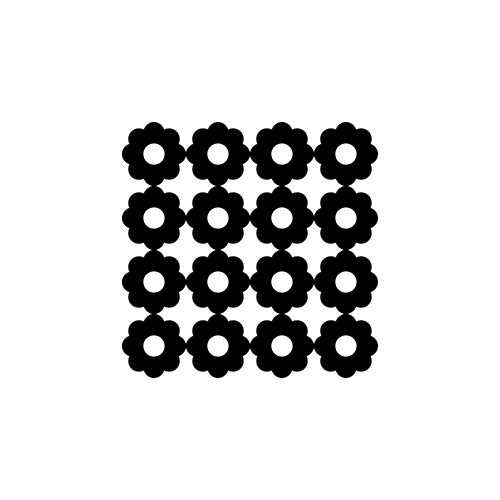 0Retro patterns are not a single pattern type but a stylistic mode that borrows visual conventions from earlier decades. In surface pattern design, "retro" typically references the aesthetics of the mid-20th century: the bold graphics and atomic motifs of the 1950s, the psychedelic colour and organic forms of the 1960s and 1970s, and the domestic print vocabularies of the immediate post-war period. The defining characteristic is intentional historical recall - the pattern signals its era of reference rather than trying to appear contemporary.
You've reached the end
7 Types