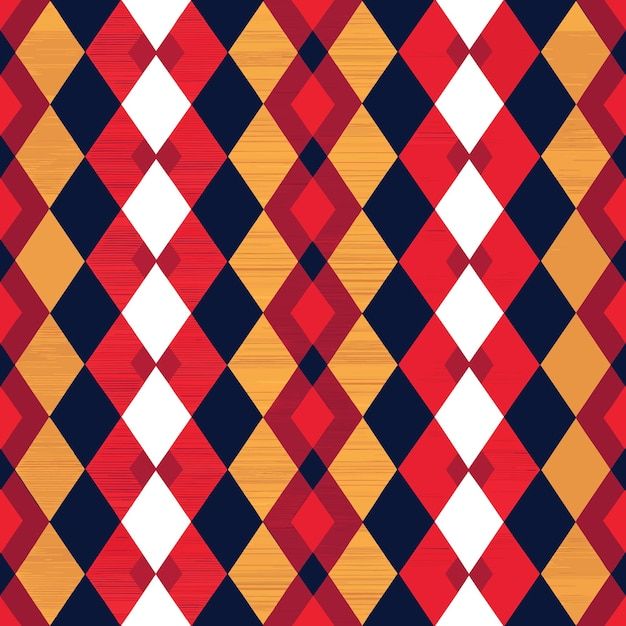
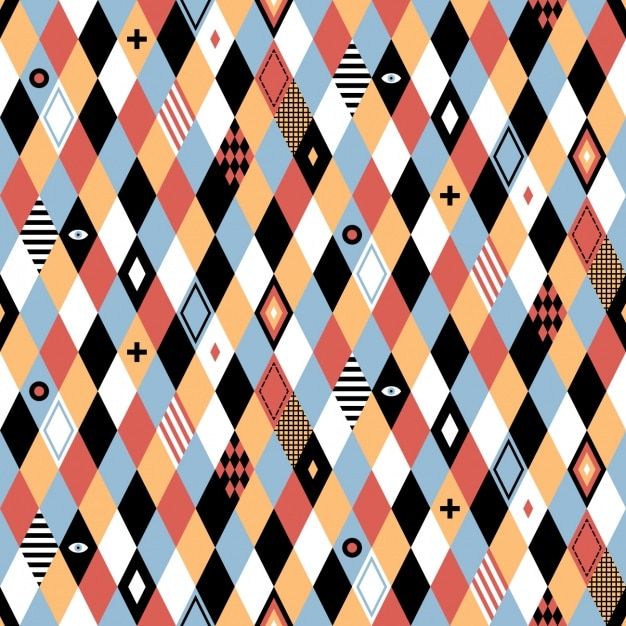
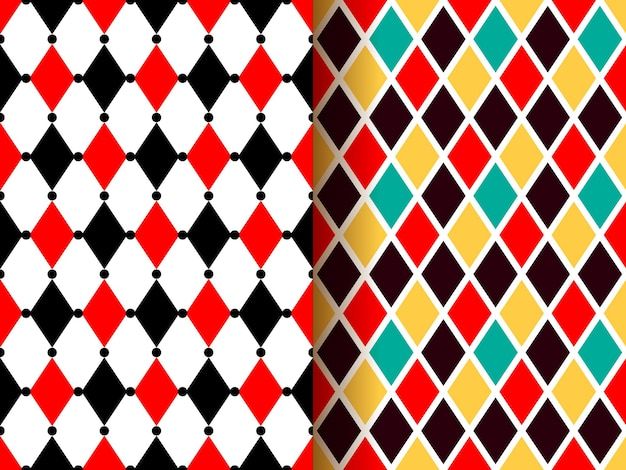
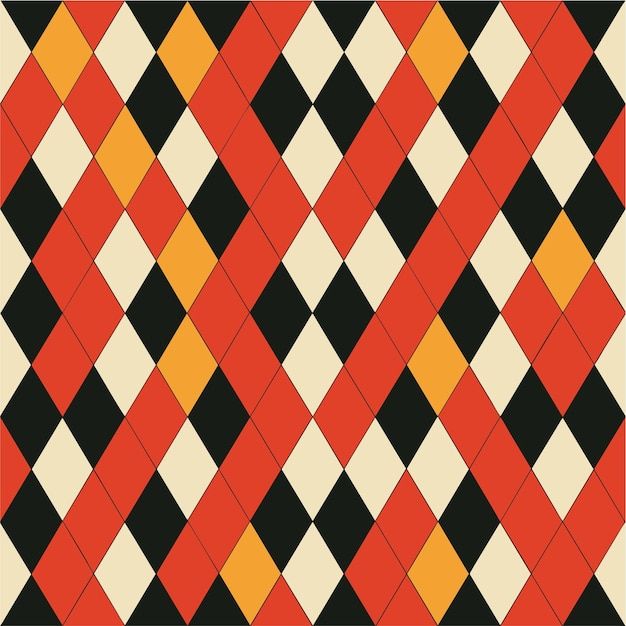
The harlequin pattern is composed of repeating diamonds (or elongated diamond shapes standing on point) in alternating contrasting colours or values. Its origin lies specifically in the costume of the Harlequin (Arlecchino) character from the Italian Commedia dell'arte tradition, whose distinctive patchwork of multi-coloured diamond or lozenge-shaped fabric became one of the most recognised costume motifs in European popular culture. The pattern is a subset of the broader Diamond Pattern and Check Pattern family, distinguished by its theatrical origin and its characteristic use of high contrast, multiple colours, or bold two-tone compositions.
We use cookies to improve your experience and understand how PatternDesigners is used.
The harlequin pattern is composed of repeating diamonds (or elongated diamond shapes standing on point) in alternating contrasting colours or values. Its origin lies specifically in the costume of the Harlequin (Arlecchino) character from the Italian Commedia dell'arte tradition, whose distinctive patchwork of multi-coloured diamond or lozenge-shaped fabric became one of the most recognised costume motifs in European popular culture. The pattern is a subset of the broader Diamond Pattern and Check Pattern family, distinguished by its theatrical origin and its characteristic use of high contrast, multiple colours, or bold two-tone compositions.
The harlequin pattern uses a straight repeat of diamonds or lozenges (elongated diamonds standing on end) in alternating colour or tonal contrast. Each diamond unit is a distinct colour - the traditional harlequin uses a patchwork of many colours (red, blue, green, yellow, orange), while the commercial surface pattern version more often uses a bold two-tone or limited multi-colour palette for clarity and reproduction. The elongation of the diamond (taller than wide) creates the characteristic "standing on point" rhythm of the harlequin grid.
The harlequin is an all-over repeat using a brick or offset square grid rotated 45 degrees - each diamond aligns to produce a continuous diagonal lattice. In full-colour traditional harlequin, each diamond is individually coloured from a palette of four to six or more colours with no two adjacent diamonds sharing the same colour. In commercial two-tone harlequin, diamonds alternate between two contrasting colours in a simple checkerboard-on-the-diagonal arrangement.
The harlequin motif is the diamond repeat itself - the pattern is structural rather than motif-based in the traditional sense. Design variation occurs through:
Traditional harlequin uses a maximum-contrast multicolour palette - red, blue, yellow, green, and orange in no consistent arrangement, creating the "patchwork" effect of the Commedia costume. 20th-century fashion deployments (Adele Simpson, 1944; Oscar de la Renta, 2001) tend to use more resolved palettes - bold multicolour charmeuse in luxury fashion. Two-tone harlequin (black and white, navy and cream) is the most commercially versatile simplified version. Contemporary interior design applications often use two-tone or limited palette harlequin for sophistication.
The harlequin costume - the multicoloured diamond-patched suit of the Arlecchino character - originated in 16th-century Commedia dell'arte, the Italian improvised theatrical tradition. The costume's distinctive diamond patchwork pattern became a recognised motif in European decorative arts, appearing in paintings, ceramics, and textiles from the 17th century. In fashion, the pattern was popularised as a bold modern print by American designer Adele Simpson in 1944, whose prominent diamond design brought it into mid-century fashion. The Picasso retrospective of 1962 (Picasso frequently painted harlequin figures) fuelled a 1960s trend for harlequin-referencing fashion and interiors. Freddie Mercury wore notable harlequin print trousers in the late 1970s. Oscar de la Renta's 2001 multicoloured silk charmeuse gown is a documented haute couture example.
The harlequin pattern is composed of repeating diamonds (or elongated diamond shapes standing on point) in alternating contrasting colours or values.
The harlequin pattern uses a straight repeat of diamonds or lozenges (elongated diamonds standing on end) in alternating colour or tonal contrast.
Geometric
The harlequin is an all-over repeat using a brick or offset square grid rotated 45 degrees - each diamond aligns to produce a continuous diagonal lattice.
The harlequin motif is the diamond repeat itself - the pattern is structural rather than motif-based in the traditional sense. Design variation occurs through: Colour palette choice (traditional multicolour, duotone, monochromatic) Diamond proportion (square, elongated, short) Edge treatment (hard, clean edges vs.
Traditional harlequin uses a maximum-contrast multicolour palette - red, blue, yellow, green, and orange in no consistent arrangement, creating the "patchwork" effect of the Commedia costume.
The harlequin costume - the multicoloured diamond-patched suit of the Arlecchino character - originated in 16th-century Commedia dell'arte, the Italian improvised theatrical tradition.
Diamond Pattern, Check Pattern, Argyle Pattern, Geometric Pattern, and Plaid Pattern