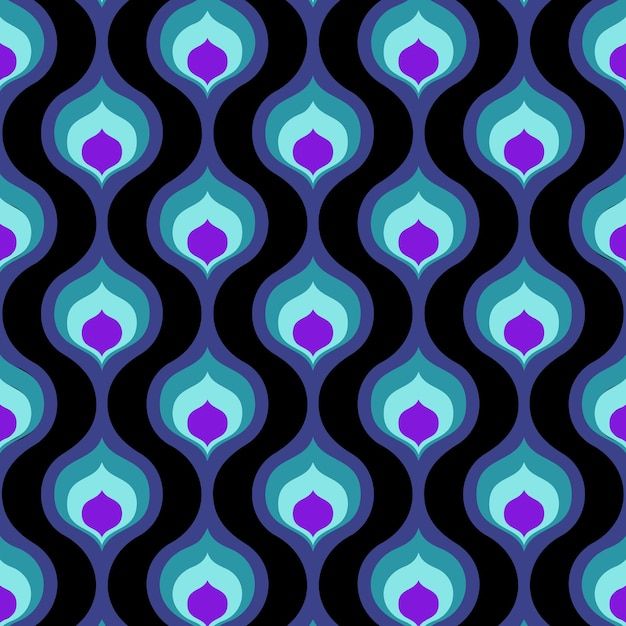
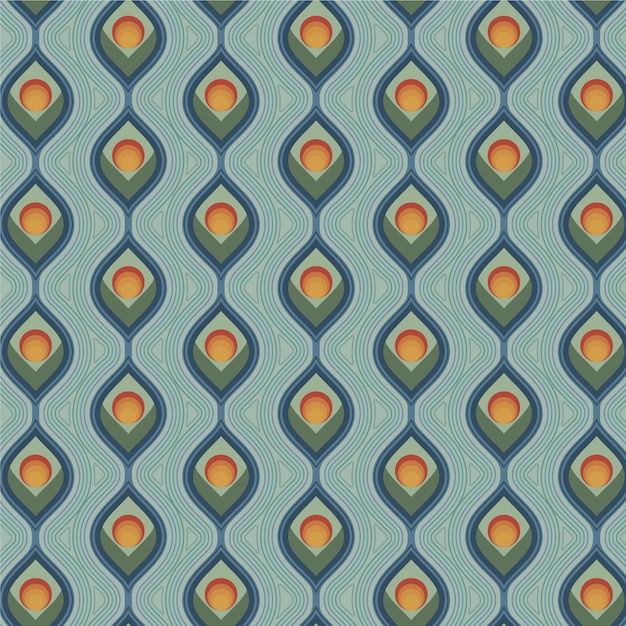
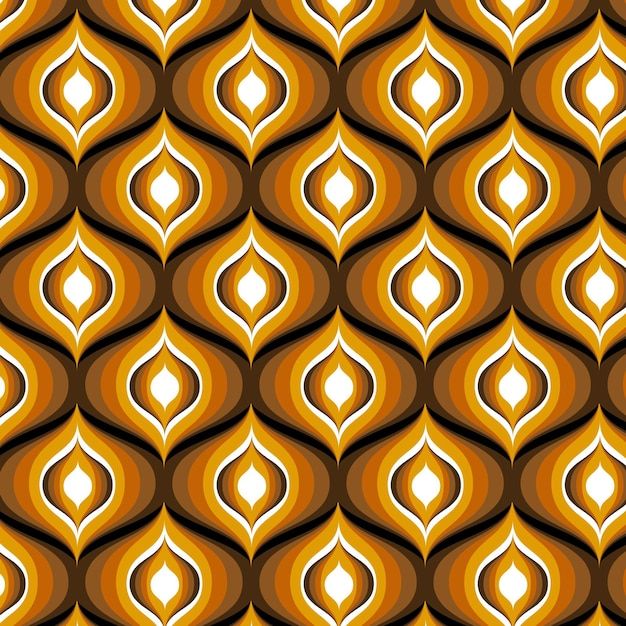
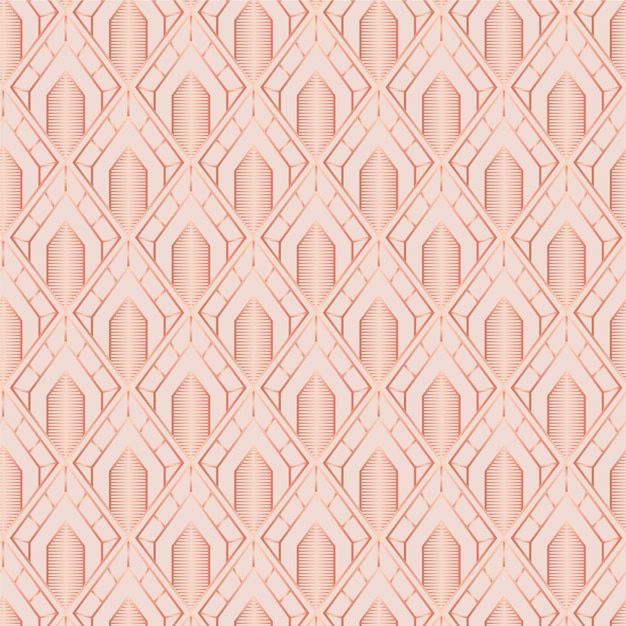
The ogee is defined geometrically as a double curve in which a concave arc flows smoothly into a convex arc (or vice versa), forming an elongated S-shape. In surface pattern design, the ogee motif is deployed as a repeating unit that interlocks with its neighbours to cover a plane seamlessly - producing the characteristic field of pointed oval or onion-dome shapes. The ogee pattern appears in textiles as early as the 12th century and has been a continuous feature of decorative arts through the Gothic and Renaissance periods to the present day. It is commercially associated with wallpaper, damask fabric, furnishing textiles, and high-end interior design. The shape's elegant proportions and historical pedigree give it a luxury and heritage positioning across markets.
We use cookies to improve your experience and understand how PatternDesigners is used.
The ogee is defined geometrically as a double curve in which a concave arc flows smoothly into a convex arc (or vice versa), forming an elongated S-shape. In surface pattern design, the ogee motif is deployed as a repeating unit that interlocks with its neighbours to cover a plane seamlessly - producing the characteristic field of pointed oval or onion-dome shapes.
The ogee pattern appears in textiles as early as the 12th century and has been a continuous feature of decorative arts through the Gothic and Renaissance periods to the present day. It is commercially associated with wallpaper, damask fabric, furnishing textiles, and high-end interior design. The shape's elegant proportions and historical pedigree give it a luxury and heritage positioning across markets.
Ogee patterns have several defining visual qualities:
The shape closely resembles the teardrop, the Venetian Gothic arch, and the pinecone - all forms with which it has historical connections.
The ogee repeat is based on a grid structure where each cell is a pointed oval (the ogee unit). Units are typically arranged in a vertical half-drop, offset by 50% so that the pointed top of each unit nestles between the shoulders of the two units above it. This produces the distinctive column-with-offset arrangement that is the hallmark of ogee field patterns.
Interior content of the ogee cell varies widely:
Traditional ogee is associated with deep, rich colours - jewel tones, damask burgundy, midnight blue, forest green - on grounds of gold, cream, or black. This palette reinforces the historical luxury positioning.
Contemporary applications extend to neutral grounds with tonal ogee structure (tone-on-tone), pastel grounds with white ogee for softer interiors, and bold graphic two-colour combinations for modern fashion and homeware applications.
The ogee shape first appeared in textiles in the 12th century and became a defining motif of Venetian Gothic architecture from the 13th century onwards. In architecture, the ogee arch - formed by two mirrored ogee curves meeting at an apex - is a characteristic feature of English Gothic of the late 13th century and of Venetian Gothic (14th-15th century).
The Dictionary of Ornament (Lewis and Darley, 1986) defines ogee as particularly characteristic of Venetian Gothic Revival, Gothic, and Gothic Revival architectural styles. In 18th-century usage the term was sometimes abbreviated as "o-g."
In textiles, the ogee structure has been used continuously from Byzantine and Islamic decorative traditions through to Italian Renaissance damasks. William Morris used ogee-based repeat structures in several of his most celebrated pattern designs. Today, the ogee remains a foundational commercial pattern type in luxury wallpaper and furnishing textile markets.
The ogee is defined geometrically as a double curve in which a concave arc flows smoothly into a convex arc (or vice versa), forming an elongated S-shape.
Geometric
The ogee repeat is based on a grid structure where each cell is a pointed oval (the ogee unit). Units are typically arranged in a vertical half-drop, offset by 50% so that the pointed top of each unit nestles between the shoulders of the two units above it.
Geometric
Traditional ogee is associated with deep, rich colours - jewel tones, damask burgundy, midnight blue, forest green - on grounds of gold, cream, or black. This palette reinforces the historical luxury positioning.
The ogee shape first appeared in textiles in the 12th century and became a defining motif of Venetian Gothic architecture from the 13th century onwards.