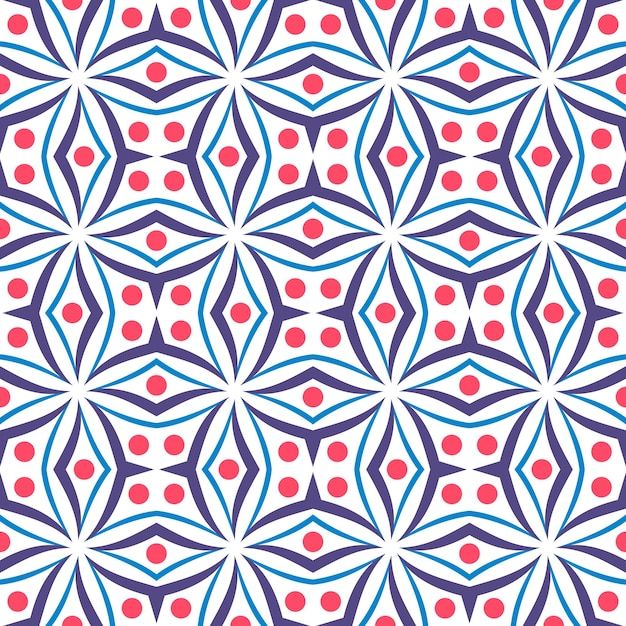
The diaper pattern is defined by the regular repetition of a simple geometric unit - typically a diamond or lozenge - spaced evenly to create an unbroken field across the fabric. The pattern belongs to the damask family of woven cloth but is distinguished by the small scale of its repeat unit and the simplicity of its geometric form. It has been a consistent presence in European and South Asian textile traditions for centuries, produced in silk, linen, and cotton across distinct cultural weaving practices.
We use cookies to improve your experience and understand how PatternDesigners is used.
The diaper pattern is defined by the regular repetition of a simple geometric unit - typically a diamond or lozenge - spaced evenly to create an unbroken field across the fabric. The pattern belongs to the damask family of woven cloth but is distinguished by the small scale of its repeat unit and the simplicity of its geometric form. It has been a consistent presence in European and South Asian textile traditions for centuries, produced in silk, linen, and cotton across distinct cultural weaving practices.
The pattern reads as a fine, regular geometric texture across the fabric surface. At a distance, the repeat dissolves into an even grid impression. Close examination reveals the individual diamond units and, in the bird's eye variant, a characteristic dotted centre eye within each diamond. The self-coloured damask version creates the pattern through light-and-shade variation in the weave structure rather than through colour contrast, giving it a subtle, formal quality.
A diamond-grid structure: individual diamond or lozenge units set on a regular 45° tilt grid so that each unit interlocks with its neighbours across the full cloth. The repeat is typically small-scale, producing a fine all-over texture. The bird's eye variant adds a small dot at the centre of each diamond, creating a secondary visual element within the basic geometric grid.
Traditionally woven as a self-coloured damask - pattern visible through the weave structure's light/shade play rather than applied colour contrast. The cloth reads as a subtle, formal texture. When executed as a printed pattern, two-tone or monochrome treatments are most common. The aesthetic register is classical, formal, and heritage-inflected.
The term "diaper" traces to Latin diasper (rough, uneven texture) via Low Latin diasperus, originally denoting a particular type of cloth with tactile surface variation. The name later transferred to the woven pattern.
The pattern originated in silk textiles with diamond designs, historically associated with Islamic weaving traditions before adoption in European linen and cotton. By the 19th century, the term was defined as "any small geometrical or floral pattern that consists of the constant repetition of one or more simple figures or units of design evenly spaced" (Encyclopædia Britannica, 1911).
South Asian textile traditions show parallel development: bulbul chashm silk fabrics woven in Baghdad were in use in northern India by the 17th century. The bird's eye / bulbul chashm pattern became a signature motif in Khes weaving (Punjab), in woven sari borders, and in phulkari embroidery.
The practical absorbency of diaper-weave cloth led to its use for baby linen and tablecloths - the English word "diaper" (nappy/baby diaper) derives directly from the cloth type.
The diaper pattern is defined by the regular repetition of a simple geometric unit - typically a diamond or lozenge - spaced evenly to create an unbroken field across the fabric.
The pattern reads as a fine, regular geometric texture across the fabric surface. At a distance, the repeat dissolves into an even grid impression. Close examination reveals the individual diamond units and, in the bird's eye variant, a characteristic dotted centre eye within each diamond.
Shirting and suiting fabrics (self-coloured woven texture) Table linen (the pattern's historical primary application) Wallpaper (heritage/formal register) Interior textiles: formal upholstery, curtaining Heritage pattern libraries and classical print revivals
A diamond-grid structure: individual diamond or lozenge units set on a regular 45° tilt grid so that each unit interlocks with its neighbours across the full cloth. The repeat is typically small-scale, producing a fine all-over texture.
Geometric
Traditionally woven as a self-coloured damask - pattern visible through the weave structure's light/shade play rather than applied colour contrast. The cloth reads as a subtle, formal texture. When executed as a printed pattern, two-tone or monochrome treatments are most common.
The term "diaper" traces to Latin diasper (rough, uneven texture) via Low Latin diasperus, originally denoting a particular type of cloth with tactile surface variation. The name later transferred to the woven pattern.
Damask Pattern, Diamond Pattern, and Trellis Pattern