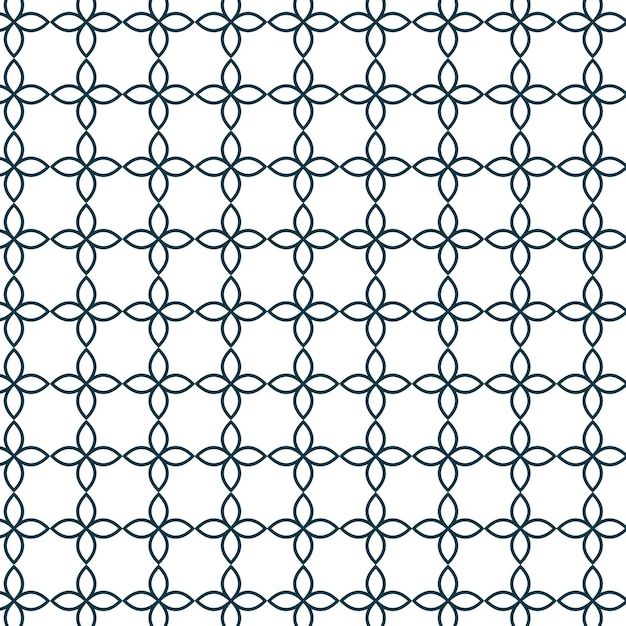
The trellis pattern draws its identity from the architectural garden structure of the same name: an open, interlocking grid of bamboo, timber, or metal that provides a framework for climbing foliage. Translated into surface pattern, the trellis becomes a geometric lattice motif - either used as a primary grid structure with foliage elements filling the cells, or simplified to a geometric linear pattern without botanical content. The pattern sits at the intersection of geometric structure and garden/botanical aesthetics, and is strongly associated with home furnishing rather than apparel.
We use cookies to improve your experience and understand how PatternDesigners is used.
The trellis pattern draws its identity from the architectural garden structure of the same name: an open, interlocking grid of bamboo, timber, or metal that provides a framework for climbing foliage. Translated into surface pattern, the trellis becomes a geometric lattice motif - either used as a primary grid structure with foliage elements filling the cells, or simplified to a geometric linear pattern without botanical content. The pattern sits at the intersection of geometric structure and garden/botanical aesthetics, and is strongly associated with home furnishing rather than apparel.
Trellis patterns are defined by their lattice framework: an interlocking diagonal or orthogonal grid of intersecting lines or bands. The characteristic form is a repeating diamond or square cell structure. In botanical trellis patterns, climbing plants - roses, wisteria, jasmine, ivy, clematis - fill the cells, grow along the framework, or trail over and around the structure. In geometric trellis patterns (sometimes called latticework), the linear grid structure alone forms the pattern with no botanical content.
The trellis pattern uses a regular, repeating grid structure - either a diagonal diamond grid or an orthogonal square/rectangular grid. Motifs placed within or along the grid lines tile predictably. The framework provides a strong structural armature that can accommodate a wide range of secondary motifs (flowers, leaves, birds, fruit) placed at intersections, within cells, or trailing along bars. In simplified geometric form, the trellis functions as a linear lattice repeat.
Primary trellis motifs:
The source notes that Susan Meller's Textile Designs specifically situates trellis patterns in "home-furnishing fabrics rather than apparel" - a characterisation that holds broadly for the category.
Trellis patterns in their botanical form tend toward garden palettes: greens (foliage), whites and pinks (climbing roses, jasmine), mauves and purples (wisteria, clematis), and pale backgrounds suggesting rendered wall or sky. The geometric lattice version is more flexible - it appears in metallic (gold lattice on white or navy), classic blue-and-white Chinese porcelain traditions, and contemporary graphic reinterpretations. Ground colours range from white and cream (traditional) through to deep navy, forest green, and black (contemporary and maximalist).
William Morris designed his first trellis wallpaper in 1864 - widely considered the first wallpaper he designed. Produced while he was living at The Red House in Kent (the house built for him by Philip Webb), the "Trellis" design features a regular diamond trellis framework with roses and birds (reportedly drawn by Philip Webb). It established the trellis as a core motif of the Arts and Crafts movement and remains in commercial production as part of the Morris & Co. archive. The garden trellis as a domestic design reference connects interior pattern to the cultivated English garden aesthetic - a cultural connection that has sustained the trellis motif in British and broader Western home furnishing design since the Victorian period. Bamboo trellis structures additionally carry symbolic meaning in Asian design traditions, where bamboo represents harmony and balance.
The trellis pattern draws its identity from the architectural garden structure of the same name: an open, interlocking grid of bamboo, timber, or metal that provides a framework for climbing foliage.
Trellis patterns are defined by their lattice framework: an interlocking diagonal or orthogonal grid of intersecting lines or bands. The characteristic form is a repeating diamond or square cell structure.
Botanical
The trellis pattern uses a regular, repeating grid structure - either a diagonal diamond grid or an orthogonal square/rectangular grid. Motifs placed within or along the grid lines tile predictably.
Botanical
Trellis patterns in their botanical form tend toward garden palettes: greens (foliage), whites and pinks (climbing roses, jasmine), mauves and purples (wisteria, clematis), and pale backgrounds suggesting rendered wall or sky.
William Morris designed his first trellis wallpaper in 1864 - widely considered the first wallpaper he designed.