Types
 0Botanical pattern draws a direct line from the historical practice of botanical illustration into surface pattern design. Where tropical pattern pursues bold, exotic, large-scale immediacy, botanical pattern emphasises careful observation, plant specificity, and illustrative accuracy. Watercolour is the primary medium. Applications span fashion, home textiles, wallpaper, and stationery, with strong heritage positioning in the British and European markets.
 0Floral pattern is the broadest and commercially most active category in surface pattern design. It encompasses any design in which flowers, foliage, stems, and botanical elements constitute the primary visual subject. The category spans a wide range of sub-types - from dense all-over repeats to spaced individual blooms - and includes distinct historical styles with their own visual languages. Floral pattern has been central to textile design across virtually every culture and era, and remains the highest-volume category in wallpaper, fabric, fashion, and home textiles today.
 0Flower pattern refers specifically to designs where recognisable flower species - roses, peonies, dahlias, tulips, and others - function as the primary repeating motif. It is the most direct sub-category within the broader Floral Pattern family. While "floral pattern" encompasses the full range of botanical and plant-derived design, "flower pattern" centres on the rendered flower head or bloom as the dominant visual unit. The species, rendering style (realistic, stylised, graphic, watercolour), and arrangement mode together define the commercial character of a given flower pattern.
 0The rose is among the most widely used motifs in surface pattern design across all major product categories. Rose patterns draw on the flower's deep cultural associations - love, beauty, femininity, celebration - and its strong visual identity: the distinctive layered petal form is instantly readable at any scale. The motif appears across the full range of surface pattern applications, from fine chintz prints to bold digital repeats, and sustains consistent commercial demand particularly in fashion, home textiles, and gifting.
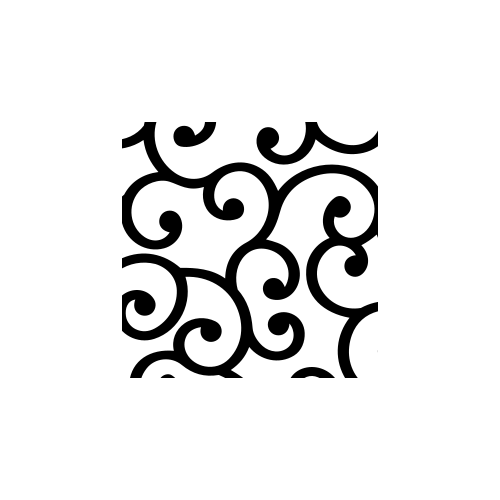 0The scroll pattern is an ornamental system built from the logic of plant growth: a continuous stem that branches, curls, and spirals, producing a flowing, all-over structure that can fill any surface without obvious repeat. Unlike grid-based geometric patterns, scroll patterns follow organic rhythms - mirroring the way vines, tendrils, and climbing plants ramify through space. This structural flexibility has made scroll patterns one of the most versatile and durable motif traditions in decorative history. They appear as architectural borders, woven textile structures, painted ceramic ornament, carved stone relief, and printed wallpaper. In surface pattern design, they translate naturally into all-over repeating structures with strong commercial applications across wallpaper, furnishing fabric, fashion, and heritage design reproduction.
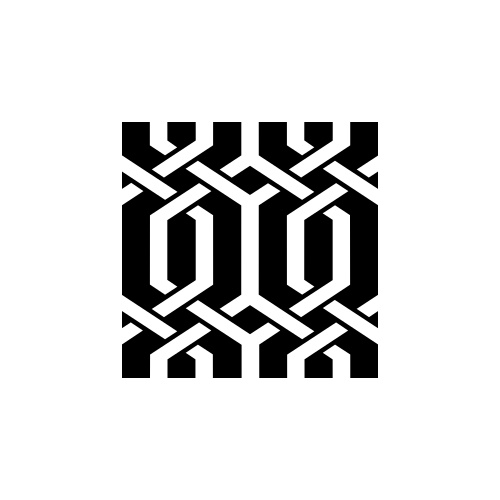 0The trellis pattern draws its identity from the architectural garden structure of the same name: an open, interlocking grid of bamboo, timber, or metal that provides a framework for climbing foliage. Translated into surface pattern, the trellis becomes a geometric lattice motif - either used as a primary grid structure with foliage elements filling the cells, or simplified to a geometric linear pattern without botanical content. The pattern sits at the intersection of geometric structure and garden/botanical aesthetics, and is strongly associated with home furnishing rather than apparel.
You've reached the end
6 Types