Zebra print is one of the most commercially durable animal print categories in surface pattern design, distinguished by its extreme simplicity - two colours only, typically black and white - and its bold, organic stripe structure. Unlike tiger print (orange and black, curved organic stripes) or leopard print (spots/rosettes on a tawny ground), zebra print derives its impact from the graphic intensity of the black-white contrast and the flowing, individual character of each stripe. Its commercial appeal is broad, crossing fashion, home design, and accessories markets.
We use cookies to improve your experience and understand how PatternDesigners is used.
Zebra print is one of the most commercially durable animal print categories in surface pattern design, distinguished by its extreme simplicity - two colours only, typically black and white - and its bold, organic stripe structure. Unlike tiger print (orange and black, curved organic stripes) or leopard print (spots/rosettes on a tawny ground), zebra print derives its impact from the graphic intensity of the black-white contrast and the flowing, individual character of each stripe. Its commercial appeal is broad, crossing fashion, home design, and accessories markets.
The zebra's markings are characterised by:
The biological theory of stripe formation follows Turing pattern principles (the same reaction-diffusion morphogen model that produces tiger stripes and other animal coat patterns). An additional proposed biological function of zebra stripes is deterring biting insects - the theory suggests that zebra stripe patterns disrupt the edge-detection perception used by flies when landing.
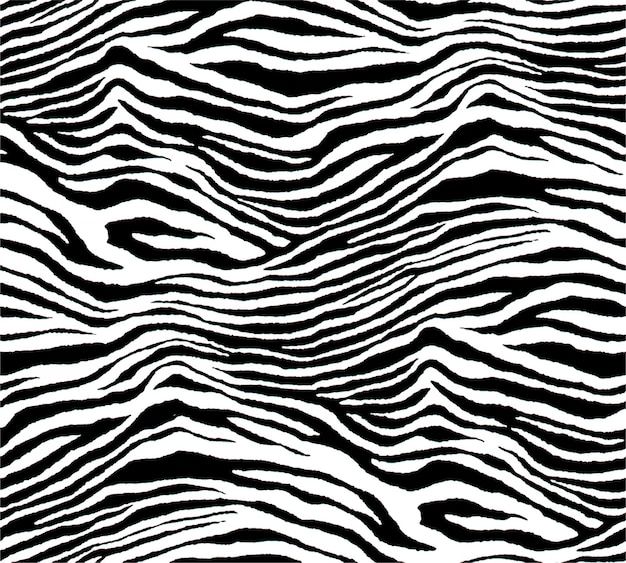
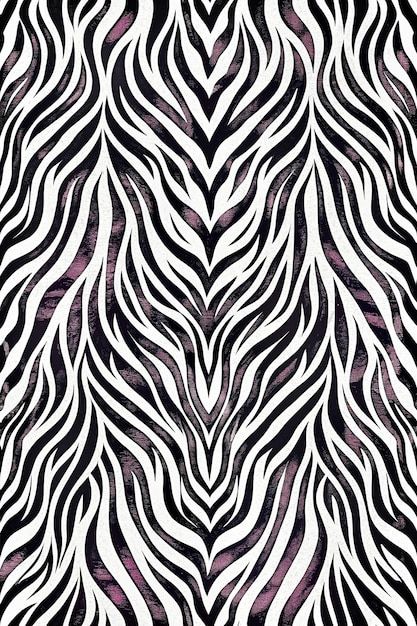
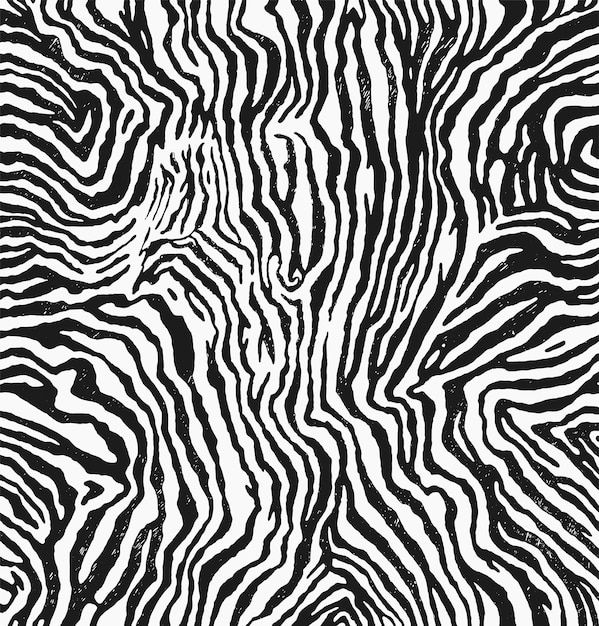
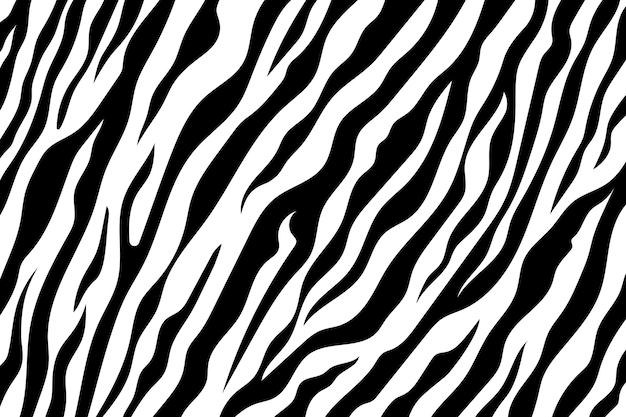
Zebra prints in surface pattern use flowing organic stripes at a scale appropriate to the product. The characteristic stripe is not a geometric band of even width but an irregular organic form with slightly tapered ends. All-over repeats distribute the stripe motif across the surface without a visible grid. In fashion applications, the placement of stripes in relation to body seams is often considered for optical effect.
The pattern is entirely defined by the stripe structure - there are no secondary motifs. Commercial zebra print may vary from closely naturalistic (following actual zebra proportions and stripe character) to stylised (simplified, more regular, or exaggerated for graphic impact). The two-tone structure makes it exceptionally easy to recolour in non-naturalistic palettes while retaining the pattern's identity.
The naturalistic black-and-white palette is commercially dominant and gives zebra print its defining graphic clarity. Key commercial variations:
Zebra print entered fashion as part of the broader animal print trend of the 20th century, reaching particular commercial prominence in 1960s Mod fashion (where the bold black-and-white graphic quality aligned with the era's optical and geometric aesthetic) and in the maximalist luxury fashion of the 1970s and 1980s. Unlike leopard and tiger prints, zebra's achromatic two-tone structure gives it a graphic versatility - it works in contexts where colour animal prints would be too heavy. The pattern has remained a perennial commercial reference, cycling through high-fashion and mainstream retail regularly.
Zebra print is one of the most commercially durable animal print categories in surface pattern design, distinguished by its extreme simplicity - two colours only, typically black and white - and its bold, organic stripe structure.
Animal
Zebra prints in surface pattern use flowing organic stripes at a scale appropriate to the product. The characteristic stripe is not a geometric band of even width but an irregular organic form with slightly tapered ends. All-over repeats distribute the stripe motif across the surface without a visible grid.
The pattern is entirely defined by the stripe structure - there are no secondary motifs. Commercial zebra print may vary from closely naturalistic (following actual zebra proportions and stripe character) to stylised (simplified, more regular, or exaggerated for graphic impact).
The naturalistic black-and-white palette is commercially dominant and gives zebra print its defining graphic clarity.
Zebra print entered fashion as part of the broader animal print trend of the 20th century, reaching particular commercial prominence in 1960s Mod fashion (where the bold black-and-white graphic quality aligned with the era's optical and geometric aesthetic) and in the maximalist luxury fashion of the 1970s and 1980s.