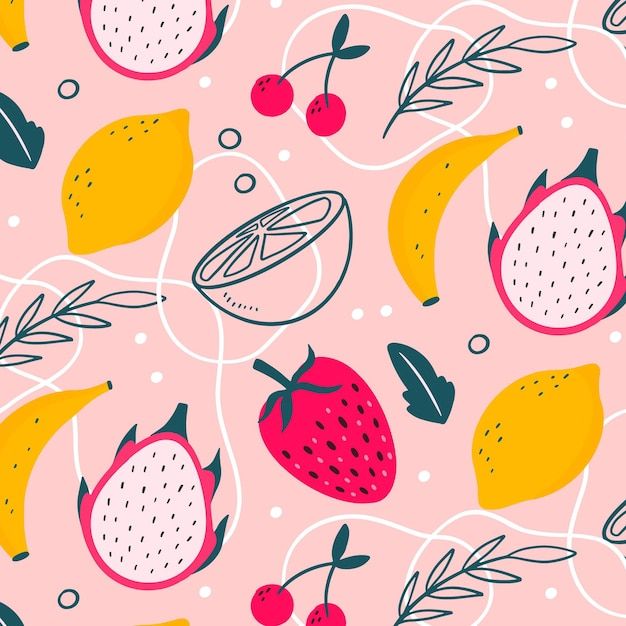
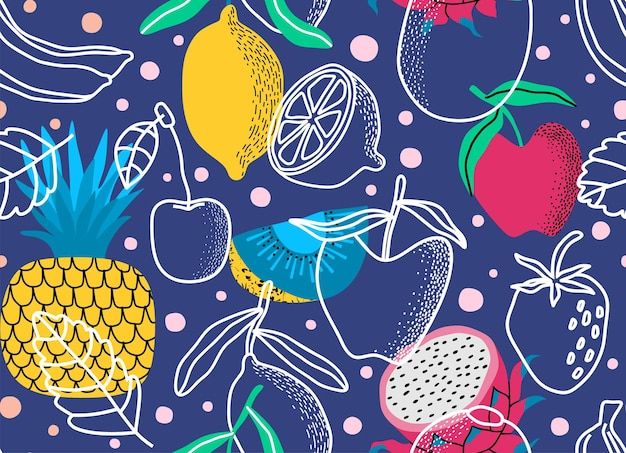
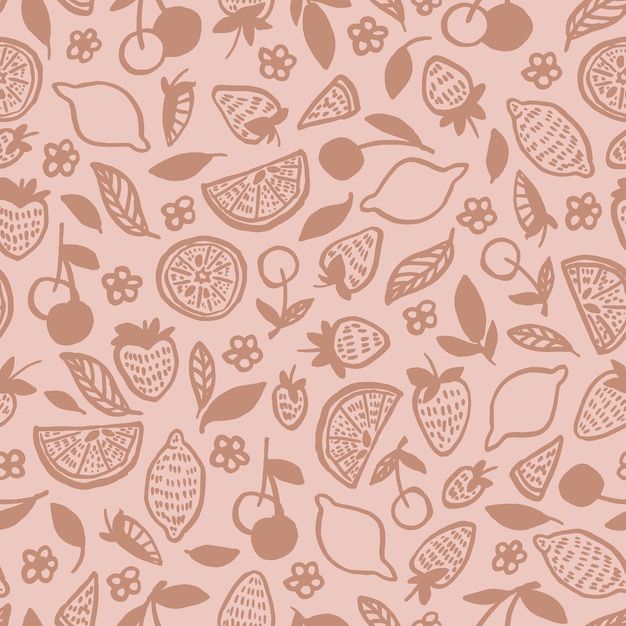
Fruit pattern uses illustrated or stylised fruit forms as primary repeating motifs. The category sits within the broader Floral Pattern family, drawing on the same botanical illustration tradition as flower and plant patterns. Fruit pattern has a long history in decorative arts - William Morris's block-printed "Fruit" wallpaper of 1862 is among the most significant historic examples - and continues as an active commercial category across interiors, fashion, and licensing. The category ranges from vintage botanical-style illustration through to contemporary graphic and pop-art treatments.
We use cookies to improve your experience and understand how PatternDesigners is used.
Fruit pattern uses illustrated or stylised fruit forms as primary repeating motifs. The category sits within the broader Floral Pattern family, drawing on the same botanical illustration tradition as flower and plant patterns. Fruit pattern has a long history in decorative arts - William Morris's block-printed "Fruit" wallpaper of 1862 is among the most significant historic examples - and continues as an active commercial category across interiors, fashion, and licensing. The category ranges from vintage botanical-style illustration through to contemporary graphic and pop-art treatments.
Fruit patterns are typically rendered in a naturalistic-but-stylised mode: identifiable species with simplified forms, flat colour, and clear outline. Vintage and heritage fruit patterns use detailed botanical illustration style with shading and fine detail. Contemporary treatments often use graphic flat design with bold colour and clean lines. Pop-art and novelty fruit patterns use exaggerated scale, bright saturated palettes, and simplified iconic forms. The overall surface impression is characteristically fresh, warm, and domestic.
Fruit patterns most commonly use all-over repeats - individual fruit motifs arranged in tossed, half-drop, or grid layouts across the surface. Trailing or vine-format repeats (fruits hanging from or nestled in illustrated branches and foliage) are common, particularly in the William Morris tradition. Stripe-based fruit repeats (rows of fruit alternating with foliage bands) are used in kitchen textiles. Placement prints featuring an oversized single fruit are used in fashion and homeware.
Fruit patterns are typically warm-toned: greens, reds, yellows, and oranges are common, with cream or white grounds. Heritage fruit patterns (botanical illustration, William Morris) use muted, naturalistic palettes - kiwi green/cream, burgundy/sage. Contemporary and novelty fruit patterns use brighter, more saturated palettes. Summer seasonal collections and tropical-themed ranges often feature vivid fruit palettes - passion fruit purple/yellow, citrus orange/green.
William Morris designed his "Fruit" (also known as "Pomegranate") wallpaper in 1862 - a dense, repeating composition of pomegranates, leaves, and other fruit in an intertwined repeat. The design is held in the Victoria and Albert Museum (collections.vam.ac.uk/item/O73421/) and remains in production, illustrating the longevity of fruit pattern in decorative arts. Fruit motifs in decorative arts predate Morris considerably - pomegranate and vine motifs appear in Islamic and Byzantine textile design, and the pomegranate was a standard element in European Renaissance and Baroque furnishing fabrics.
Fruit pattern uses illustrated or stylised fruit forms as primary repeating motifs. The category sits within the broader Floral Pattern family, drawing on the same botanical illustration tradition as flower and plant patterns.
Fruit patterns are typically rendered in a naturalistic-but-stylised mode: identifiable species with simplified forms, flat colour, and clear outline. Vintage and heritage fruit patterns use detailed botanical illustration style with shading and fine detail.
Food
Fruit patterns most commonly use all-over repeats - individual fruit motifs arranged in tossed, half-drop, or grid layouts across the surface. Trailing or vine-format repeats (fruits hanging from or nestled in illustrated branches and foliage) are common, particularly in the William Morris tradition.
Botanical
Fruit patterns are typically warm-toned: greens, reds, yellows, and oranges are common, with cream or white grounds. Heritage fruit patterns (botanical illustration, William Morris) use muted, naturalistic palettes - kiwi green/cream, burgundy/sage.
William Morris designed his "Fruit" (also known as "Pomegranate") wallpaper in 1862 - a dense, repeating composition of pomegranates, leaves, and other fruit in an intertwined repeat. uk/item/O73421/) and remains in production, illustrating the longevity of fruit pattern in decorative arts.
Floral Pattern, Botanical Pattern, and Flower Pattern