Types
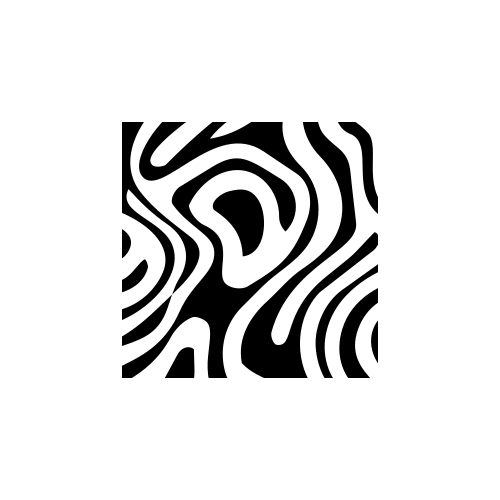 14Abstract pattern spans from rigorous geometric systems to spontaneous painterly marks. In surface pattern design, it is one of the broadest commercially active categories, encompassing geometric abstraction, lyrical/painterly abstraction, op art, colour field, and hard-edge minimalism. Because abstract pattern carries no cultural or representational specificity, it is among the most broadly licensable pattern types across markets.
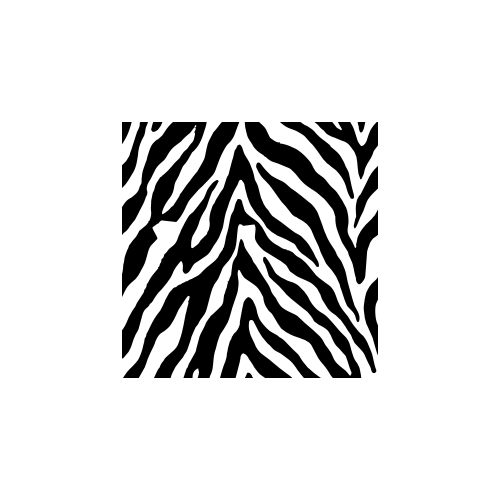 4Animal print is one of the most commercially durable print categories in fashion and interiors. The category carries consistent associations of luxury, wildness, and status. Leopard and cheetah prints are the most commercially active; zebra and tiger follow closely. The pattern cycles between trend status and perennial commercial category - it reliably resurfaces in fashion and interior design across market cycles.
 3The apple pattern is a motif-driven repeat design using apple forms alongside leaves and blossoms. It sits within the broader Botanical Pattern and fruit motif categories, adaptable from naive folk illustration to detailed watercolour rendering. The motif has domestic and seasonal associations - autumn, harvest, orchard - that anchor it in home textiles, kitchen contexts, and children's design markets.
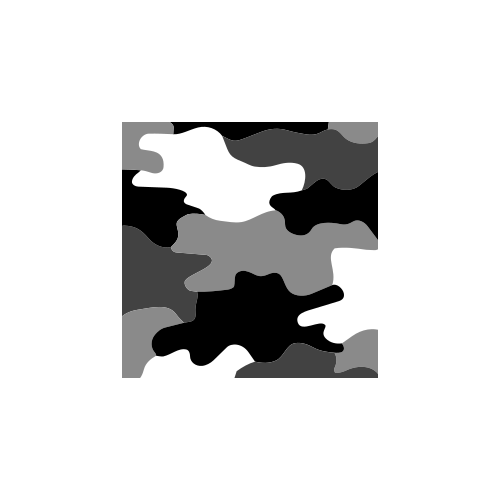 2Army pattern (camouflage) originated as a military concealment technology and has become one of the most commercially active print categories in streetwear, fashion, and licensed product design. The pattern carries persistent cultural associations with military identity, subcultural rebellion, and anti-establishment positioning. It cycles reliably through mainstream fashion while maintaining a permanent baseline presence in workwear, sportswear, and streetwear.
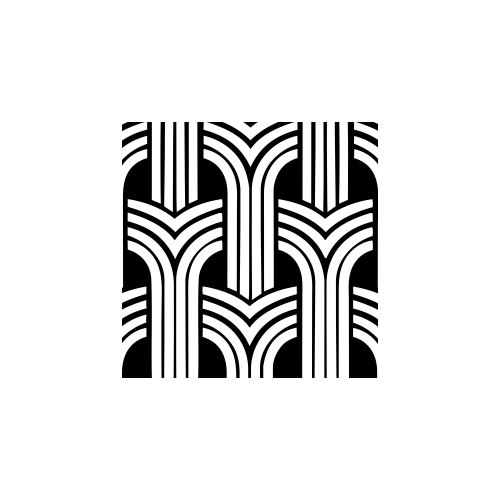 1Art Nouveau was a complete design movement spanning architecture, furniture, glass, ceramics, jewellery, textiles, and graphic arts. In surface pattern design, it is a foundational historical style with persistent commercial relevance - particularly in premium textiles, wallpaper, and licensing. Its botanical vocabulary, linear elegance, and association with the Belle Époque carry strong heritage value across luxury, interiors, and editorial markets. The style experienced significant revival in the 1960s and has remained commercially active since.
 4Asymmetry in surface pattern design refers to the deliberate avoidance of symmetrical arrangement. Rather than cancelling visual energy, an asymmetric pattern harnesses contrast, uneven spacing, and varied visual weights to create compositions that feel dynamic and engaging. It is a structural choice rather than a specific pattern style, applicable across a wide range of motif types and aesthetics.
 0The banana pattern groups banana fruit forms with associated tropical foliage - the large, arch-shaped banana leaf being a distinctive graphic element in its own right. It sits alongside pineapple and monstera patterns within the resort and summer market aesthetic. Both fruit and leaf motifs translate well into bold, graphic repeat structures at various scales.
 0Batik is both a technique and a pattern aesthetic. The wax-resist process produces a distinctive line quality and surface character - particularly the organic crackle lines where wax fractures during dyeing - that distinguishes batik from printed textiles. Indonesian batik was inscribed on the UNESCO Intangible Cultural Heritage list in 2009. As a surface pattern aesthetic, batik-inspired design is commercially active in fashion, home textiles, licensing, and print-on-demand markets.
 1Bohemian pattern is defined by its source diversity - drawing simultaneously from Moroccan tilework, Indian block-print traditions, African mudcloth geometry, Native American and Southwestern weavings, and Eastern European folk embroidery. The unifying quality is not any single motif but palette discipline and a hand-made visual register. Home textiles represent the largest commercial market; mandala patterns form the most commercially active subcategory.
 0Botanical pattern draws a direct line from the historical practice of botanical illustration into surface pattern design. Where tropical pattern pursues bold, exotic, large-scale immediacy, botanical pattern emphasises careful observation, plant specificity, and illustrative accuracy. Watercolour is the primary medium. Applications span fashion, home textiles, wallpaper, and stationery, with strong heritage positioning in the British and European markets.
 0Butterfly pattern has a long history in both fine decorative arts and commercial surface design. As a motif, the butterfly offers symmetry, colour complexity, wing-surface variation, and symbolic richness - making it commercially active across luxury fashion, interior wallpaper, scarves, upholstery, and licensing. The historical trajectory of butterfly pattern runs from scientific illustration (E.A. Seguy, 1925) through haute couture (Schiaparelli, McQueen) to contemporary wallpaper and textiles. Moths are frequently treated as aesthetic extensions of butterfly pattern, with their own design vocabulary.
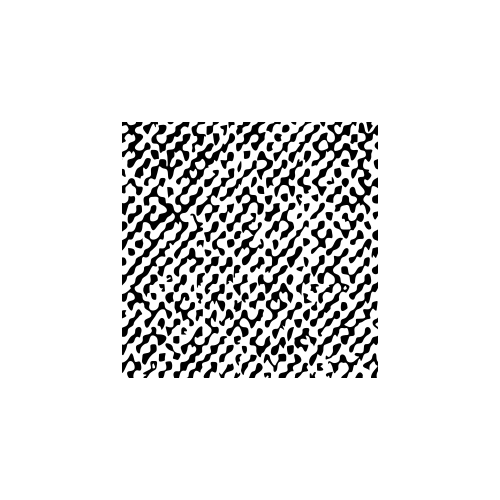 0Calico's pattern identity is primarily an American definition: small-scale all-over florals or geometric motifs on cotton. In the UK, Australia, and New Zealand, "calico" refers to the unbleached unprinted plain-weave fabric itself. In surface pattern design, the American usage is operative - a dense, small-scale printed cotton with multiple tightly packed repeating motifs. The style anchors the quilting fabric, country-home, and folk-domestic markets.
 0Camouflage pattern entered surface pattern design from military application. In its civilian form it functions as a graphic aesthetic rather than a functional concealment system - the pattern carries connotations of military history, outdoor/utility culture, streetwear, and counter-cultural fashion. It is commercially active across casual apparel, accessories, homeware, and stationery, and has undergone repeated fashion revivals since the 1970s. The source confirms directly: "patterns derived from military camouflage are frequently used in fashion clothing."
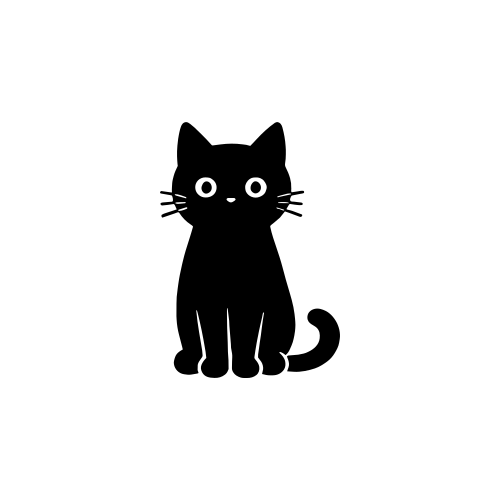 0Cat patterns operate on two levels in surface design: as a figurative motif (cats as characters, poses, or silhouettes) and as a reference to feline coat markings (stripes, spots, and tortoiseshell coloration systems). Feline coat pattern provides a rich, naturally occurring visual vocabulary that directly informs pattern design - particularly tabby stripe, tortoiseshell colour mixing, and calico tricolour arrangements. Domestically, cat-themed surface pattern is commercially active in gifting, stationery, home textiles, and children's products.
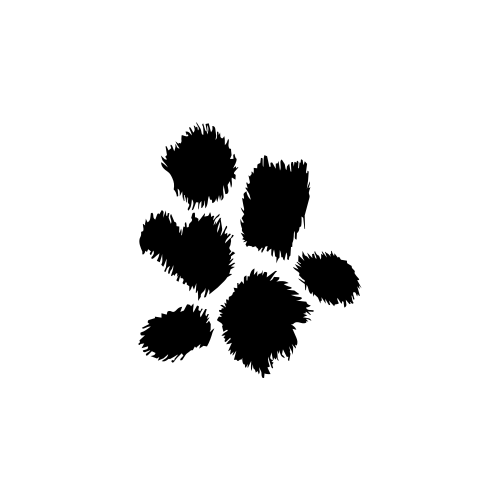 0Cheetah pattern occupies a specific position within the animal print category, differentiated from Leopard Pattern by its smaller, rounder, solid (unfilled) spots and lighter tawny ground colour. In fashion and surface design, cheetah print is commercially active alongside leopard as part of the broader animal print market, though it is less dominant commercially. Its lighter ground and more delicate spot structure give it a different visual character - less saturated and bolder than leopard, more refined and even-toned.
 0Christmas pattern is one of the most commercially reliable seasonal pattern categories in surface design. The seasonal and gift-driven purchasing cycle creates consistent demand for Christmas pattern across wrapping paper, fabric, stationery, homeware, and holiday apparel - with new designs produced annually by retailers and pattern designers. The category is characterised by a stable core motif vocabulary with significant variation in style, from traditional and heritage treatments through to contemporary, minimal, and novelty approaches.
 0Collage as a surface pattern approach is both a historical fine art lineage and a current digital workflow. In physical practice it involves cutting, tearing, and combining paper, photographs, fabric, or found material into a compositional surface. In digital design the same visual logic applies: layering scanned textures, photographs, hand-drawn elements, and type into a single assembled image. Both versions translate into repeating surface patterns with a characteristically layered, eclectic visual texture.
 0Coral pattern encompasses two related but distinct directions. The first uses marine coral organisms as literal motifs - branching polyp forms, sea fans, and reef structures rendered as conversational or abstract surface patterns. The second uses coral as a dominant colour vocabulary: a warm pinkish-orange positioned between orange and pink, applied across botanical, geometric, abstract, and figurative motif categories. Both directions share tropical and coastal associations and are commercially grouped together in resort, swimwear, and lifestyle product contexts.
 0Dinosaur pattern is a commercially reliable children's motif category with consistent market demand. Driven by the persistent cultural popularity of dinosaurs - sustained through museum exhibits, film franchises such as Jurassic Park, and children's media - the category provides surface pattern designers with a distinctive zoological subject that combines fantasy appeal with factual content. Dinosaur pattern is primarily positioned in children's markets but has expanded into adult and lifestyle applications through ironic, graphic, and nostalgic treatments.
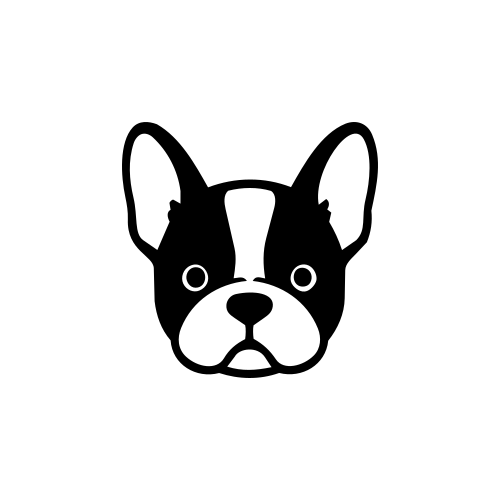 0Dog pattern draws on one of the oldest and most widespread human-animal relationships. Dogs have been depicted in decorative arts across cultures and centuries - from prehistoric rock carvings and Greek ceramics through Renaissance portraiture and Victorian oil painting to contemporary character illustration. As a surface pattern motif, dog imagery carries strong associations with loyalty, companionship, and domestic life, making it commercially reliable across gifting, home textiles, and lifestyle products. The variety of dog breeds provides a visually rich design vocabulary - from the elegant silhouette of the greyhound through the square-headed bulldog to the fluffy outline of the samoyed.
 0Emoji pattern brings the visual vocabulary of digital communication into surface pattern design. The motifs are drawn directly from the standardised Unicode emoji library - the brightly coloured, flat-graphic pictograms used in text messaging and digital communication worldwide. As a pattern type, emoji prints belong to the conversational and novelty print category: they use immediately recognisable popular-culture imagery as the primary design element, prioritising cultural reference and emotional resonance over abstract or aesthetic composition.
 0The fleur-de-lis is a symmetrical three-part form: a central upward-pointing petal flanked by two outward-curving petals, all bound at the base by a horizontal band or ring. As a surface pattern, it appears in seamless all-over repeats, formal damask compositions, trellis grids, and contemporary minimalist interpretations. Its heritage associations - French royalty, European heraldry, Christian iconography - give it a luxury and classical positioning that remains commercially active across wallpaper, home furnishings, and fashion.
 0Floral pattern is the broadest and commercially most active category in surface pattern design. It encompasses any design in which flowers, foliage, stems, and botanical elements constitute the primary visual subject. The category spans a wide range of sub-types - from dense all-over repeats to spaced individual blooms - and includes distinct historical styles with their own visual languages. Floral pattern has been central to textile design across virtually every culture and era, and remains the highest-volume category in wallpaper, fabric, fashion, and home textiles today.
 0Flower pattern refers specifically to designs where recognisable flower species - roses, peonies, dahlias, tulips, and others - function as the primary repeating motif. It is the most direct sub-category within the broader Floral Pattern family. While "floral pattern" encompasses the full range of botanical and plant-derived design, "flower pattern" centres on the rendered flower head or bloom as the dominant visual unit. The species, rendering style (realistic, stylised, graphic, watercolour), and arrangement mode together define the commercial character of a given flower pattern.
 0Fruit pattern uses illustrated or stylised fruit forms as primary repeating motifs. The category sits within the broader Floral Pattern family, drawing on the same botanical illustration tradition as flower and plant patterns. Fruit pattern has a long history in decorative arts - William Morris's block-printed "Fruit" wallpaper of 1862 is among the most significant historic examples - and continues as an active commercial category across interiors, fashion, and licensing. The category ranges from vintage botanical-style illustration through to contemporary graphic and pop-art treatments.
 0Ghost pattern is a conversational/novelty print type defined by its motif: the ghost - a simplified, typically friendly or cute figure drawn from Halloween and popular culture iconography. In surface pattern design, ghost patterns appear most actively in seasonal Halloween product ranges: children's apparel, home textiles, wrapping paper, party supplies, and stationery. A separate but related use of "ghost pattern" in graphic and digital design refers to a faint, low-contrast background texture - a subtle pattern using near-matched tones to add visual depth without distracting from foreground content.
 0Halloween pattern is a major commercial category in the seasonal surface design market, ranked alongside Christmas and Easter as one of the three biggest seasonal pattern opportunities. The commercial window runs from August through October, giving designers significant lead time for seasonal product. The market has segmented significantly in recent years - the traditional orange-and-black children's aesthetic is now just one of five recognised commercial directions, with adult-targeted pastel Halloween, vintage, and witchy/cottagecore aesthetics commanding significant and growing market share. Origins in the Celtic festival of Samhain (c. 1st century BC) provide a deep symbolic vocabulary that designers continue to draw from.
 0Hawaiian pattern refers to the printed textile aesthetic developed for and by the aloha shirt (also called the Hawaiian shirt) in 1920s-1930s Hawaii. Characterised by all-over tropical, floral, and Polynesian-inspired motifs in bold multicolour compositions, Hawaiian pattern evolved from the use of Japanese kimono fabrics by early Hawaiian garment makers, incorporating indigenous Hawaiian tapa and quilt design influences alongside the imported Japanese aesthetic. The pattern type has a documented commercial and cultural history, and remains commercially active in resort wear, summer fashion, and global casual wear.
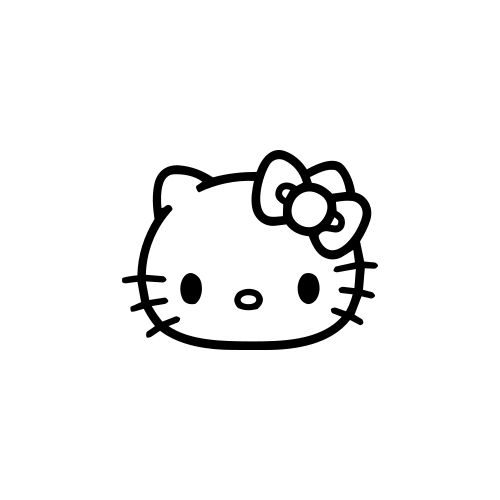 0Hello Kitty pattern is a surface design category defined by the use of the Hello Kitty character and associated Sanrio imagery as primary motifs in all-over repeats and placement designs. Unlike most surface pattern types, which are defined by visual structure or motif vocabulary, Hello Kitty pattern is defined by intellectual property - the Sanrio character created in 1974 by Yuko Shimizu. Its significance in surface pattern design lies in its scale as a licensing property: it represents one of the most commercially important character licensing programmes in the world, with an estimated $8 billion in retail sales in 2013, 50,000+ licensed product lines, and operations across 130+ countries. For surface designers, Hello Kitty is a primary case study in character-based licensed pattern.
 0Horse pattern uses the horse figure - in full-body illustration, silhouette, or stylised form - as the primary surface design motif. The category sits within the broader animal print and figurative pattern family. It is commercially active across equestrian lifestyle products, country and rural aesthetic homeware, children's textiles and stationery, and seasonal gift ranges. The horse's visual vocabulary - drawn from the diverse range of horse coat colours and marking types - provides a rich palette reference for surface designers working in this category.
 0Ice cream patterns sit within the broader novelty and conversational print category: designs whose motifs carry immediate associative meaning rather than abstract visual interest. Ice cream imagery is commercially embedded in summer seasonal product lines, children's products, and food-service contexts. The motifs are universally legible and carry strong positive associations - leisure, summer, sweetness - making them commercially durable across a range of applications and price points. The pattern type spans from simple tossed scatter repeats of single-colour cone silhouettes to detailed illustrated arrangements combining multiple ice cream forms with supporting props (sprinkles, cherries, waffle textures, drip details).
 0Ice patterns in surface pattern design take their visual vocabulary from natural frost and ice crystal formations. The branching, fern-like structures that form when water freezes slowly - across glass, on wet surfaces, in the natural environment - produce distinctive geometric forms that have direct application in textile and wallpaper design. These structures sit between the organic and the geometric: they follow mathematical rules (dendritic branching, hexagonal symmetry in ice crystals) but result in forms that appear organic and irregular. The ice pattern category covers a range from literal representations of frost ferns and window ice to stylised geometric interpretations of crystalline forms, blending into the broader winter and snowflake pattern traditions.
 0Lemon patterns draw from a well-established decorative tradition connecting citrus imagery with Italian and Mediterranean coastal culture. The motif combines immediate visual appeal - the saturated yellow of ripe lemons against deep green foliage - with strong lifestyle associations: Sorrento, the Amalfi Coast, outdoor dining, and warm climate leisure. The lemon pattern is one of the most commercially durable fruit motifs in surface design, present across product categories from luxury fashion to mass-market homeware. Citrus patterns (lemons, oranges, pomegranates) are periodically identified as interior trend drivers. A 2023 trend report cited in Livingetc noted citrus motifs undergoing contemporary re-interpretation in a "Mediterranean-inspired" direction linked to Italian Maximalism and a shift away from simpler florals.
 0Leopard pattern replicates the coat markings of the leopard (Panthera pardus) - black or dark brown spots and rosettes on a tawny gold to tan ground. It is the dominant animal print pattern type in fashion, with a commercial history in womenswear extending from early 20th-century fur substitution through to a continuous contemporary presence. Leopard print sits within the broader Animal Print category and is specifically distinguished from Cheetah Pattern (which has solid black spots on a yellow ground, without rosettes) by its characteristic rosette structure: irregularly shaped clusters of spots forming partial ring shapes around a lighter centre.
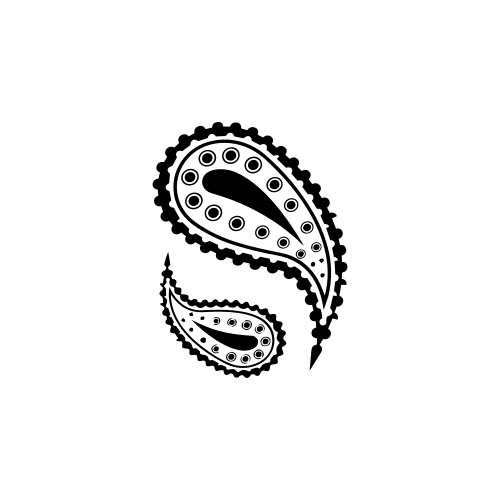 0Paisley is a curved, teardrop-shaped motif with a characteristic bent or curved upper end. The motif originated in Iranian and Persian decorative art - where it is called boteh or buta - and entered the European market through the importation of Kashmir shawls from the 17th century onwards. Its English name comes from Paisley, the Scottish town whose Jacquard-loom weavers became the dominant European producers of paisley-pattern fabric in the 19th century. Paisley is one of the most commercially enduring pattern types in Western fashion, with documented presence from early 19th-century bandanas through to continuous contemporary production. It is known by different names in different cultures: "mango" in most Indian and South Asian languages; "cucumbers" in Russia; "ham hock pattern" in China; "boteh," "cachemire," or "palme" in French design vocabulary.
 0Pet patterns draw on the universal appeal of domestic animal companions to create commercially accessible, emotionally resonant repeating designs. As a novelty/conversational print category, they derive value from the recognisability and affective associations of the depicted animals rather than from abstract visual interest. The category is commercially durable because pet ownership is widespread and pet-related gifting is a large and growing retail segment. The term covers three related but distinct design approaches: illustrative repeat patterns featuring stylised or cartoon animal motifs; custom merchandise where a specific pet's image is made into a personalised repeat; and the natural coat markings of animals themselves (tabby cat patterns, dalmatian spots) used as surface pattern reference.
 0Pig patterns sit within the farm animal novelty print category alongside cow, sheep, chicken, and duck motif designs. As a conversational print, the pig's strong silhouette - rounded body, distinctive snout, curly tail, pink colouring - provides an immediately recognisable motif with broad, non-specific appeal. Commercially, pig patterns operate primarily in children's markets (apparel, nursery products) and in novelty gifting contexts. Pink pig imagery has particular cultural currency in East Asian markets (the Year of the Pig in the Chinese zodiac generates cyclical demand). The farm-to-table and artisan food cultural moment has also contributed some adult-market positioning for pig motifs in kitchen and homeware contexts.
 0Pineapple patterns occupy a specific position within the broader tropical and fruit pattern category: they carry a cultural legacy that elevates them beyond generic novelty fruit imagery. Historically, the pineapple represented hospitality, wealth, and exotic status in Colonial America, where the fruit's rarity and expense made it a meaningful gift and decorative statement. This symbolic weight persists in contemporary usage. The pineapple pattern category also encompasses a distinct craft tradition: the crochet pineapple stitch, a recognised lace motif with a characteristic widening-then-narrowing teardrop structure. This craft application has given the pineapple pattern a textural, handmade presence alongside its graphic print applications.
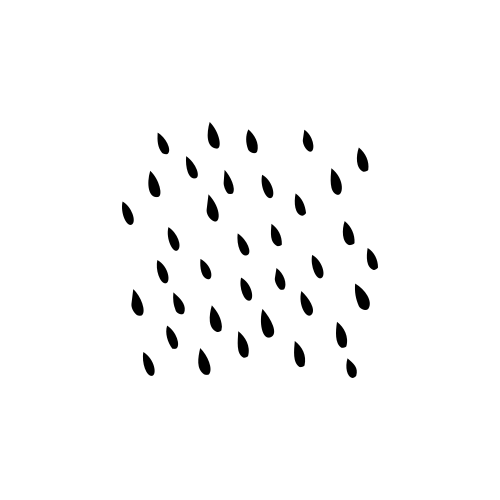 0Rain patterns operate across two distinct design registers. The first is an illustrative or abstract surface pattern tradition: raindrop shapes, falling lines, drip motifs, and weather-associated imagery (clouds, umbrellas, puddle reflections) applied to textiles, stationery, and homeware. The second is the military camouflage tradition, in which broken vertical irregular lines on a muted ground produce patterns colloquially known as "raindrop" camouflage - a category with its own textile and design history. In consumer surface pattern design, rain and drip motifs have consistent commercial applications in children's products (particularly for rainy weather themes), fashion (particularly April/spring collections), and occasion-based stationery (umbrellas and rain for specific greeting card markets).
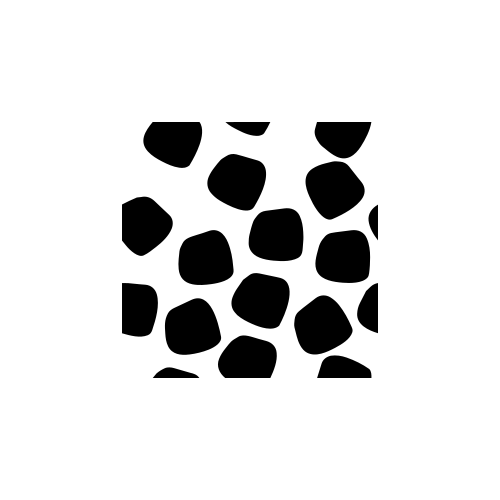 0Random patterns (or toss patterns) are one of the most technically demanding repeat structures in surface pattern design. Their purpose is to appear non-repeating: motifs are placed with varied rotation, scale, and spacing to eliminate any visible grid. When well-executed, a random pattern appears as if the motifs were scattered freely, making the tile structure invisible across a large surface. The style is particularly valued when naturalistic or loose aesthetics are the goal.
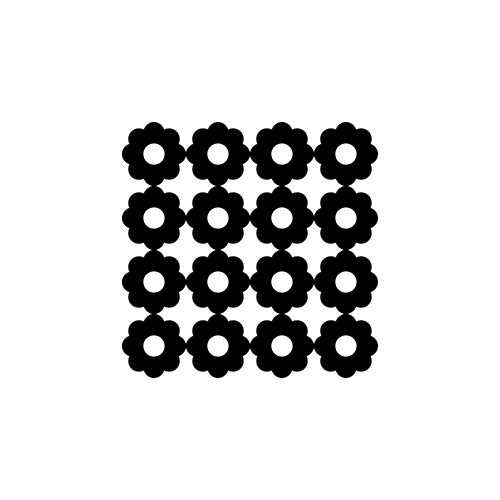 0Retro patterns are not a single pattern type but a stylistic mode that borrows visual conventions from earlier decades. In surface pattern design, "retro" typically references the aesthetics of the mid-20th century: the bold graphics and atomic motifs of the 1950s, the psychedelic colour and organic forms of the 1960s and 1970s, and the domestic print vocabularies of the immediate post-war period. The defining characteristic is intentional historical recall - the pattern signals its era of reference rather than trying to appear contemporary.
 0Rocket patterns belong to the space-theme category of novelty and conversational prints - a commercially durable children's product category alongside dinosaur, construction vehicle, and dinosaur motif patterns. The rocket's strong silhouette, cultural associations with adventure and exploration, and appeal to children's imagination give it reliable commercial traction in licensed and unlicensed product design. The aesthetic splits into two dominant traditions: the retro-futuristic style (drawing on 1950s-1960s science fiction illustration and Space Age design, featuring bullet-shaped metallic rockets with fins and flames), and the contemporary cartoon style (simplified, friendly forms suited to infant and younger children's products).
 0The rose is among the most widely used motifs in surface pattern design across all major product categories. Rose patterns draw on the flower's deep cultural associations - love, beauty, femininity, celebration - and its strong visual identity: the distinctive layered petal form is instantly readable at any scale. The motif appears across the full range of surface pattern applications, from fine chintz prints to bold digital repeats, and sustains consistent commercial demand particularly in fashion, home textiles, and gifting.
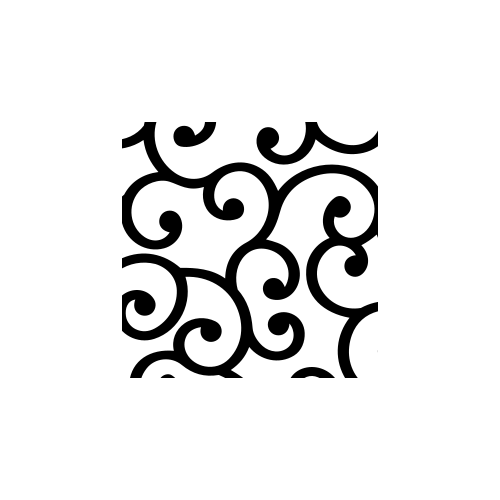 0The scroll pattern is an ornamental system built from the logic of plant growth: a continuous stem that branches, curls, and spirals, producing a flowing, all-over structure that can fill any surface without obvious repeat. Unlike grid-based geometric patterns, scroll patterns follow organic rhythms - mirroring the way vines, tendrils, and climbing plants ramify through space. This structural flexibility has made scroll patterns one of the most versatile and durable motif traditions in decorative history. They appear as architectural borders, woven textile structures, painted ceramic ornament, carved stone relief, and printed wallpaper. In surface pattern design, they translate naturally into all-over repeating structures with strong commercial applications across wallpaper, furnishing fabric, fashion, and heritage design reproduction.
 0A simple repeating pattern is a design in which one or more motifs are systematically duplicated to create an infinitely continuous surface. The repeat unit - the smallest tile that contains the complete design - is placed according to a layout rule that governs how tiles relate to each other spatially. Understanding these layout rules is considered one of the core technical competencies of surface pattern design. Once motifs are established, a designer can produce multiple coordinating patterns by applying different repeat layouts to the same elements.
 0Sky patterns draw on the day and night sky as their primary design source, incorporating cloud formations, stars, celestial bodies, and constellation arrangements as repeating motifs. As a category, sky patterns span a wide tonal and stylistic range: soft pastel daytime cloud compositions for nursery textiles, midnight-blue constellation charts for adult wallpaper, and golden celestial symbols for fashion accessory prints. The astronomical framework of constellations - both the 88 officially recognised IAU groupings and informal asterisms - provides a named and historically grounded motif vocabulary that lends sky patterns an educational and heritage dimension beyond purely decorative use.
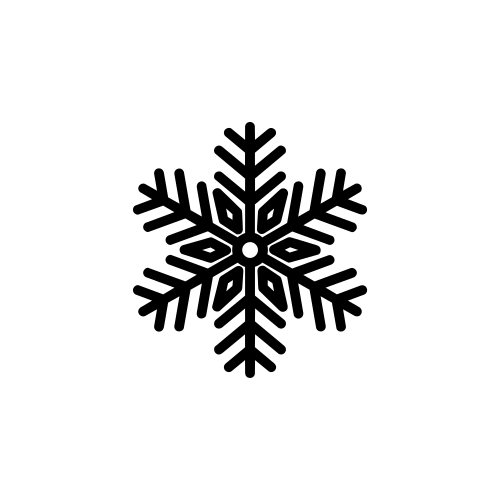 0Snow patterns in surface pattern design are primarily driven by the snowflake motif and its variants. The snowflake is one of the most geometrically distinctive natural forms - its strict sixfold symmetry, intricate branching, and infinite variation within a fixed structural rule make it an enduringly rich source for surface pattern. Snow patterns are strongly seasonal, with commercial demand concentrated in autumn/winter product ranges, Christmas collections, and winter homeware.
 0Space patterns draw on astronomy and science-fiction aesthetics for decorative surface design, using the visual vocabulary of the night sky and space exploration as motif material. The category spans a wide stylistic range - from precise star-chart illustrations to cartoon rocket ships, from photographic nebula-inspired digital prints to mid-century retro-futurist designs. In surface pattern terms, "space" most directly refers to this astronomical and sci-fi thematic category, not to the concept of negative space or spatial grid systems in design.
 0Strawberry patterns are among the most commercially resilient fruit motifs in surface pattern design, sustained by the strawberry's strong visual identity (vivid red form, distinctive seed texture, bright green calyx and leaves), its seasonal associations with summer and fresh abundance, and its recurring cultural presence in design history. The motif spans a wide stylistic range, from botanical illustration to flat graphic design, and is particularly associated with childrenswear, women's fashion, and decorative homeware.
 0Swirl and spiral patterns draw on one of the most fundamental geometric structures in mathematics and nature. The spiral - a curve that emanates from a point and moves progressively further away as it rotates - appears across natural forms (nautilus shells, sunflower seed heads, unfurling ferns) and across cultures and millennia of decorative art (Celtic triple-spirals, Islamic arabesque scrollwork, Art Nouveau organic curves). In surface pattern design, swirl and spiral forms create a sense of dynamic flow and movement, and are particularly associated with fluid, organic, or energetic aesthetic directions.