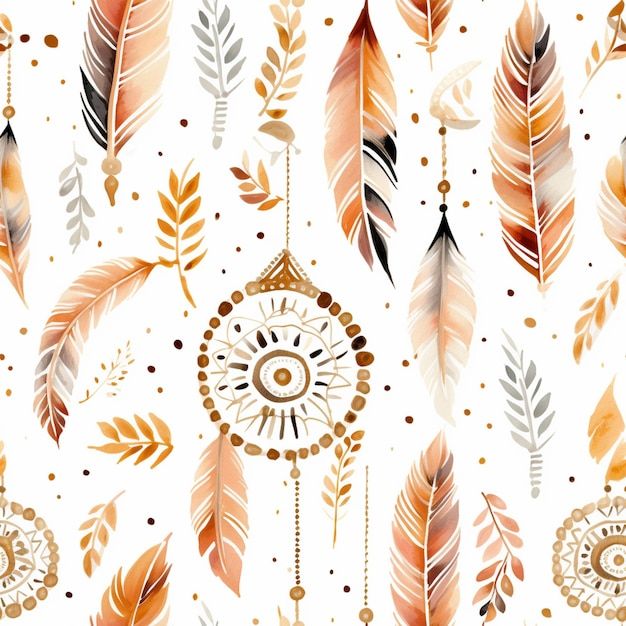
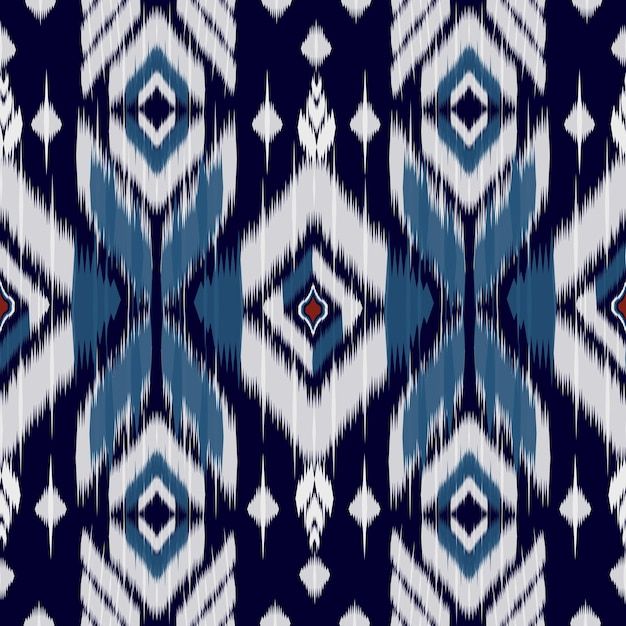
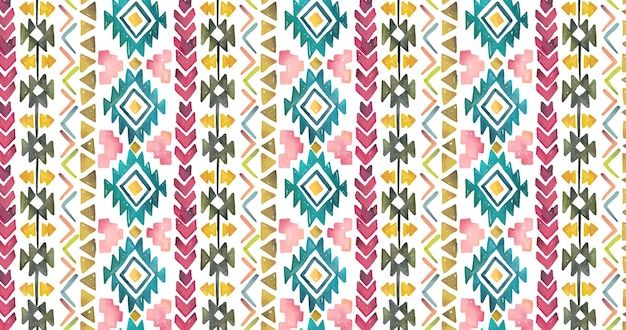
Bohemian pattern is defined by its source diversity - drawing simultaneously from Moroccan tilework, Indian block-print traditions, African mudcloth geometry, Native American and Southwestern weavings, and Eastern European folk embroidery. The unifying quality is not any single motif but palette discipline and a hand-made visual register. Home textiles represent the largest commercial market; mandala patterns form the most commercially active subcategory.
We use cookies to improve your experience and understand how PatternDesigners is used.
Bohemian pattern is defined by its source diversity - drawing simultaneously from Moroccan tilework, Indian block-print traditions, African mudcloth geometry, Native American and Southwestern weavings, and Eastern European folk embroidery. The unifying quality is not any single motif but palette discipline and a hand-made visual register. Home textiles represent the largest commercial market; mandala patterns form the most commercially active subcategory.
Bohemian patterns tend toward medium-to-high motif density, with layered compositions built from mixed-source motifs. Lines are intentionally imperfect - slightly irregular circles, hand-traced edges, and visible registration variation are part of the authentic character. The palette reads as warm and sun-aged rather than fresh or clean.
Both geometric and free-form compositions appear. Moroccan tile-based geometrics demand mathematical precision (zellige-derived star patterns, eight-point grids). Mandala repeats use radial symmetry, typically arranged on a grid or as a scattered repeat with secondary fill motifs. Mudcloth-derived linear geometrics work as blender-weight patterns. Layered mixed-motif compositions work as scattered or asymmetric all-overs.
Core palette: rust orange, terracotta, ochre, burnt sienna, deep teal, olive green, cream, warm brown, mustard yellow, dusty rose. Jewel-tone accents - amethyst purple, sapphire blue, emerald - appear as punctuation rather than foundation colours. Pure white and pure black are absent; cream and charcoal stand in their place. The overall register reads warm, aged, and saturated.
The term "bohemian" derives from the French Bohémien, originally associated with the Roma community and a historical misconception that they originated from Bohemia (Czech Republic). The modern bohemian aesthetic in fashion and surface pattern emerged from the 1960s-1970s counterculture movements, notably Woodstock and the hippie era, which drew on global textile traditions filtered through a free-spirited, anti-establishment sensibility. Contemporary boho pattern design continues the global referencing approach, largely avoiding the more imprecise "tribal" descriptor.
Bohemian pattern is defined by its source diversity - drawing simultaneously from Moroccan tilework, Indian block-print traditions, African mudcloth geometry, Native American and Southwestern weavings, and Eastern European folk embroidery.
Bohemian patterns tend toward medium-to-high motif density, with layered compositions built from mixed-source motifs. Lines are intentionally imperfect - slightly irregular circles, hand-traced edges, and visible registration variation are part of the authentic character.
Heritage
Both geometric and free-form compositions appear. Moroccan tile-based geometrics demand mathematical precision (zellige-derived star patterns, eight-point grids). Mandala repeats use radial symmetry, typically arranged on a grid or as a scattered repeat with secondary fill motifs.
Emblem
Core palette: rust orange, terracotta, ochre, burnt sienna, deep teal, olive green, cream, warm brown, mustard yellow, dusty rose. Jewel-tone accents - amethyst purple, sapphire blue, emerald - appear as punctuation rather than foundation colours.
The term "bohemian" derives from the French Bohémien, originally associated with the Roma community and a historical misconception that they originated from Bohemia (Czech Republic).
Paisley Pattern