Types
 1Bohemian pattern is defined by its source diversity - drawing simultaneously from Moroccan tilework, Indian block-print traditions, African mudcloth geometry, Native American and Southwestern weavings, and Eastern European folk embroidery. The unifying quality is not any single motif but palette discipline and a hand-made visual register. Home textiles represent the largest commercial market; mandala patterns form the most commercially active subcategory.
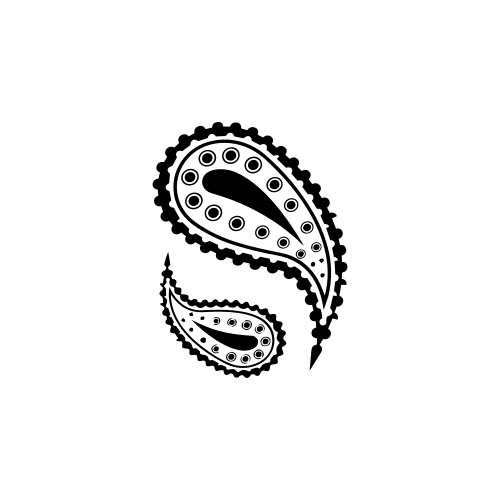 0Paisley is a curved, teardrop-shaped motif with a characteristic bent or curved upper end. The motif originated in Iranian and Persian decorative art - where it is called boteh or buta - and entered the European market through the importation of Kashmir shawls from the 17th century onwards. Its English name comes from Paisley, the Scottish town whose Jacquard-loom weavers became the dominant European producers of paisley-pattern fabric in the 19th century. Paisley is one of the most commercially enduring pattern types in Western fashion, with documented presence from early 19th-century bandanas through to continuous contemporary production. It is known by different names in different cultures: "mango" in most Indian and South Asian languages; "cucumbers" in Russia; "ham hock pattern" in China; "boteh," "cachemire," or "palme" in French design vocabulary.
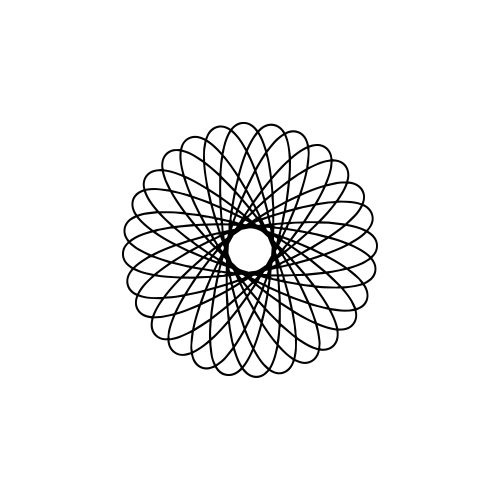 0Radial patterns organise their design elements around a central origin point, from which motifs, lines, or shapes extend outward in all directions. The structure produces a strong visual focus and an inherent sense of balance and rhythm. Radial composition is one of the most ancient and cross-cultural structural principles in decorative art, appearing in mandalas, rose windows, Islamic geometric mosaics, and natural forms.
You've reached the end
3 Types