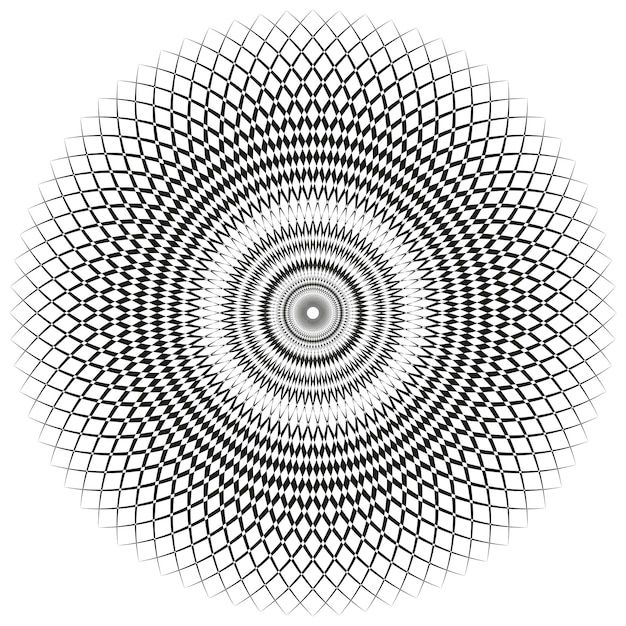
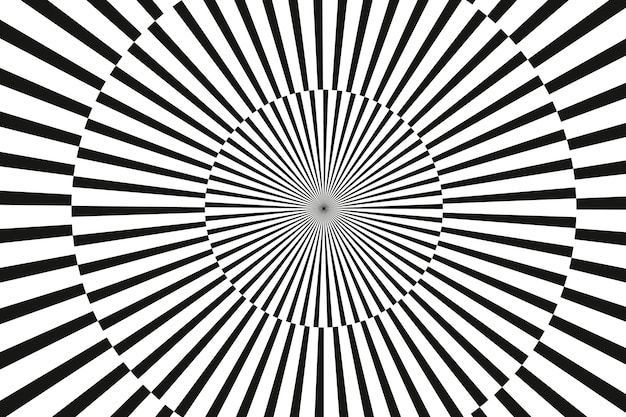
Radial patterns organise their design elements around a central origin point, from which motifs, lines, or shapes extend outward in all directions. The structure produces a strong visual focus and an inherent sense of balance and rhythm. Radial composition is one of the most ancient and cross-cultural structural principles in decorative art, appearing in mandalas, rose windows, Islamic geometric mosaics, and natural forms.
We use cookies to improve your experience and understand how PatternDesigners is used.
Radial patterns organise their design elements around a central origin point, from which motifs, lines, or shapes extend outward in all directions. The structure produces a strong visual focus and an inherent sense of balance and rhythm. Radial composition is one of the most ancient and cross-cultural structural principles in decorative art, appearing in mandalas, rose windows, Islamic geometric mosaics, and natural forms.
The defining feature is centrifugal organisation: all elements point toward or away from a shared centre. The result is a pattern with one clear focal point, strong rotational symmetry, and a visual energy that reads as either expanding outward or converging inward depending on how elements are arranged. Radial patterns can be tight and geometric or loose and organic. Complexity increases as additional rings of elements are added around the centre.
Radial patterns are typically built using rotational symmetry, with elements repeated at equal angular intervals around the centre point. Common subdivisions are 4-fold, 6-fold, 8-fold, and 12-fold rotational symmetry. Elements may also be mirrored around the centre (reflectional symmetry combined with rotational symmetry). In surface pattern design, radial patterns are most commonly used as standalone placement motifs or medallion elements rather than continuous repeating fields.
Natural sources for radial patterns include: snowflakes (sixfold symmetry), flowers (petals radiating from a centre), sunbursts, spider webs, and nautilus shell cross-sections. Architectural sources include rose windows in Gothic cathedrals, Islamic geometric mosaics, and mandala diagrams. Radial patterns built from geometric elements include starbursts, pinwheels, and compass rose forms.
Colour in radial patterns typically emphasises the central focal point - often with the highest saturation or contrast at the centre, fading or alternating outward. Geometric radial patterns in Islamic-influenced design use highly saturated, complex colour progressions. Mandala-inspired radial patterns may use more meditative, tonal palettes. Natural-form radials (sunflowers, snowflakes) often appear in monochrome or limited palettes that emphasise structure over colour.
Radial pattern construction appears independently across most world cultures. Islamic geometric art, which developed sophisticated multi-fold radial structures in tilework, textiles, and architecture, represents one of the most technically advanced applications of radial design. Rose windows in Gothic cathedrals (12th-16th centuries) are among the most architecturally prominent radial pattern applications in Western design. Mandala diagrams from Hindu and Buddhist traditions are specifically radial in structure, with religious and meditative significance attached to their symmetry. Natural radial structures - sunflowers following Fibonacci spirals, snowflake sixfold symmetry - have consistently informed design across eras.
Radial patterns organise their design elements around a central origin point, from which motifs, lines, or shapes extend outward in all directions. The structure produces a strong visual focus and an inherent sense of balance and rhythm.
The defining feature is centrifugal organisation: all elements point toward or away from a shared centre. The result is a pattern with one clear focal point, strong rotational symmetry, and a visual energy that reads as either expanding outward or converging inward depending on how elements are arranged.
Fundamentals
Radial patterns are typically built using rotational symmetry, with elements repeated at equal angular intervals around the centre point. Common subdivisions are 4-fold, 6-fold, 8-fold, and 12-fold rotational symmetry.
Natural sources for radial patterns include: snowflakes (sixfold symmetry), flowers (petals radiating from a centre), sunbursts, spider webs, and nautilus shell cross-sections. Architectural sources include rose windows in Gothic cathedrals, Islamic geometric mosaics, and mandala diagrams.
Colour in radial patterns typically emphasises the central focal point - often with the highest saturation or contrast at the centre, fading or alternating outward. Geometric radial patterns in Islamic-influenced design use highly saturated, complex colour progressions.
Radial pattern construction appears independently across most world cultures. Islamic geometric art, which developed sophisticated multi-fold radial structures in tilework, textiles, and architecture, represents one of the most technically advanced applications of radial design.