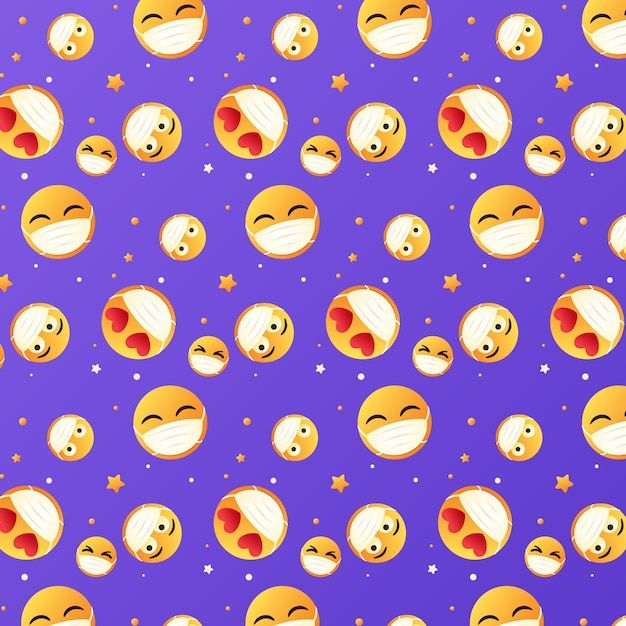
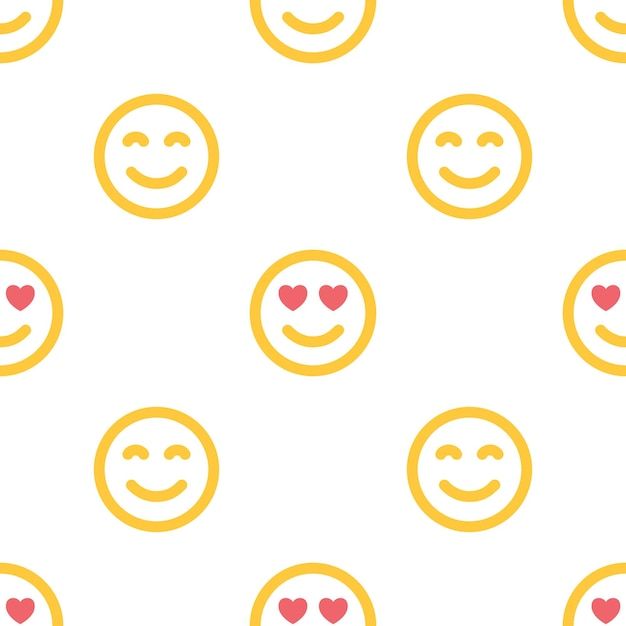
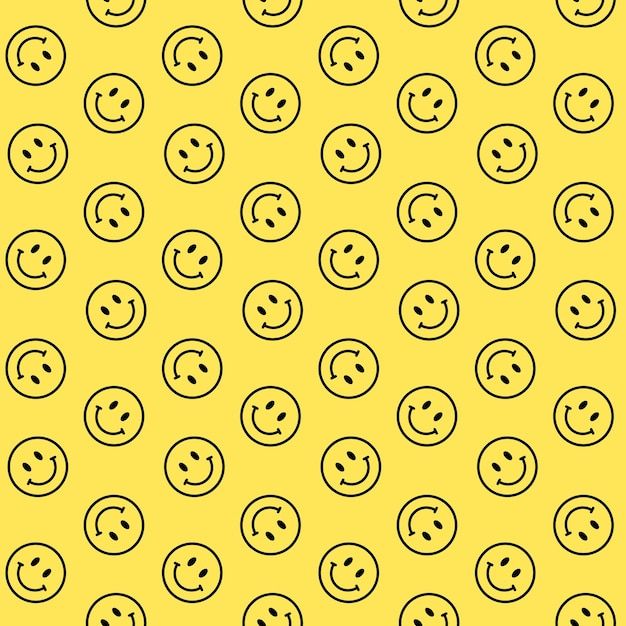
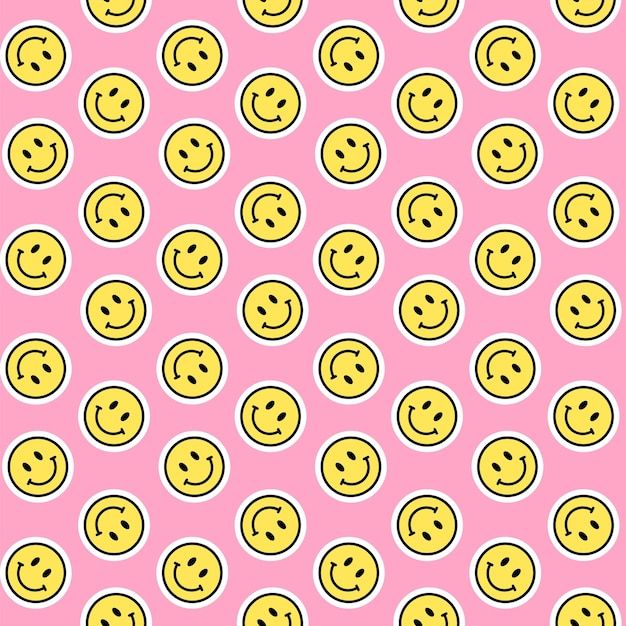
Emoji pattern brings the visual vocabulary of digital communication into surface pattern design. The motifs are drawn directly from the standardised Unicode emoji library - the brightly coloured, flat-graphic pictograms used in text messaging and digital communication worldwide. As a pattern type, emoji prints belong to the conversational and novelty print category: they use immediately recognisable popular-culture imagery as the primary design element, prioritising cultural reference and emotional resonance over abstract or aesthetic composition.
We use cookies to improve your experience and understand how PatternDesigners is used.
Emoji pattern brings the visual vocabulary of digital communication into surface pattern design. The motifs are drawn directly from the standardised Unicode emoji library - the brightly coloured, flat-graphic pictograms used in text messaging and digital communication worldwide. As a pattern type, emoji prints belong to the conversational and novelty print category: they use immediately recognisable popular-culture imagery as the primary design element, prioritising cultural reference and emotional resonance over abstract or aesthetic composition.
Bright, flat-colour pictographic motifs rendered in the distinctive rounded, simplified graphic style of emoji design. Typically small to medium scale, set in all-over scattered or tossed arrangements. The motifs are highly legible at small sizes - designed originally for screen display at 12×12 to 72×72 pixels. Multi-motif prints mix emoji from across categories (faces, food, symbols, animals) for maximum colour and variety; single-category prints isolate one emoji type for a more focused aesthetic.
All-over tossed scatter is the dominant structure - individual emoji distributed randomly across the ground in varying sizes and orientations. Themed groupings cluster related emoji (expression faces, food items, love symbols) for a more curated look. Single-motif repeats use one emoji symbol repeated across the surface. The flat, icon-like nature of the motifs suits any repeat scale.
Bold, saturated, multi-coloured palettes reflecting the screen-optimised original designs. High contrast and visually energetic. The aesthetic is digital-native, pop cultural, and immediately contemporary. Most commercially active in children's and teen markets; also active in novelty gifting, stationery, and seasonal product categories.
The first set of modern emoji was created by Shigetaka Kurita in 1999 for NTT DoCoMo's i-mode mobile platform in Japan. Kurita drew inspiration from manga, Chinese characters, and street sign pictograms. His original 176 emoji - brightly coloured, drawn at single-colour pixel scale - are now held in the permanent collection of the Museum of Modern Art, New York.
Earlier emoji sets were developed by SoftBank (1997) and, newly discovered, by Sharp (1988) and NEC (early 1990s), but Kurita's DoCoMo set achieved the widest adoption and cultural influence.
The Unicode Consortium began standardising emoji in 2010 (Unicode 6.0, 722 emoji) following proposals from Google and Apple employees beginning in 2007. Standardisation made emoji a universal shared visual language across all devices and platforms. Unicode 17.0 (2025) includes 3,953 emoji.
Emoji achieved mainstream cultural recognition in the 2010s - Oxford Dictionaries named 😂 (Face with Tears of Joy) its Word of the Year in 2015. The subsequent decade saw emoji enter surface pattern design as a novelty print category, driven by their recognition across all demographic groups.
Emoji pattern brings the visual vocabulary of digital communication into surface pattern design. The motifs are drawn directly from the standardised Unicode emoji library - the brightly coloured, flat-graphic pictograms used in text messaging and digital communication worldwide.
Bright, flat-colour pictographic motifs rendered in the distinctive rounded, simplified graphic style of emoji design. Typically small to medium scale, set in all-over scattered or tossed arrangements. The motifs are highly legible at small sizes - designed originally for screen display at 12×12 to 72×72 pixels.
Children's apparel and nursery textiles Teen fashion (T-shirts, accessories, swimwear) Seasonal novelty gifting and wrapping paper Stationery: notebooks, greeting cards Phone cases and tech accessories Party supplies and seasonal products
All-over tossed scatter is the dominant structure - individual emoji distributed randomly across the ground in varying sizes and orientations. Themed groupings cluster related emoji (expression faces, food items, love symbols) for a more curated look.
Yellow smiley face and expression emoji (😂, 😍, 😎) Heart and love symbols (❤️, 💕) Food and drink (🍕, 🍦, 🍔) Animal emoji (🐱, 🐶, 🦋) Gesture and symbol emoji (💅, 🤳, ⭐) Face with tears of joy (😂) - the most popular single emoji globally as of 2017
Bold, saturated, multi-coloured palettes reflecting the screen-optimised original designs. High contrast and visually energetic. The aesthetic is digital-native, pop cultural, and immediately contemporary.
The first set of modern emoji was created by Shigetaka Kurita in 1999 for NTT DoCoMo's i-mode mobile platform in Japan. Kurita drew inspiration from manga, Chinese characters, and street sign pictograms.
Pop art Pattern