Types
 0Cat patterns operate on two levels in surface design: as a figurative motif (cats as characters, poses, or silhouettes) and as a reference to feline coat markings (stripes, spots, and tortoiseshell coloration systems). Feline coat pattern provides a rich, naturally occurring visual vocabulary that directly informs pattern design - particularly tabby stripe, tortoiseshell colour mixing, and calico tricolour arrangements. Domestically, cat-themed surface pattern is commercially active in gifting, stationery, home textiles, and children's products.
 0Emoji pattern brings the visual vocabulary of digital communication into surface pattern design. The motifs are drawn directly from the standardised Unicode emoji library - the brightly coloured, flat-graphic pictograms used in text messaging and digital communication worldwide. As a pattern type, emoji prints belong to the conversational and novelty print category: they use immediately recognisable popular-culture imagery as the primary design element, prioritising cultural reference and emotional resonance over abstract or aesthetic composition.
 0Ghost pattern is a conversational/novelty print type defined by its motif: the ghost - a simplified, typically friendly or cute figure drawn from Halloween and popular culture iconography. In surface pattern design, ghost patterns appear most actively in seasonal Halloween product ranges: children's apparel, home textiles, wrapping paper, party supplies, and stationery. A separate but related use of "ghost pattern" in graphic and digital design refers to a faint, low-contrast background texture - a subtle pattern using near-matched tones to add visual depth without distracting from foreground content.
 0Halloween pattern is a major commercial category in the seasonal surface design market, ranked alongside Christmas and Easter as one of the three biggest seasonal pattern opportunities. The commercial window runs from August through October, giving designers significant lead time for seasonal product. The market has segmented significantly in recent years - the traditional orange-and-black children's aesthetic is now just one of five recognised commercial directions, with adult-targeted pastel Halloween, vintage, and witchy/cottagecore aesthetics commanding significant and growing market share. Origins in the Celtic festival of Samhain (c. 1st century BC) provide a deep symbolic vocabulary that designers continue to draw from.
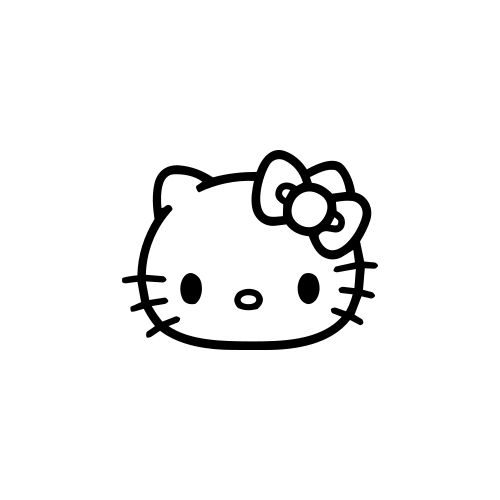 0Hello Kitty pattern is a surface design category defined by the use of the Hello Kitty character and associated Sanrio imagery as primary motifs in all-over repeats and placement designs. Unlike most surface pattern types, which are defined by visual structure or motif vocabulary, Hello Kitty pattern is defined by intellectual property - the Sanrio character created in 1974 by Yuko Shimizu. Its significance in surface pattern design lies in its scale as a licensing property: it represents one of the most commercially important character licensing programmes in the world, with an estimated $8 billion in retail sales in 2013, 50,000+ licensed product lines, and operations across 130+ countries. For surface designers, Hello Kitty is a primary case study in character-based licensed pattern.
 0Ice cream patterns sit within the broader novelty and conversational print category: designs whose motifs carry immediate associative meaning rather than abstract visual interest. Ice cream imagery is commercially embedded in summer seasonal product lines, children's products, and food-service contexts. The motifs are universally legible and carry strong positive associations - leisure, summer, sweetness - making them commercially durable across a range of applications and price points. The pattern type spans from simple tossed scatter repeats of single-colour cone silhouettes to detailed illustrated arrangements combining multiple ice cream forms with supporting props (sprinkles, cherries, waffle textures, drip details).
 0Pet patterns draw on the universal appeal of domestic animal companions to create commercially accessible, emotionally resonant repeating designs. As a novelty/conversational print category, they derive value from the recognisability and affective associations of the depicted animals rather than from abstract visual interest. The category is commercially durable because pet ownership is widespread and pet-related gifting is a large and growing retail segment. The term covers three related but distinct design approaches: illustrative repeat patterns featuring stylised or cartoon animal motifs; custom merchandise where a specific pet's image is made into a personalised repeat; and the natural coat markings of animals themselves (tabby cat patterns, dalmatian spots) used as surface pattern reference.
 0Pig patterns sit within the farm animal novelty print category alongside cow, sheep, chicken, and duck motif designs. As a conversational print, the pig's strong silhouette - rounded body, distinctive snout, curly tail, pink colouring - provides an immediately recognisable motif with broad, non-specific appeal. Commercially, pig patterns operate primarily in children's markets (apparel, nursery products) and in novelty gifting contexts. Pink pig imagery has particular cultural currency in East Asian markets (the Year of the Pig in the Chinese zodiac generates cyclical demand). The farm-to-table and artisan food cultural moment has also contributed some adult-market positioning for pig motifs in kitchen and homeware contexts.
 0Pink is a broad colour family encompassing all light tints of red with varying saturation - from the palest pastel pink through soft coral and warm salmon to vivid hot pink and deep rose. In surface pattern design, pink spans a wide range of commercial positioning: pale pink is associated with femininity, softness, and infant products; bright hot pink with boldness and pop energy; dusty rose with heritage and nostalgia; and millennial pink with a specific 2010s-2020s cultural aesthetic of calm sophistication and gender-inclusive design. The commercial range of pink in surface pattern is wider than any simple "feminine" classification suggests.
 0Sky patterns draw on the day and night sky as their primary design source, incorporating cloud formations, stars, celestial bodies, and constellation arrangements as repeating motifs. As a category, sky patterns span a wide tonal and stylistic range: soft pastel daytime cloud compositions for nursery textiles, midnight-blue constellation charts for adult wallpaper, and golden celestial symbols for fashion accessory prints. The astronomical framework of constellations - both the 88 officially recognised IAU groupings and informal asterisms - provides a named and historically grounded motif vocabulary that lends sky patterns an educational and heritage dimension beyond purely decorative use.
 0The unicorn pattern draws on the mythological single-horned horse as a decorative motif, almost exclusively in its contemporary commercial form: a brightly coloured, pastel, or rainbow-palette character with a spiralling horn, flowing mane, and often surrounded by stars, clouds, rainbows, and sparkle elements. The motif reached peak commercial prominence around 2017, driven by social-media-amplified consumer aesthetics across food, beauty, fashion, and homeware. As a surface pattern type, unicorn prints remain commercially active in children's products, gifting, and seasonal novelty lines.
You've reached the end
11 Types