Pet patterns draw on the universal appeal of domestic animal companions to create commercially accessible, emotionally resonant repeating designs. As a novelty/conversational print category, they derive value from the recognisability and affective associations of the depicted animals rather than from abstract visual interest. The category is commercially durable because pet ownership is widespread and pet-related gifting is a large and growing retail segment. The term covers three related but distinct design approaches: illustrative repeat patterns featuring stylised or cartoon animal motifs; custom merchandise where a specific pet's image is made into a personalised repeat; and the natural coat markings of animals themselves (tabby cat patterns, dalmatian spots) used as surface pattern reference.
We use cookies to improve your experience and understand how PatternDesigners is used.
Pet patterns draw on the universal appeal of domestic animal companions to create commercially accessible, emotionally resonant repeating designs. As a novelty/conversational print category, they derive value from the recognisability and affective associations of the depicted animals rather than from abstract visual interest. The category is commercially durable because pet ownership is widespread and pet-related gifting is a large and growing retail segment.
The term covers three related but distinct design approaches: illustrative repeat patterns featuring stylised or cartoon animal motifs; custom merchandise where a specific pet's image is made into a personalised repeat; and the natural coat markings of animals themselves (tabby cat patterns, dalmatian spots) used as surface pattern reference.
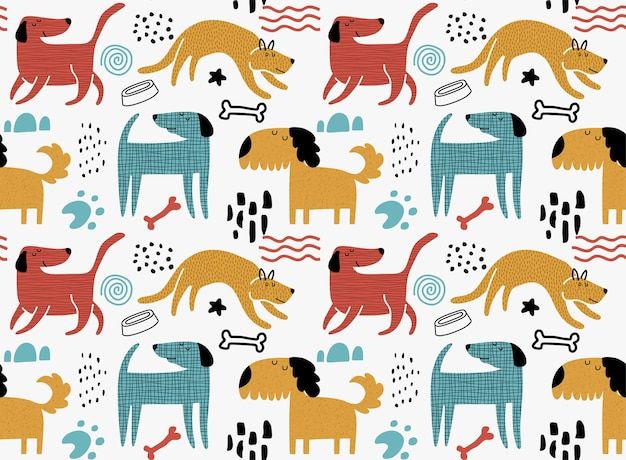
Pet patterns use the visual vocabulary of domestic animal portraiture - faces, full-body silhouettes, characteristic markings, postures, and accessories. Common visual approaches:
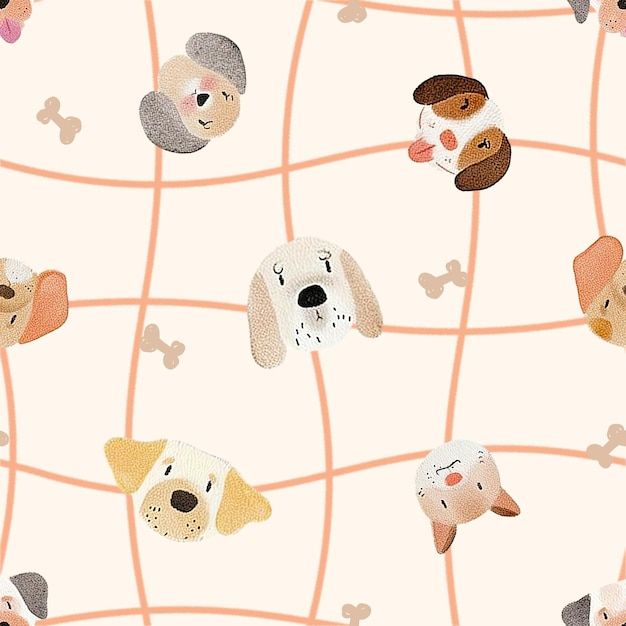
Pet patterns most commonly use a tossed or scattered all-over layout, with individual motif elements distributed at varied angles and scales to avoid obvious horizontal alignment. Portrait-grid arrangements (regular grid of faces) are used where a more formal or graphic result is intended.
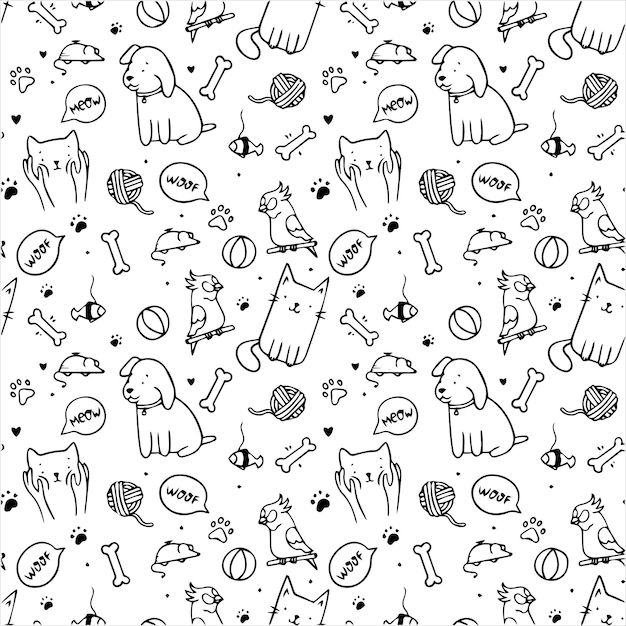
Mixed-element compositions combine multiple motif types - sitting cat, paw print, fish bone, yarn ball - to create a cohesive pet-themed collection within a single tile.
Colour is typically driven by the animal depicted: warm tawny/caramel for dogs, varied for cats (black, orange, tabby). Popular palette approaches include:
Animal companions have been represented in decorative arts throughout history, from Egyptian cat imagery through Victorian pet portraiture. As a distinct commercial surface pattern category, pet patterns developed alongside the growth of pet ownership as a major lifestyle segment in the 20th and 21st centuries, and more specifically alongside the growth of personalised and custom merchandise enabled by digital print-on-demand platforms.
The rise of social media pet culture - pets as content, pets as personality extensions of their owners - has significantly expanded the commercial territory for pet-themed products and made personalised pet portrait patterns a commercially viable category.
Pet patterns draw on the universal appeal of domestic animal companions to create commercially accessible, emotionally resonant repeating designs.
Pet patterns use the visual vocabulary of domestic animal portraiture - faces, full-body silhouettes, characteristic markings, postures, and accessories.
Animal
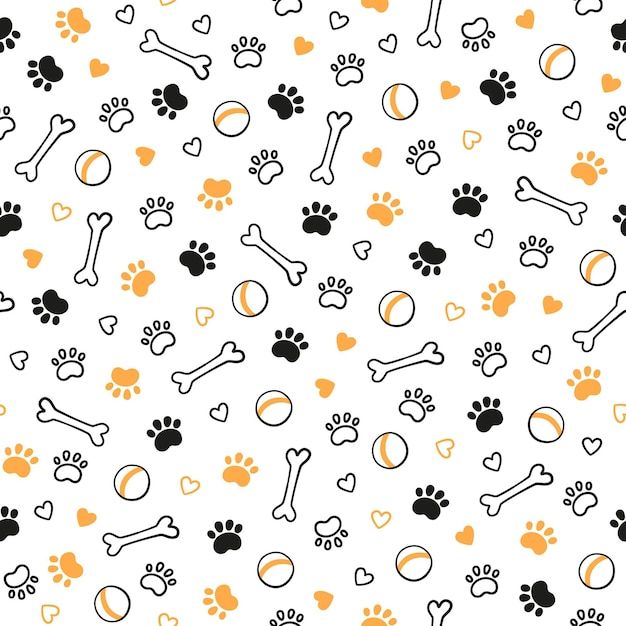
Pet patterns most commonly use a tossed or scattered all-over layout, with individual motif elements distributed at varied angles and scales to avoid obvious horizontal alignment. Portrait-grid arrangements (regular grid of faces) are used where a more formal or graphic result is intended.
Animal
Colour is typically driven by the animal depicted: warm tawny/caramel for dogs, varied for cats (black, orange, tabby).
Animal companions have been represented in decorative arts throughout history, from Egyptian cat imagery through Victorian pet portraiture.