Types
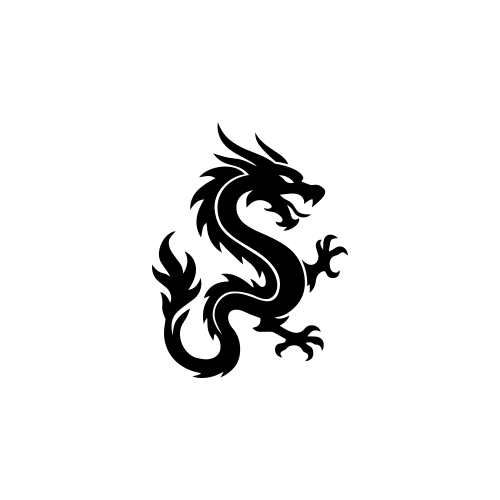 0Dragon pattern in surface design is dominated by East Asian iconographic traditions - particularly the Chinese imperial dragon with its coiled body, five claws, and accompanying symbolic elements (flaming pearl, clouds, waves). This tradition connects to one of the most historically significant applications of surface pattern design: the ceremonial robes of Chinese, Korean, and Japanese imperial courts, in which dragon motifs were encoded symbols of rank and political authority. In contemporary surface design, dragon pattern carries associations with power, mythology, and Asian cultural heritage, and is commercially active across fashion, wallpaper, licensing, and gift products.
 0Emoji pattern brings the visual vocabulary of digital communication into surface pattern design. The motifs are drawn directly from the standardised Unicode emoji library - the brightly coloured, flat-graphic pictograms used in text messaging and digital communication worldwide. As a pattern type, emoji prints belong to the conversational and novelty print category: they use immediately recognisable popular-culture imagery as the primary design element, prioritising cultural reference and emotional resonance over abstract or aesthetic composition.
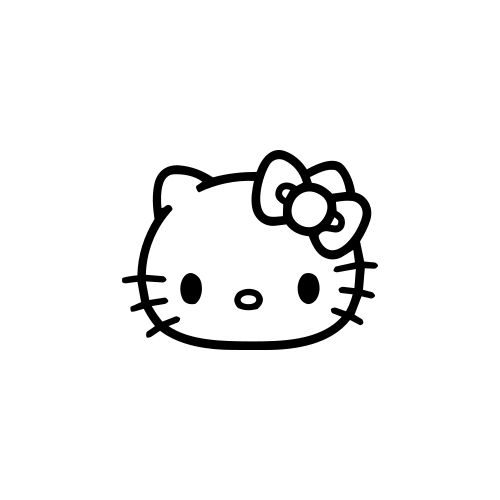 0Hello Kitty pattern is a surface design category defined by the use of the Hello Kitty character and associated Sanrio imagery as primary motifs in all-over repeats and placement designs. Unlike most surface pattern types, which are defined by visual structure or motif vocabulary, Hello Kitty pattern is defined by intellectual property - the Sanrio character created in 1974 by Yuko Shimizu. Its significance in surface pattern design lies in its scale as a licensing property: it represents one of the most commercially important character licensing programmes in the world, with an estimated $8 billion in retail sales in 2013, 50,000+ licensed product lines, and operations across 130+ countries. For surface designers, Hello Kitty is a primary case study in character-based licensed pattern.
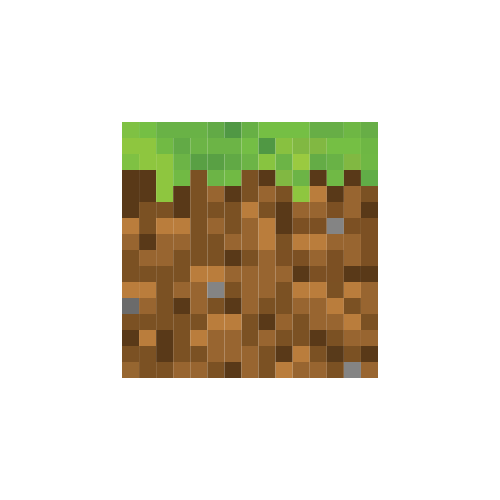 0Minecraft pattern draws its visual identity from the game's core building unit, the "block" - a 1-cubic-metre cell arranged in a three-dimensional grid, with each face rendered from a small square texture. This gives the motif category a distinctive, instantly recognisable look: hard-edged cubes and a visible low-resolution pixel grain, rather than smooth or painterly surfaces. The source is a game-reference article on block mechanics rather than a design source, so this page draws only on the visual/structural facts it documents.
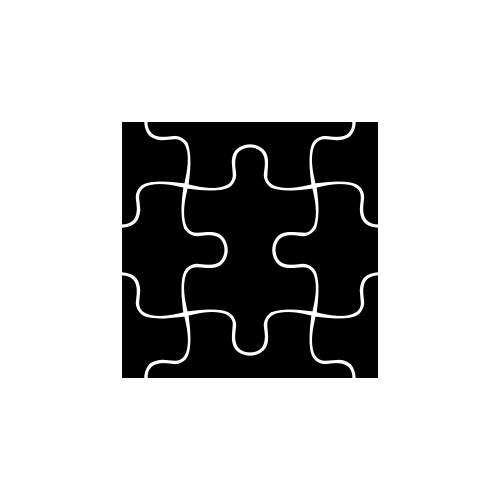 0The puzzle pattern draws on the visual vocabulary of physical puzzles - objects designed to be taken apart or reassembled, most recognisably the jigsaw puzzle. The source is a general Wikipedia article on puzzles as a category of game and toy, not a textile or surface pattern reference, so the motif's design use is inferred narrowly from the shapes and objects it describes rather than documented directly.
 0Rocket patterns belong to the space-theme category of novelty and conversational prints - a commercially durable children's product category alongside dinosaur, construction vehicle, and dinosaur motif patterns. The rocket's strong silhouette, cultural associations with adventure and exploration, and appeal to children's imagination give it reliable commercial traction in licensed and unlicensed product design. The aesthetic splits into two dominant traditions: the retro-futuristic style (drawing on 1950s-1960s science fiction illustration and Space Age design, featuring bullet-shaped metallic rockets with fins and flames), and the contemporary cartoon style (simplified, friendly forms suited to infant and younger children's products).
 0Space patterns draw on astronomy and science-fiction aesthetics for decorative surface design, using the visual vocabulary of the night sky and space exploration as motif material. The category spans a wide stylistic range - from precise star-chart illustrations to cartoon rocket ships, from photographic nebula-inspired digital prints to mid-century retro-futurist designs. In surface pattern terms, "space" most directly refers to this astronomical and sci-fi thematic category, not to the concept of negative space or spatial grid systems in design.
 0Spaceship pattern uses the recognisable silhouettes of real spacecraft - capsules, spaceplanes, rockets, satellites, and space stations - as a repeating decorative motif. The source material is a general technical reference on spacecraft engineering rather than a design or textile source, so this page is limited to the visual vocabulary of spacecraft forms that the source documents; it does not address how this vocabulary is used in surface pattern design in practice.
 0The unicorn pattern draws on the mythological single-horned horse as a decorative motif, almost exclusively in its contemporary commercial form: a brightly coloured, pastel, or rainbow-palette character with a spiralling horn, flowing mane, and often surrounded by stars, clouds, rainbows, and sparkle elements. The motif reached peak commercial prominence around 2017, driven by social-media-amplified consumer aesthetics across food, beauty, fashion, and homeware. As a surface pattern type, unicorn prints remain commercially active in children's products, gifting, and seasonal novelty lines.
You've reached the end
9 Types