The puzzle pattern draws on the visual vocabulary of physical puzzles - objects designed to be taken apart or reassembled, most recognisably the jigsaw puzzle. The source is a general Wikipedia article on puzzles as a category of game and toy, not a textile or surface pattern reference, so the motif's design use is inferred narrowly from the shapes and objects it describes rather than documented directly.
We use cookies to improve your experience and understand how PatternDesigners is used.
The puzzle pattern draws on the visual vocabulary of physical puzzles - objects designed to be taken apart or reassembled, most recognisably the jigsaw puzzle. The source is a general Wikipedia article on puzzles as a category of game and toy, not a textile or surface pattern reference, so the motif's design use is inferred narrowly from the shapes and objects it describes rather than documented directly.
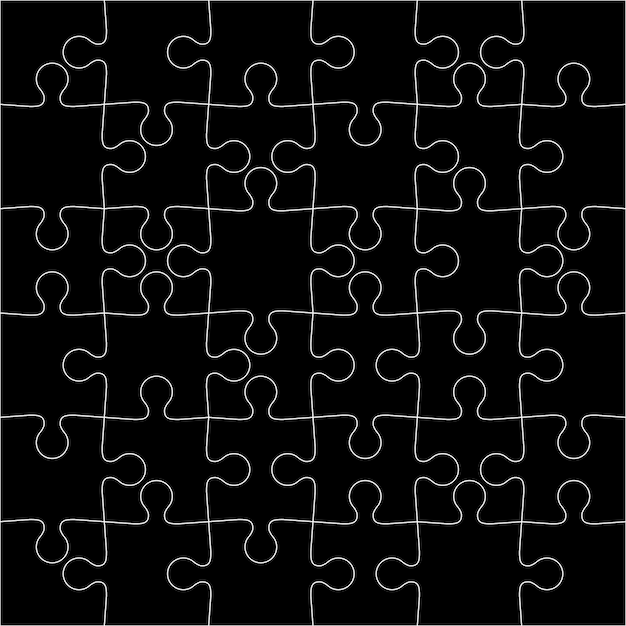
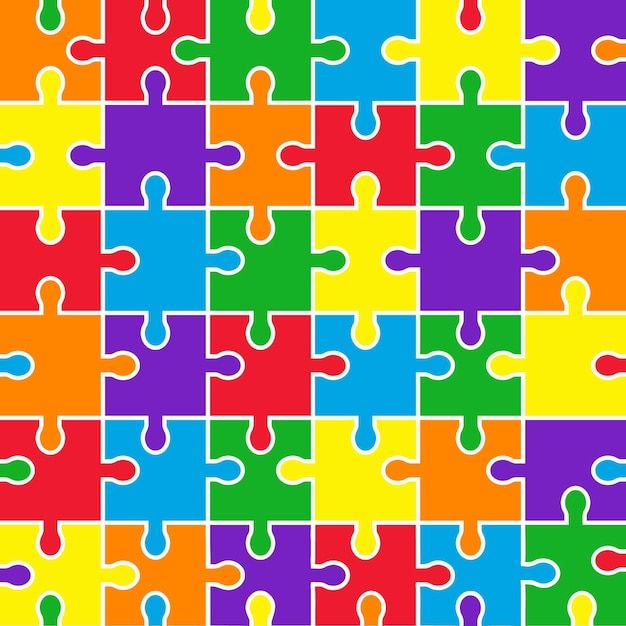
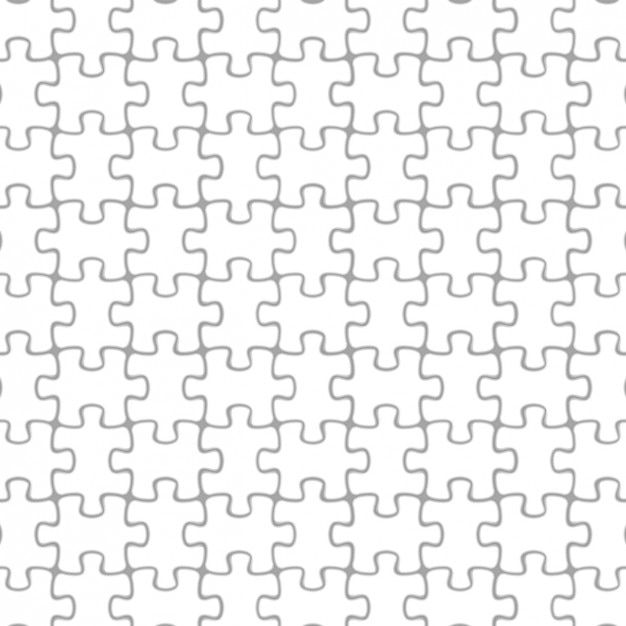
The defining visual unit is the interlocking jigsaw piece: an irregular tile with projecting "tabs" and receiving "blanks" that lock into neighbouring pieces, originating from the practice of sawing a mounted map or picture along the outlines of its sections. Related puzzle forms referenced in the source contribute distinct silhouettes if drawn on: the grid-based sliding puzzle (e.g. the 15 Puzzle), the interlaced rings of the nine linked-rings puzzle, and the flat geometric pieces of tiling puzzles such as Tangram.
The source does not describe repeat-layout conventions for a puzzle motif in surface pattern design. Structurally, jigsaw pieces are edge-to-edge interlocking tiles by nature, which lends the motif toward tessellating, all-over layouts, but this is inferred from the mechanics of the physical object rather than stated in the source.
The source does not specify colour or styling conventions for puzzle motifs.
Jigsaw puzzles were invented around 1760 by British engraver and cartographer John Spilsbury, who mounted a map on wood and sawed it along country outlines as a geography teaching aid; this remained the primary use of jigsaw puzzles until about 1820. Puzzles as a broader category are much older - the nine linked-rings puzzle originated in China during the Warring States period (475-221 BCE), and riddles, the earliest documented puzzle form, appear in Greek mythology (e.g. the riddle of the Sphinx) and throughout the Middle Ages. None of this history is specific to surface pattern or textile design.
The source does not document any use of puzzle imagery in fashion, home textile, wallpaper, or stationery design. It covers puzzles only as games, toys, and objects (jigsaw, mechanical, mathematical, word, and logic puzzles), with no reference to designers, markets, or commercial pattern applications.
The puzzle pattern draws on the visual vocabulary of physical puzzles - objects designed to be taken apart or reassembled, most recognisably the jigsaw puzzle.
The defining visual unit is the interlocking jigsaw piece: an irregular tile with projecting "tabs" and receiving "blanks" that lock into neighbouring pieces, originating from the practice of sawing a mounted map or picture along the outlines of its sections. g.
The source does not document any use of puzzle imagery in fashion, home textile, wallpaper, or stationery design. It covers puzzles only as games, toys, and objects (jigsaw, mechanical, mathematical, word, and logic puzzles), with no reference to designers, markets, or commercial pattern applications.
The source does not describe repeat-layout conventions for a puzzle motif in surface pattern design.
Geometric
The source does not specify colour or styling conventions for puzzle motifs.
Jigsaw puzzles were invented around 1760 by British engraver and cartographer John Spilsbury, who mounted a map on wood and sawed it along country outlines as a geography teaching aid; this remained the primary use of jigsaw puzzles until about 1820. g. the riddle of the Sphinx) and throughout the Middle Ages.
Tessellation Pattern