Strawberry patterns are among the most commercially resilient fruit motifs in surface pattern design, sustained by the strawberry's strong visual identity (vivid red form, distinctive seed texture, bright green calyx and leaves), its seasonal associations with summer and fresh abundance, and its recurring cultural presence in design history. The motif spans a wide stylistic range, from botanical illustration to flat graphic design, and is particularly associated with childrenswear, women's fashion, and decorative homeware.
We use cookies to improve your experience and understand how PatternDesigners is used.
Strawberry patterns are among the most commercially resilient fruit motifs in surface pattern design, sustained by the strawberry's strong visual identity (vivid red form, distinctive seed texture, bright green calyx and leaves), its seasonal associations with summer and fresh abundance, and its recurring cultural presence in design history. The motif spans a wide stylistic range, from botanical illustration to flat graphic design, and is particularly associated with childrenswear, women's fashion, and decorative homeware.
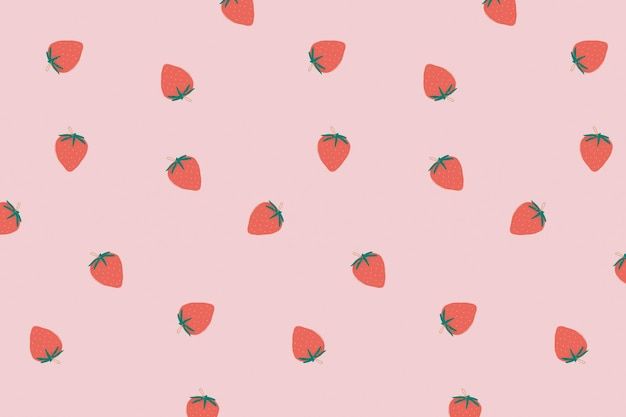
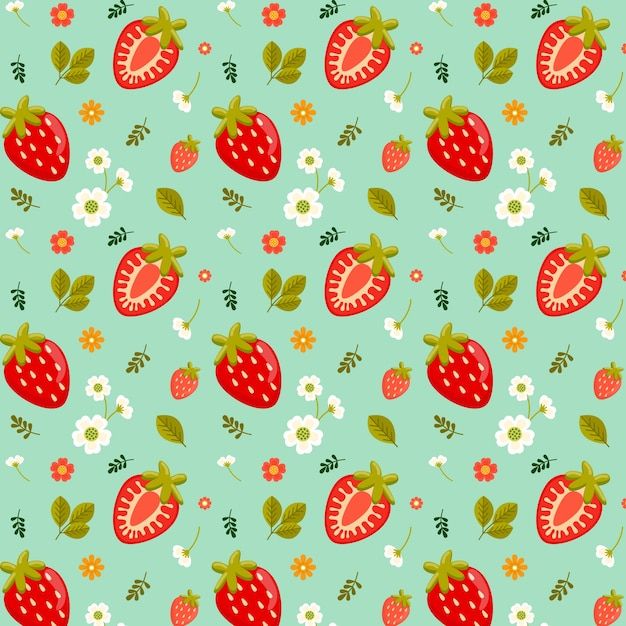
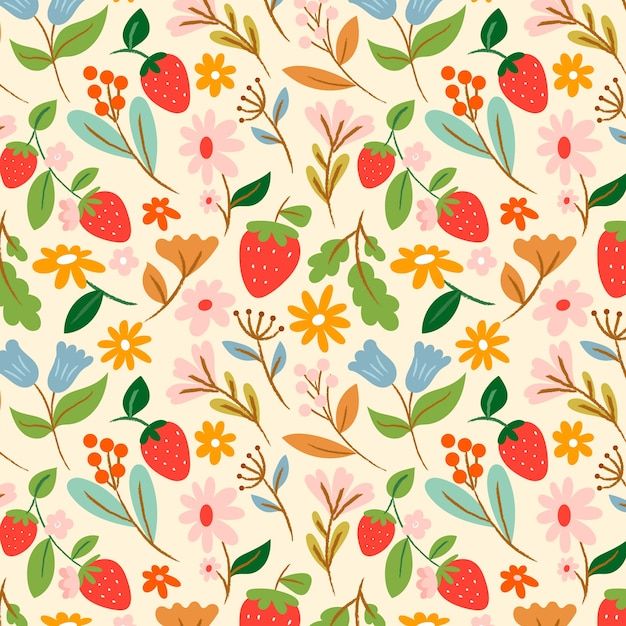
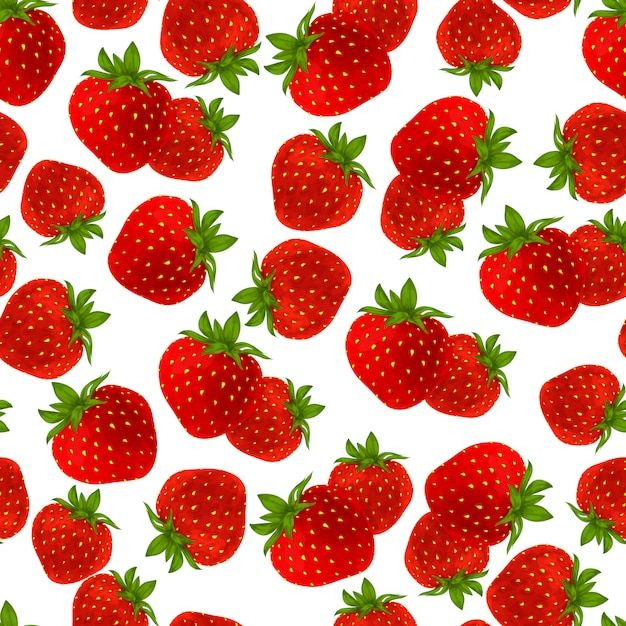
The strawberry motif is visually distinctive: a conical or heart-shaped red fruit with surface seed dimples (achenes), a green calyx of sepals at the top, and a short stem. In pattern design the motif is almost always accompanied by the trifoliate (three-leaflet) strawberry leaf and frequently by the white five-petalled strawberry flower. The combination of red fruit, white flower, and green leaf creates a naturally balanced, high-contrast colour arrangement. Motifs may be rendered in detailed botanical illustration style or simplified to flat graphic forms.
Strawberry patterns use scattered/toss layouts and half-drop repeats most commonly. The combination of fruit at different sizes (ripe, partially ripe, unripe green), flowers, and leaves enables convincing random scatter compositions. Stripe arrangements - alternating rows of fruit and foliage - are also used in more structured, traditional presentations.
The complete strawberry motif set includes:
The natural strawberry palette - red/pink against green on a white or cream ground - is the dominant commercial colour scheme and remains consistently strong across fashion and homeware markets. Variations include:
The strawberry has appeared in decorative art and textiles since at least the medieval period, where it appeared in illuminated manuscripts and embroidery alongside other garden plants. William Morris's 1883 textile design "Strawberry Thief" - depicting thrushes stealing strawberries from a garden - is one of the most celebrated and recognised works in British decorative art history. Produced using the technically demanding indigo discharge printing process, it became a canonical example of Arts and Crafts textile design and remains in commercial production. Wedgwood's "Wild Strawberry" pattern, introduced in the 1960s, is a major example of the motif in ceramics. In contemporary fashion, the Lirika Matoshi strawberry dress (a viral moment circa 2020) demonstrated the motif's strong commercial appeal in women's occasionwear.
The strawberry motif is visually distinctive: a conical or heart-shaped red fruit with surface seed dimples (achenes), a green calyx of sepals at the top, and a short stem.
Food
Strawberry patterns use scattered/toss layouts and half-drop repeats most commonly. The combination of fruit at different sizes (ripe, partially ripe, unripe green), flowers, and leaves enables convincing random scatter compositions.
Botanical
The natural strawberry palette - red/pink against green on a white or cream ground - is the dominant commercial colour scheme and remains consistently strong across fashion and homeware markets.
The strawberry has appeared in decorative art and textiles since at least the medieval period, where it appeared in illuminated manuscripts and embroidery alongside other garden plants.