Types
 3The apple pattern is a motif-driven repeat design using apple forms alongside leaves and blossoms. It sits within the broader Botanical Pattern and fruit motif categories, adaptable from naive folk illustration to detailed watercolour rendering. The motif has domestic and seasonal associations - autumn, harvest, orchard - that anchor it in home textiles, kitchen contexts, and children's design markets.
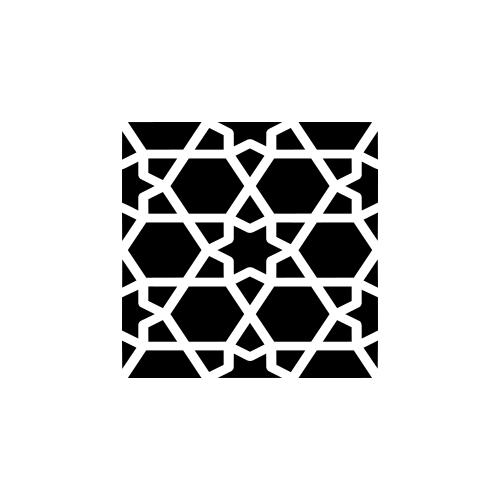 0Arabesque is among the most historically significant and technically sophisticated surface pattern traditions in world design history. Its defining properties - continuous interlacing scrollwork, organic branching structure, and infinite repeatability - make it distinctively suited to all-over surface application. The pattern appears across textiles, tile, metalwork, manuscript illumination, architectural decoration, and wallpaper, and remains commercially active in luxury interiors and premium textile markets.
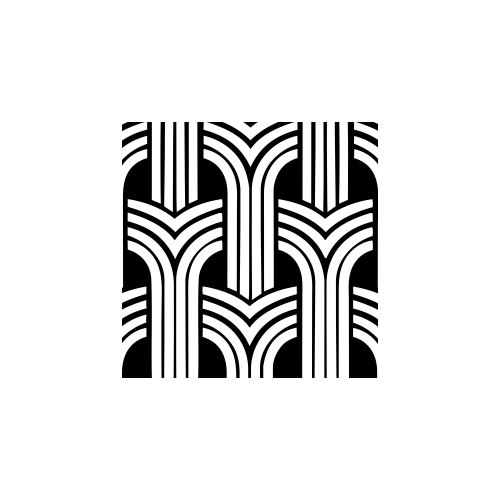 1Art Nouveau was a complete design movement spanning architecture, furniture, glass, ceramics, jewellery, textiles, and graphic arts. In surface pattern design, it is a foundational historical style with persistent commercial relevance - particularly in premium textiles, wallpaper, and licensing. Its botanical vocabulary, linear elegance, and association with the Belle Époque carry strong heritage value across luxury, interiors, and editorial markets. The style experienced significant revival in the 1960s and has remained commercially active since.
 0The banana pattern groups banana fruit forms with associated tropical foliage - the large, arch-shaped banana leaf being a distinctive graphic element in its own right. It sits alongside pineapple and monstera patterns within the resort and summer market aesthetic. Both fruit and leaf motifs translate well into bold, graphic repeat structures at various scales.
 0Botanical pattern draws a direct line from the historical practice of botanical illustration into surface pattern design. Where tropical pattern pursues bold, exotic, large-scale immediacy, botanical pattern emphasises careful observation, plant specificity, and illustrative accuracy. Watercolour is the primary medium. Applications span fashion, home textiles, wallpaper, and stationery, with strong heritage positioning in the British and European markets.
 0Calico's pattern identity is primarily an American definition: small-scale all-over florals or geometric motifs on cotton. In the UK, Australia, and New Zealand, "calico" refers to the unbleached unprinted plain-weave fabric itself. In surface pattern design, the American usage is operative - a dense, small-scale printed cotton with multiple tightly packed repeating motifs. The style anchors the quilting fabric, country-home, and folk-domestic markets.
 0Chinoiserie is not a direct reproduction of Chinese art but a European fantasy of Chinese aesthetics, filtered through trade goods, diplomatic gifts, and imaginative interpretation. It emerged alongside European fascination with East Asian trade goods and was closely associated with the Rococo movement - sharing Rococo's appetite for exuberance, asymmetry, and decorative invention. In surface pattern design, chinoiserie is particularly active in wallpaper, ceramics, upholstery, and luxury interior textiles, where it carries associations with heritage, grandeur, and sophisticated eccentricity. The style has proven commercially durable from its 17th-century origins through to the present.
 1Damask is simultaneously a weaving technique and a surface pattern aesthetic. As a woven fabric, it is defined by its structure: a warp-faced satin pattern woven against a weft-faced satin ground using the same thread set, producing a reversible fabric where the pattern appears on both sides but in inverse tone. As a pattern aesthetic, damask refers to the large-scale ornamental vocabulary - medallions, scrolls, florals, and architectural forms - that developed through this technique. In surface pattern design, damask motifs are reproduced by printing as well as weaving, and are commercially active in wallpaper, home textiles, and licensing across heritage, formal, and ironically-deployed contexts.
 0Floral pattern is the broadest and commercially most active category in surface pattern design. It encompasses any design in which flowers, foliage, stems, and botanical elements constitute the primary visual subject. The category spans a wide range of sub-types - from dense all-over repeats to spaced individual blooms - and includes distinct historical styles with their own visual languages. Floral pattern has been central to textile design across virtually every culture and era, and remains the highest-volume category in wallpaper, fabric, fashion, and home textiles today.
 0Flower pattern refers specifically to designs where recognisable flower species - roses, peonies, dahlias, tulips, and others - function as the primary repeating motif. It is the most direct sub-category within the broader Floral Pattern family. While "floral pattern" encompasses the full range of botanical and plant-derived design, "flower pattern" centres on the rendered flower head or bloom as the dominant visual unit. The species, rendering style (realistic, stylised, graphic, watercolour), and arrangement mode together define the commercial character of a given flower pattern.
 0Fruit pattern uses illustrated or stylised fruit forms as primary repeating motifs. The category sits within the broader Floral Pattern family, drawing on the same botanical illustration tradition as flower and plant patterns. Fruit pattern has a long history in decorative arts - William Morris's block-printed "Fruit" wallpaper of 1862 is among the most significant historic examples - and continues as an active commercial category across interiors, fashion, and licensing. The category ranges from vintage botanical-style illustration through to contemporary graphic and pop-art treatments.
 0Hawaiian pattern refers to the printed textile aesthetic developed for and by the aloha shirt (also called the Hawaiian shirt) in 1920s-1930s Hawaii. Characterised by all-over tropical, floral, and Polynesian-inspired motifs in bold multicolour compositions, Hawaiian pattern evolved from the use of Japanese kimono fabrics by early Hawaiian garment makers, incorporating indigenous Hawaiian tapa and quilt design influences alongside the imported Japanese aesthetic. The pattern type has a documented commercial and cultural history, and remains commercially active in resort wear, summer fashion, and global casual wear.
 0Lemon patterns draw from a well-established decorative tradition connecting citrus imagery with Italian and Mediterranean coastal culture. The motif combines immediate visual appeal - the saturated yellow of ripe lemons against deep green foliage - with strong lifestyle associations: Sorrento, the Amalfi Coast, outdoor dining, and warm climate leisure. The lemon pattern is one of the most commercially durable fruit motifs in surface design, present across product categories from luxury fashion to mass-market homeware. Citrus patterns (lemons, oranges, pomegranates) are periodically identified as interior trend drivers. A 2023 trend report cited in Livingetc noted citrus motifs undergoing contemporary re-interpretation in a "Mediterranean-inspired" direction linked to Italian Maximalism and a shift away from simpler florals.
 0The rose is among the most widely used motifs in surface pattern design across all major product categories. Rose patterns draw on the flower's deep cultural associations - love, beauty, femininity, celebration - and its strong visual identity: the distinctive layered petal form is instantly readable at any scale. The motif appears across the full range of surface pattern applications, from fine chintz prints to bold digital repeats, and sustains consistent commercial demand particularly in fashion, home textiles, and gifting.
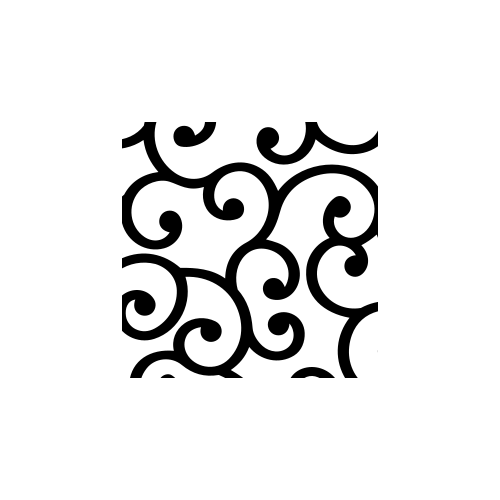 0The scroll pattern is an ornamental system built from the logic of plant growth: a continuous stem that branches, curls, and spirals, producing a flowing, all-over structure that can fill any surface without obvious repeat. Unlike grid-based geometric patterns, scroll patterns follow organic rhythms - mirroring the way vines, tendrils, and climbing plants ramify through space. This structural flexibility has made scroll patterns one of the most versatile and durable motif traditions in decorative history. They appear as architectural borders, woven textile structures, painted ceramic ornament, carved stone relief, and printed wallpaper. In surface pattern design, they translate naturally into all-over repeating structures with strong commercial applications across wallpaper, furnishing fabric, fashion, and heritage design reproduction.
 0Strawberry patterns are among the most commercially resilient fruit motifs in surface pattern design, sustained by the strawberry's strong visual identity (vivid red form, distinctive seed texture, bright green calyx and leaves), its seasonal associations with summer and fresh abundance, and its recurring cultural presence in design history. The motif spans a wide stylistic range, from botanical illustration to flat graphic design, and is particularly associated with childrenswear, women's fashion, and decorative homeware.
 0The trellis pattern draws its identity from the architectural garden structure of the same name: an open, interlocking grid of bamboo, timber, or metal that provides a framework for climbing foliage. Translated into surface pattern, the trellis becomes a geometric lattice motif - either used as a primary grid structure with foliage elements filling the cells, or simplified to a geometric linear pattern without botanical content. The pattern sits at the intersection of geometric structure and garden/botanical aesthetics, and is strongly associated with home furnishing rather than apparel.
 0Tropical patterns draw on the visual abundance of tropical and subtropical ecosystems: oversized leaves, bright flowers, vivid birds, and intense colour. The category spans a broad range from the loose, sparse Hawaiian print tradition of the 1950s to the dense, maximalist contemporary interpretations favoured in luxury wallpaper and resort fashion. Tropical patterns sustain strong perennial commercial demand driven by warm-weather travel, resort fashion, summer home collections, and the enduring appeal of lush, escapist botanical imagery.
You've reached the end
18 Types