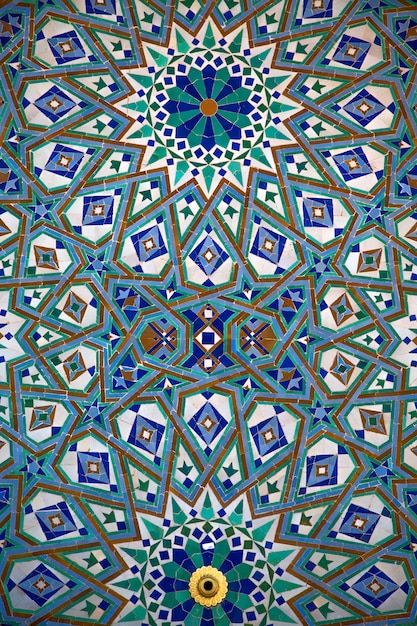
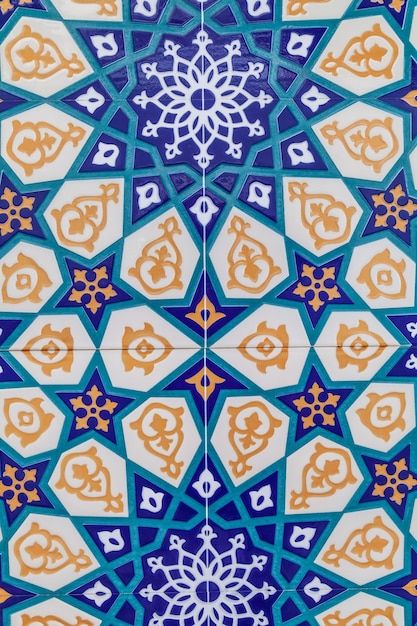
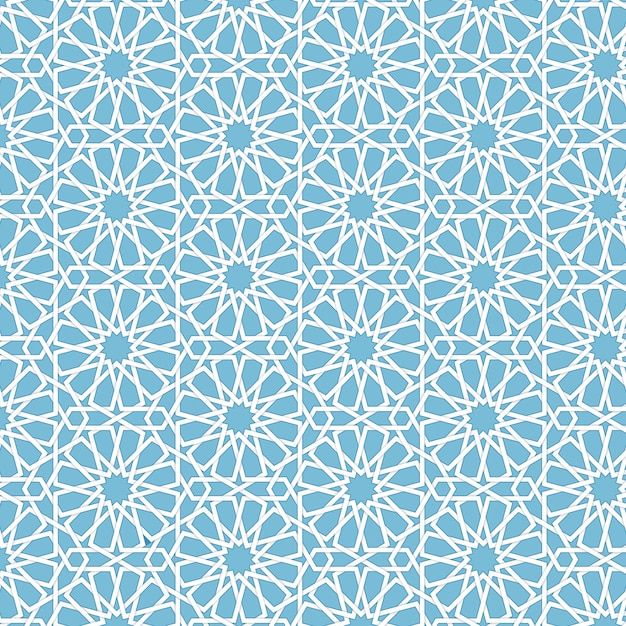
Arabesque is among the most historically significant and technically sophisticated surface pattern traditions in world design history. Its defining properties - continuous interlacing scrollwork, organic branching structure, and infinite repeatability - make it distinctively suited to all-over surface application. The pattern appears across textiles, tile, metalwork, manuscript illumination, architectural decoration, and wallpaper, and remains commercially active in luxury interiors and premium textile markets.
We use cookies to improve your experience and understand how PatternDesigners is used.
Arabesque is among the most historically significant and technically sophisticated surface pattern traditions in world design history. Its defining properties - continuous interlacing scrollwork, organic branching structure, and infinite repeatability - make it distinctively suited to all-over surface application. The pattern appears across textiles, tile, metalwork, manuscript illumination, architectural decoration, and wallpaper, and remains commercially active in luxury interiors and premium textile markets.
Arabesque is characterised by continuous scrolling stems that branch symmetrically into leaves, half-palmettes, and additional scrolls. The overall impression is of interlaced rhythmic complexity with underlying mathematical consistency. Acanthus-leaf forms and vine-scroll structures are the primary visual vocabulary. Arabesque is characteristically flat - contour-based rather than three-dimensional - with clean edge definition. In Ottoman development, saz-leaf forms (long, pointed, serrated leaves) and cloud bands were integrated into the compositional vocabulary. The pattern conveys movement and organic growth despite being mathematically constructed.
Arabesque is fundamentally a repeating tile structure - a unit that extends seamlessly in all four directions or is composed as a medallion with radiating symmetry. Its defining structural property is infinite extensibility: the design has no natural edge and can be continued beyond any frame boundary. Arabesque units are frequently combined with geometric interlace and calligraphic elements within a single composition. Mirror and rotational symmetry are built into most arabesque constructions.
Islamic arabesque is commonly executed in one or two colours, relying on tonal contrast rather than polychrome complexity. The Iznik ceramic tradition is a major exception - it uses turquoise, cobalt, red, and black on white grounds with high chromatic richness. Western arabesque adaptations (from the Renaissance) tend toward monochrome engraving or gilt-on-dark-ground applications. Contemporary textile and wallpaper arabesque spans the full colour range; neutral grounds with jewel-tone motifs and warm dark grounds with gilded detail are dominant commercial applications.
Arabesque emerged as a decorative vocabulary in Islamic art around the 9th century, with the most developed early forms appearing in Baghdad by the 10th century. The scrolling half-palmette structure was adapted from earlier Greco-Roman vine scroll traditions - but transformed through the Islamic rejection of figurative representation into a wholly non-figurative, infinitely extensible system. By the medieval period, arabesque had become one of the defining characteristics of Islamic art and architecture across the Mediterranean, Middle East, and Central Asia. Renaissance Europeans encountering Islamic decoration applied the term "arabesque" retrospectively, and Western decorative arts adopted arabesque from the 16th century onward - appearing in printed books, wallpapers, fabrics, and architectural ornament. The Iznik tile tradition (Ottoman Turkey, 15th-17th centuries) represents one of the most technically accomplished applications of arabesque in ceramics. The pattern was central to 19th-century revivalism, particularly in Moorish revival and Orientalist interior design.
Arabesque is among the most historically significant and technically sophisticated surface pattern traditions in world design history. Its defining properties - continuous interlacing scrollwork, organic branching structure, and infinite repeatability - make it distinctively suited to all-over surface application.
Arabesque is characterised by continuous scrolling stems that branch symmetrically into leaves, half-palmettes, and additional scrolls. The overall impression is of interlaced rhythmic complexity with underlying mathematical consistency. Acanthus-leaf forms and vine-scroll structures are the primary visual vocabulary.
Heritage
Arabesque is fundamentally a repeating tile structure - a unit that extends seamlessly in all four directions or is composed as a medallion with radiating symmetry. Its defining structural property is infinite extensibility: the design has no natural edge and can be continued beyond any frame boundary.
Half-palmette leaves (the foundational structural unit) Scrolling vine and branching stem lines Acanthus-leaf derivatives Ottoman saz leaves (long, pointed, serrated forms) Cloud bands and cloud collar forms In Western adaptation: floral sprays, fan shapes, and candelabra-like column compositions
Islamic arabesque is commonly executed in one or two colours, relying on tonal contrast rather than polychrome complexity. The Iznik ceramic tradition is a major exception - it uses turquoise, cobalt, red, and black on white grounds with high chromatic richness.
Arabesque emerged as a decorative vocabulary in Islamic art around the 9th century, with the most developed early forms appearing in Baghdad by the 10th century.
Paisley Pattern, Damask Pattern, Floral Pattern, and Art Nouveau Pattern