Types
 0Brickwork pattern translates architectural masonry structure into a printed or woven surface design. In surface pattern design it functions primarily as a texture or background element, used to add structural visual interest without figurative content. The pattern appears across interiors, stationery, and fashion as a reference to urban, industrial, and heritage architectural aesthetics. It is commercially active in home decor wallpaper, printed textiles, and lifestyle products.
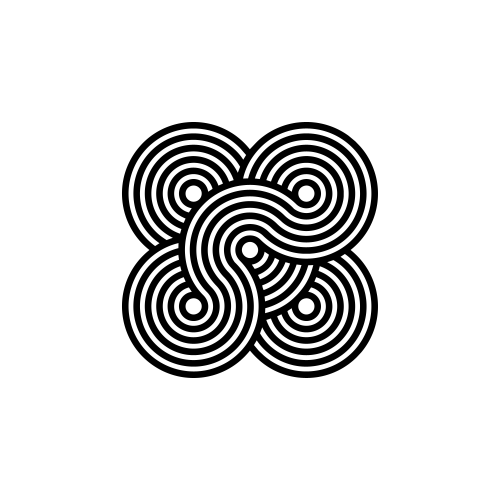 0In the context of surface pattern design (textiles, wallpaper, packaging), a designer pattern is a continuous, seamless repeat applied to the surfaces of mass-manufactured products. The designer creates a base unit - the motif - and arranges it in a systematic grid or sequence so that the edges tile perfectly when repeated. The discipline's focus is how artwork scales, repeats, and reads across physical products and surfaces. The term "pattern design" also applies in other fields - garment pattern making (structural templates for cutting cloth) and software engineering (reusable architectural blueprints) - but in the surface pattern context, it refers specifically to the visual repeat design discipline.
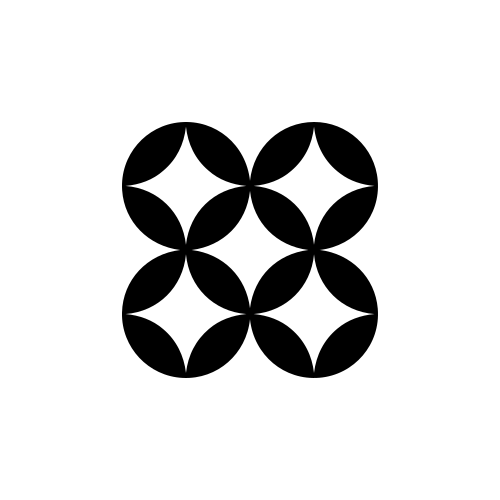 0A seamless pattern is one in which the repeat tile connects to itself at all four edges without any visible seam, break, or mismatch. This is the fundamental technical requirement for patterns applied to surfaces of arbitrary size - fabrics, wallpaper, gift wrap, and digital backgrounds must all tile seamlessly. The term describes a technical property of the pattern rather than a style or motif type. All repeating surface patterns used commercially are, by definition, seamless.
 0A simple repeating pattern is a design in which one or more motifs are systematically duplicated to create an infinitely continuous surface. The repeat unit - the smallest tile that contains the complete design - is placed according to a layout rule that governs how tiles relate to each other spatially. Understanding these layout rules is considered one of the core technical competencies of surface pattern design. Once motifs are established, a designer can produce multiple coordinating patterns by applying different repeat layouts to the same elements.
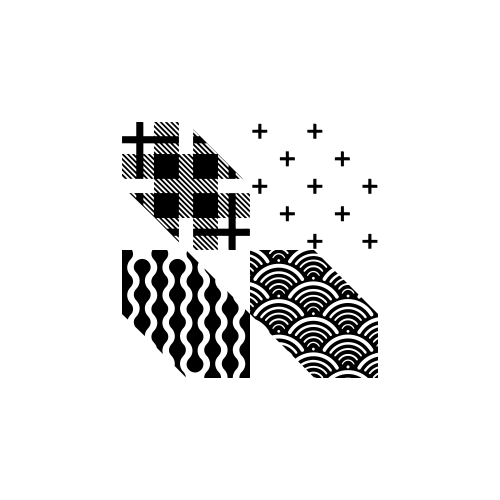 0A repeat pattern is any surface design in which a tile (or repeat unit) tessellates seamlessly across a surface. The type of repeat defines the geometric rule by which tiles relate to each other. Different repeat structures produce distinct visual rhythms and suit different markets and applications. In a pattern collection, multiple repeat types are typically used across the hero pattern and its coordinating designs to create variety and hierarchy within a unified colour and motif vocabulary.
You've reached the end
5 Types