Types
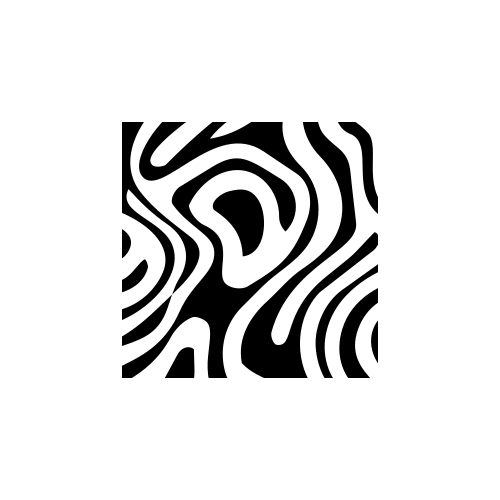 14Abstract pattern spans from rigorous geometric systems to spontaneous painterly marks. In surface pattern design, it is one of the broadest commercially active categories, encompassing geometric abstraction, lyrical/painterly abstraction, op art, colour field, and hard-edge minimalism. Because abstract pattern carries no cultural or representational specificity, it is among the most broadly licensable pattern types across markets.
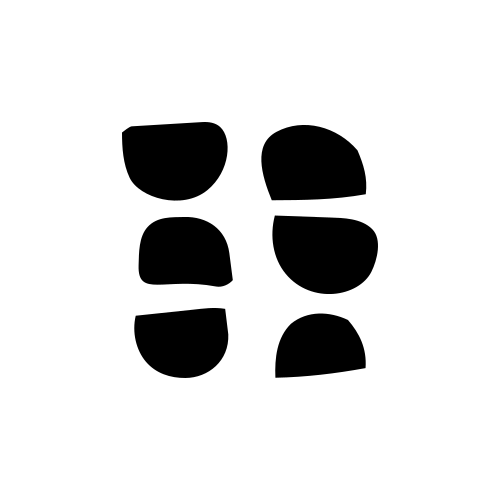 0Collage as a surface pattern approach is both a historical fine art lineage and a current digital workflow. In physical practice it involves cutting, tearing, and combining paper, photographs, fabric, or found material into a compositional surface. In digital design the same visual logic applies: layering scanned textures, photographs, hand-drawn elements, and type into a single assembled image. Both versions translate into repeating surface patterns with a characteristically layered, eclectic visual texture.
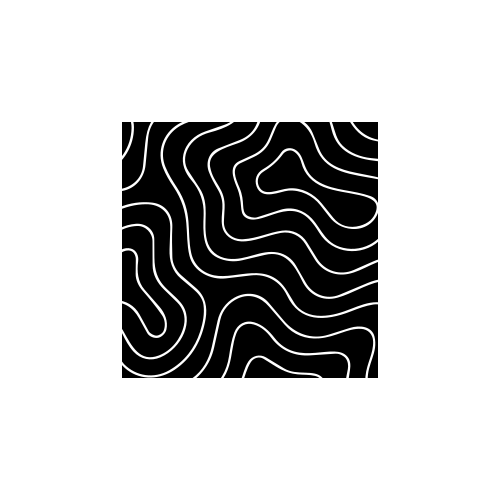 0Contour patterns draw from two distinct visual traditions sharing the same vocabulary of lines: cartographic contour mapping (where curved parallel lines reveal terrain relief) and contour drawing in fine art (where line defines the mass and edges of a subject without shading). Both traditions translate into surface pattern design as linear compositions with a characteristic structural and depth-suggesting aesthetic.
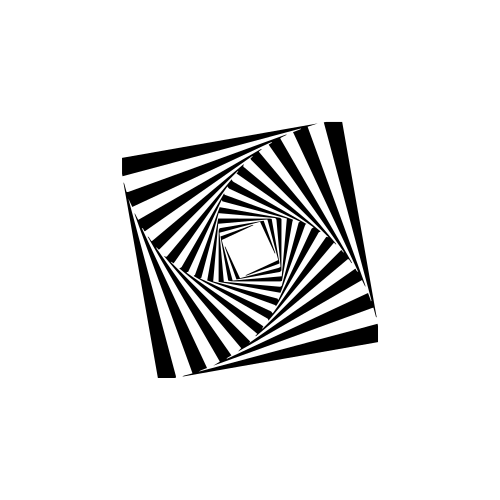 0Illusion patterns exploit the perceptual mechanisms of human vision. By carefully arranging shapes, contrasts, and line orientations, a designer can make a flat 2D surface appear three-dimensional, appear to be in motion, or appear to contain spatial depth. The technique is distinct from representational trompe l'oeil (painted imitation of objects) in that illusion patterns typically use abstract geometric forms rather than pictorial imagery. The commercial territory covers a range from bold Op Art-influenced fashion prints to subtle structural depth effects in wallpaper and interior textiles. The key technical elements are: strong tonal contrast (often black and white), precise geometric structure, and controlled spatial organisation.
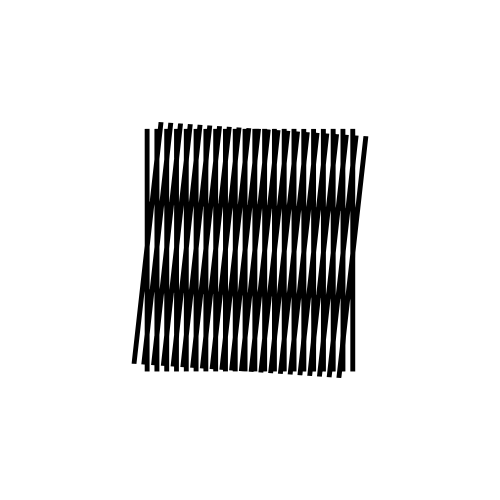 0A moiré pattern is a large-scale visual interference effect that appears when two repeating visual patterns (such as grids, lines, or dots) are overlaid with a slight rotation, offset, or scale difference between them. The visual result is a new, emergent large-scale pattern - typically a series of waves, arcs, or flowing curves - that is not present in either original pattern individually. The moiré effect is both an unintended printing artefact (a problem in halftone printing and digital photography) and a deliberately exploited optical tool in textile production, security printing, and scientific instrumentation. The term derives from the French word for a specific watered-silk textile, which produces a natural moiré effect through its weave structure.
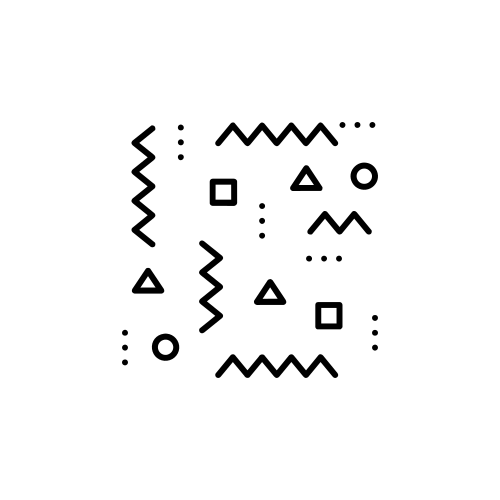 0Pop art as a pattern aesthetic borrows directly from the fine art movement that emerged in Britain and the United States in the 1950s and 1960s. It translates the movement's core visual strategies - advertising imagery, comic strip graphics, repeated consumer objects, mechanical print effects - into surface pattern. Pop art patterns are high-contrast, deliberately commercial, and intended to read as instantly recognisable graphic statements rather than decorative backgrounds.
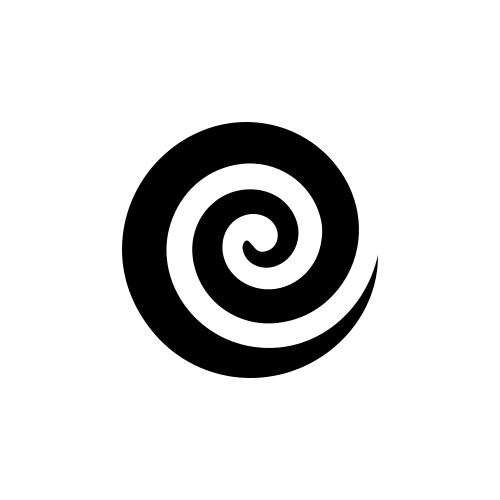 0Swirl and spiral patterns draw on one of the most fundamental geometric structures in mathematics and nature. The spiral - a curve that emanates from a point and moves progressively further away as it rotates - appears across natural forms (nautilus shells, sunflower seed heads, unfurling ferns) and across cultures and millennia of decorative art (Celtic triple-spirals, Islamic arabesque scrollwork, Art Nouveau organic curves). In surface pattern design, swirl and spiral forms create a sense of dynamic flow and movement, and are particularly associated with fluid, organic, or energetic aesthetic directions.
You've reached the end
7 Types