The quatrefoil (from Old French: "four leaves") is a specific geometric shape: four circles of equal diameter, each overlapping its neighbours, arranged so their centres define a square. The resulting outline is a four-lobed form with pointed intersections between adjacent lobes - resembling a four-leaf clover, a four-petalled flower, or a rounded cross. As a decorative motif it has been used continuously across at least 1,500 years, appearing in early Christian architecture, Islamic design, Gothic tracery, Renaissance decorative arts, and contemporary interiors. It carries consistent cultural associations with heritage, formality, and luxury, positioning it commercially as a premium interior and fashion motif.
We use cookies to improve your experience and understand how PatternDesigners is used.
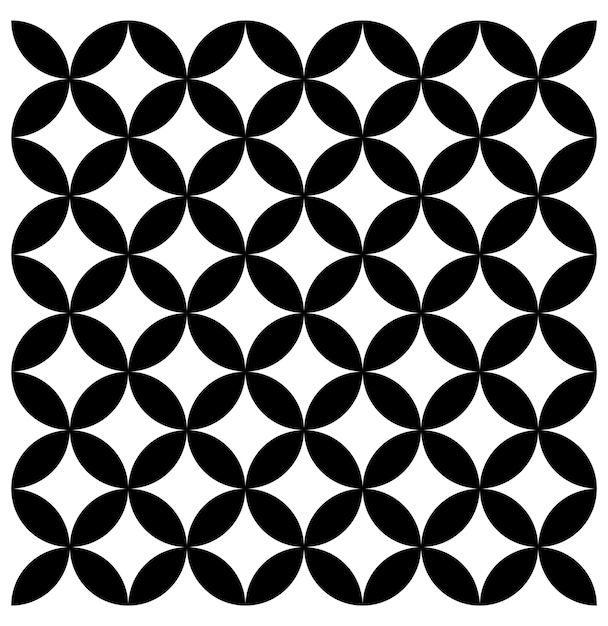
The quatrefoil (from Old French: "four leaves") is a specific geometric shape: four circles of equal diameter, each overlapping its neighbours, arranged so their centres define a square. The resulting outline is a four-lobed form with pointed intersections between adjacent lobes - resembling a four-leaf clover, a four-petalled flower, or a rounded cross.
As a decorative motif it has been used continuously across at least 1,500 years, appearing in early Christian architecture, Islamic design, Gothic tracery, Renaissance decorative arts, and contemporary interiors. It carries consistent cultural associations with heritage, formality, and luxury, positioning it commercially as a premium interior and fashion motif.
The quatrefoil is defined by its four equal lobes, the symmetry across both horizontal and vertical axes, and the characteristic pointed cusps where adjacent lobes meet. Variations alter the degree of overlap between the constituent circles:
In surface pattern repeat, quatrefoils can be:
The interlocking all-over variant produces secondary shapes (pointed stars or crosses) in the negative space between quatrefoils - a particularly rich design opportunity.
In all-over repeat, the quatrefoil most commonly uses a square grid base. Each quatrefoil unit occupies a grid cell; adjacent units may be isolated (with visible negative ground between them) or interlocked (sharing their arcs to fill the plane). The interlocked variant is a true tessellation; the isolated variant is a motif repeat.
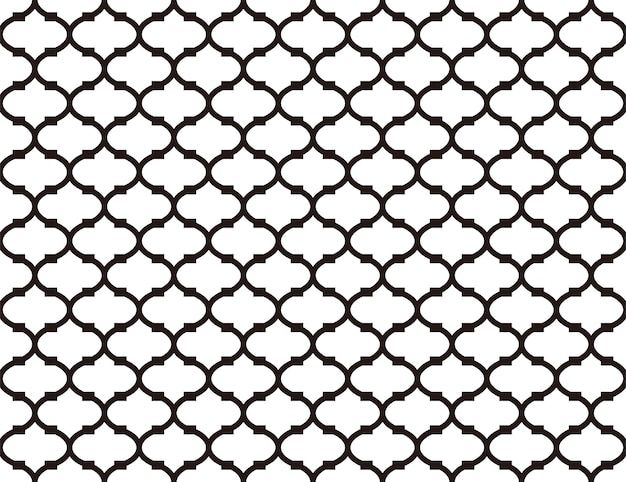
Variant forms include:
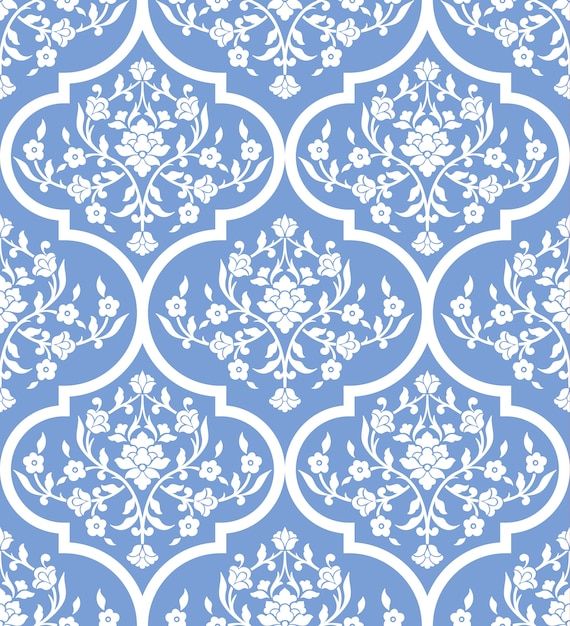
The quatrefoil is primarily a structural/outline motif; its commercial use is typically as a form that frames or repeats rather than as a figurative image:
Traditional palette: navy, emerald, burgundy, or gold on cream or white ground; black on white for graphic applications. The motif's Gothic heritage positions it naturally in deep, rich colour combinations.
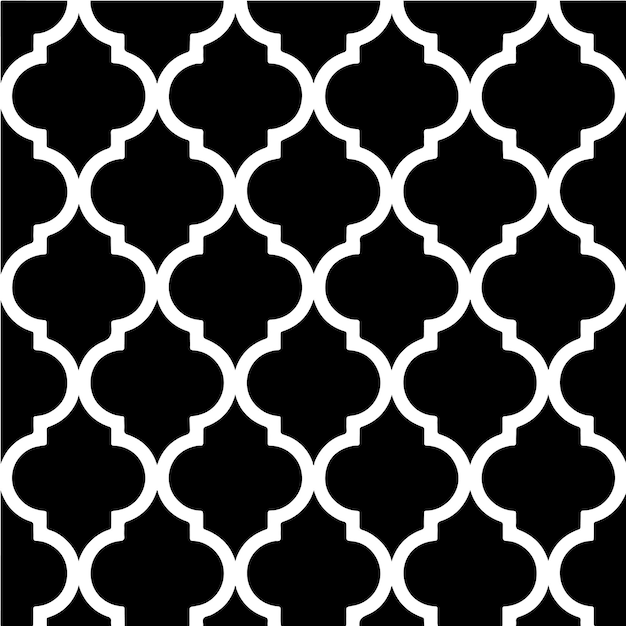
Contemporary applications have expanded the palette to neutrals (grey on cream, white on pale ground for minimalist modern interiors), pastels (soft blue/green/pink for bedroom and bathroom applications), and bold graphic (black and white or high-contrast two-colour).
The quatrefoil predates Gothic architecture by centuries - examples from the Monastery of Stoudios in Constantinople (462 AD) and from Olmec and Mayan monuments in Mesoamerica (some dating to approximately 850 BC) demonstrate that the form developed independently across multiple cultures. In Mesoamerican iconography, the quatrefoil represented the cosmic axis and the passageway between celestial and underworld realms, associated with water and agricultural fertility.
In European design, the quatrefoil achieved its peak prominence during the Gothic and Renaissance periods. It appears as tracery in Gothic architecture (windows, stone screens, metalwork) from the 13th century onwards, with notable early examples at Notre Dame de Paris (barbed quatrefoil, 1260) and in the works of Andrea Pisano and Lorenzo Ghiberti on the Florence Baptistery doors.
The motif has been in continuous commercial use in textiles and wallpaper from the medieval period to the present. In recent years, several luxury brands have attempted to assert trademark rights over the quatrefoil shape; these claims have been contested, as the symbol significantly predates any modern brand's use.
The quatrefoil (from Old French: "four leaves") is a specific geometric shape: four circles of equal diameter, each overlapping its neighbours, arranged so their centres define a square.
The quatrefoil is defined by its four equal lobes, the symmetry across both horizontal and vertical axes, and the characteristic pointed cusps where adjacent lobes meet.
Heritage
In all-over repeat, the quatrefoil most commonly uses a square grid base. Each quatrefoil unit occupies a grid cell; adjacent units may be isolated (with visible negative ground between them) or interlocked (sharing their arcs to fill the plane).
Emblem
Traditional palette: navy, emerald, burgundy, or gold on cream or white ground; black on white for graphic applications. The motif's Gothic heritage positions it naturally in deep, rich colour combinations.
The quatrefoil predates Gothic architecture by centuries - examples from the Monastery of Stoudios in Constantinople (462 AD) and from Olmec and Mayan monuments in Mesoamerica (some dating to approximately 850 BC) demonstrate that the form developed independently across multiple cultures.