Types
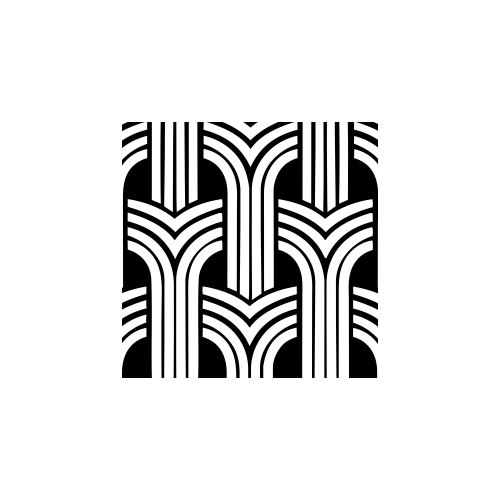 1Art Nouveau was a complete design movement spanning architecture, furniture, glass, ceramics, jewellery, textiles, and graphic arts. In surface pattern design, it is a foundational historical style with persistent commercial relevance - particularly in premium textiles, wallpaper, and licensing. Its botanical vocabulary, linear elegance, and association with the Belle Époque carry strong heritage value across luxury, interiors, and editorial markets. The style experienced significant revival in the 1960s and has remained commercially active since.
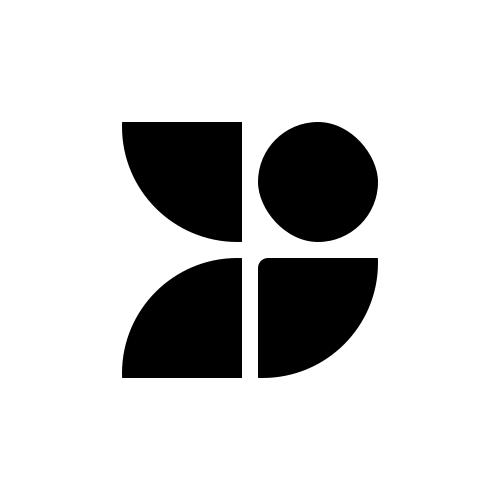 4Asymmetry in surface pattern design refers to the deliberate avoidance of symmetrical arrangement. Rather than cancelling visual energy, an asymmetric pattern harnesses contrast, uneven spacing, and varied visual weights to create compositions that feel dynamic and engaging. It is a structural choice rather than a specific pattern style, applicable across a wide range of motif types and aesthetics.
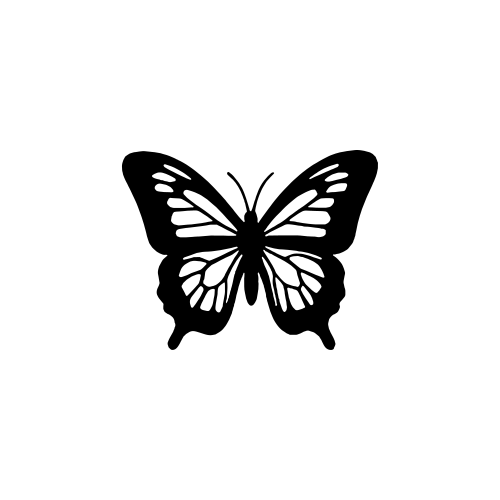 0Butterfly pattern has a long history in both fine decorative arts and commercial surface design. As a motif, the butterfly offers symmetry, colour complexity, wing-surface variation, and symbolic richness - making it commercially active across luxury fashion, interior wallpaper, scarves, upholstery, and licensing. The historical trajectory of butterfly pattern runs from scientific illustration (E.A. Seguy, 1925) through haute couture (Schiaparelli, McQueen) to contemporary wallpaper and textiles. Moths are frequently treated as aesthetic extensions of butterfly pattern, with their own design vocabulary.
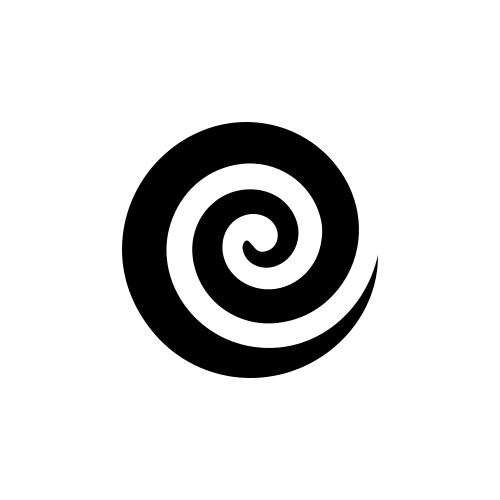 0Swirl and spiral patterns draw on one of the most fundamental geometric structures in mathematics and nature. The spiral - a curve that emanates from a point and moves progressively further away as it rotates - appears across natural forms (nautilus shells, sunflower seed heads, unfurling ferns) and across cultures and millennia of decorative art (Celtic triple-spirals, Islamic arabesque scrollwork, Art Nouveau organic curves). In surface pattern design, swirl and spiral forms create a sense of dynamic flow and movement, and are particularly associated with fluid, organic, or energetic aesthetic directions.
You've reached the end
4 Types