Tiger print is a major category within animal print surface pattern, distinguished from other large-cat prints by its stripe structure rather than spot or rosette arrangement. The tiger's orange ground with black stripes - and the knowledge that each animal carries a unique, individual pattern - has made the tiger an enduring reference for bold, energetic fashion and lifestyle prints. Tiger-stripe patterning has also had a significant independent history in military camouflage design.
We use cookies to improve your experience and understand how PatternDesigners is used.
Tiger print is a major category within animal print surface pattern, distinguished from other large-cat prints by its stripe structure rather than spot or rosette arrangement. The tiger's orange ground with black stripes - and the knowledge that each animal carries a unique, individual pattern - has made the tiger an enduring reference for bold, energetic fashion and lifestyle prints. Tiger-stripe patterning has also had a significant independent history in military camouflage design.
The tiger's stripe marking is defined by:
The biological mechanism producing stripe patterns is described by Turing pattern theory (morphogen reaction-diffusion systems producing self-organising stripe and spot distributions in animal coat markings).
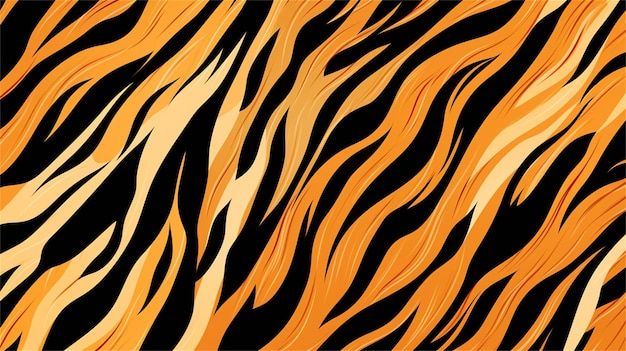
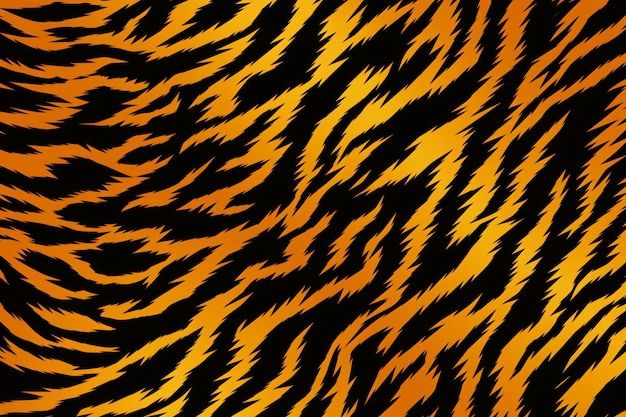
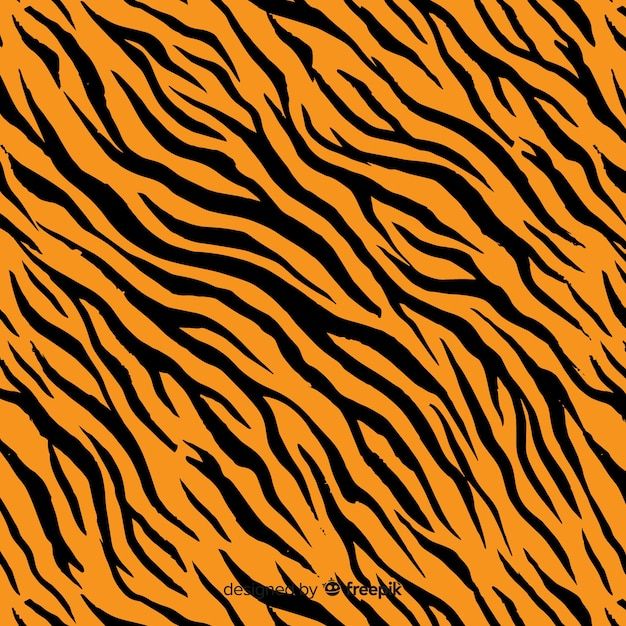
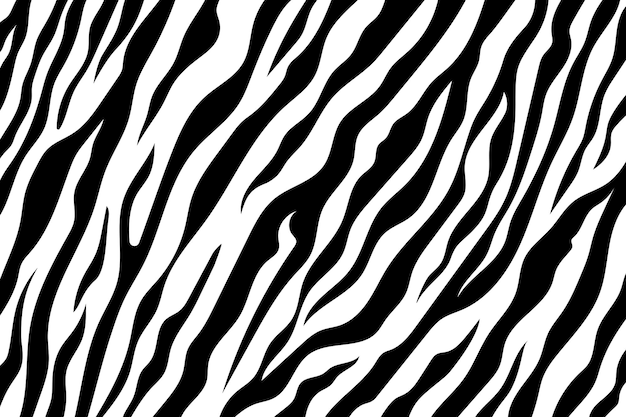
Tiger stripe prints in surface pattern design typically use flowing, irregular bands of varying width on an orange or tawny ground. Unlike zebra stripes (which are more even in width and sharply defined), tiger stripes tend to be more organic, with tapered ends and irregular spacing that follows the body contour of the original animal. All-over scatter repeats are standard for fabric and home textile applications.
The tiger pattern is defined entirely by the stripe structure. There are no secondary figurative elements in the base pattern (though tiger-adjacent prints may include the tiger's face or full-body representation as a placement motif). In fashion, the orange-and-black combination is the characteristic palette, though tiger prints are also produced in non-naturalistic colourways.
The naturalistic tiger palette - burnt orange or amber ground, deep black stripes, white on inner areas - is the commercial standard. Non-naturalistic versions include:
Tiger-stripe camouflage is a distinct military pattern tradition with direct relevance to surface pattern design history. Developed by the South Vietnamese Armed Forces and adopted by US Special Forces in the Vietnam War era (c.1962-63), the "tiger stripe" military pattern used narrow green/brown stripes and broader black brush-stroke forms over an olive or khaki ground - 64 stripe elements in total, with interlocking (not overlapping) construction. It was produced in Thailand, Korea, and Okinawa and was derived from the French "Lizard" pattern. In more recent decades, tiger stripe camouflage has continued in use by the Philippine Naval Special Operations Command and other Southeast Asian military units. The fashion and surface pattern industry has drawn on camouflage aesthetics - including tiger stripe - in multiple print revivals. In surface pattern, decorative tiger print has been in continuous fashion use since at least the mid-20th century, most associated with bold glamour and exotic luxury aesthetics in women's fashion.
Tiger print is a major category within animal print surface pattern, distinguished from other large-cat prints by its stripe structure rather than spot or rosette arrangement.
Animal
Tiger stripe prints in surface pattern design typically use flowing, irregular bands of varying width on an orange or tawny ground.
The tiger pattern is defined entirely by the stripe structure. There are no secondary figurative elements in the base pattern (though tiger-adjacent prints may include the tiger's face or full-body representation as a placement motif).
The naturalistic tiger palette - burnt orange or amber ground, deep black stripes, white on inner areas - is the commercial standard.
Tiger-stripe camouflage is a distinct military pattern tradition with direct relevance to surface pattern design history.