Art Deco is one of the most commercially significant historical styles in surface pattern design. Its geometric vocabulary, metallic sensibility, and associations with glamour and modernity make it a perennial category across fashion, interiors, wallpaper, and licensing. The style emerged from a collision of geometric abstraction, exotic ornamental traditions, and a deliberate celebration of contemporary materials and industrial production. It remains among the most recognisable and commercially active historical design movements.
We use cookies to improve your experience and understand how PatternDesigners is used.
Art Deco is one of the most commercially significant historical styles in surface pattern design. Its geometric vocabulary, metallic sensibility, and associations with glamour and modernity make it a perennial category across fashion, interiors, wallpaper, and licensing. The style emerged from a collision of geometric abstraction, exotic ornamental traditions, and a deliberate celebration of contemporary materials and industrial production. It remains among the most recognisable and commercially active historical design movements.
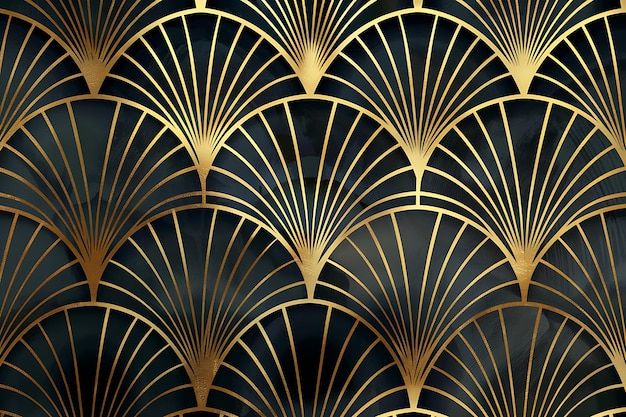
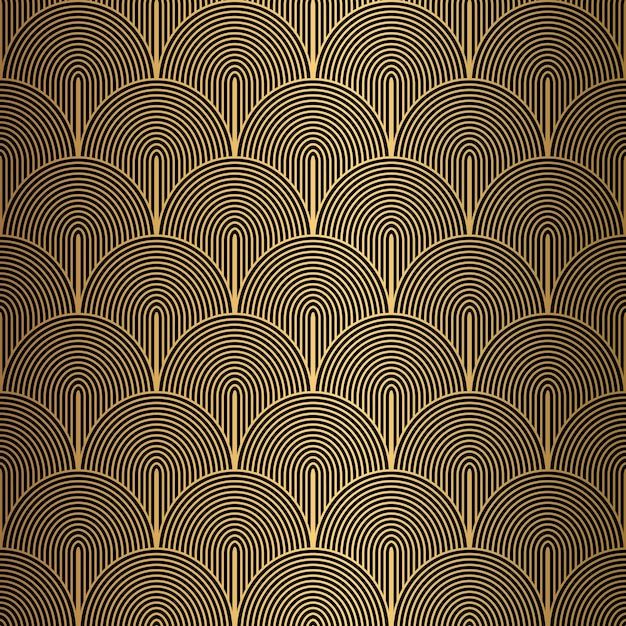
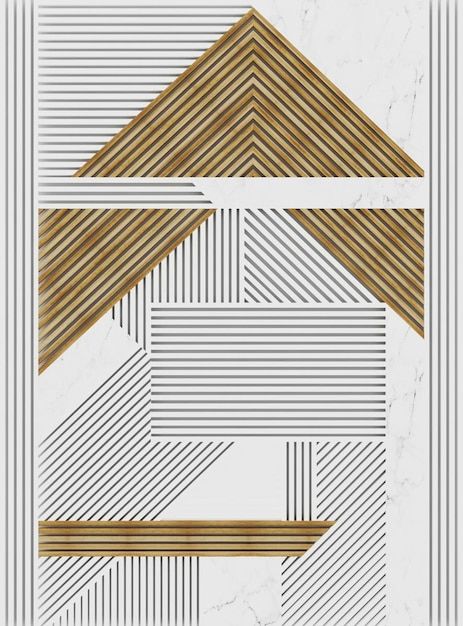
Art Deco pattern features clean, angular geometric forms - chevrons, sunbursts, fan shapes, stepped symmetry, zigzags, lozenges, and stylised botanical structures. Forms are bold, flat, and architecturally precise, with a strong preference for symmetry, repetition, and decorative rhythm. Metallic elements - gold, silver, chrome - are integral to the aesthetic. Figurative elements (exotic animals, elongated human figures, stylised architectural motifs) appear in more elaborate compositions. The Streamline Moderne variant of the 1930s introduced smoother curving forms and horizontal banding, reflecting the influence of industrial design.
Art Deco favours symmetrical repeat structures and mirror-axis compositions. Geometric forms are arranged in precise grids, diagonal grids, radiating fans, and concentric structures. Borders, panels, cartouches, and medallion compositions are important structural elements. Scale ranges from small all-over geometric repeat to large architectural-scale composition. The structured, engineered quality of the repeat is characteristic - Art Deco patterns rarely appear loose or painterly.
Early Art Deco used vivid contrasting colours influenced by Fauvism and the Ballets Russes: cerise, jade green, cobalt, saffron, vermillion, and black. Metallic accents - gold, silver, platinum - are characteristic throughout. The 1930s Streamline phase introduced cooler, more restrained palettes: cream, ivory, grey, pale blue, and rose. High contrast - black and gold, black and white, navy and gold - is a defining commercial characteristic of the style.
Art Deco emerged as a reaction against the curvilinear complexity of Art Nouveau. Its design vocabulary was drawn simultaneously from multiple sources: the geometric rigour of the Vienna Secession and Cubism; the vivid colour of Fauvism and Diaghilev's Ballets Russes; and the exotic decorative traditions of Egypt, Japan, China, India, Persia, and pre-Columbian Mesoamerica. The 1925 Exposition Internationale des Arts Décoratifs et Industriels Modernes in Paris established the style as an international design language - and gave it its retrospective name. Key designers include furniture makers Émile-Jacques Ruhlmann, Paul Follot, Louis Süe, and André Mare. The Wiener Werkstätte (Vienna) contributed the geometric textile vocabulary that shaped Art Deco fabric design. By the 1930s, Art Deco had absorbed the influence of streamlined American industrial design - the Chrysler Building, Empire State Building, and ocean liner interiors - evolving into Streamline Moderne. The style influenced clothing, furniture, wallpaper, fabrics, carpets, upholstery, ceramics, glass, jewellery, and architecture simultaneously. It is one of the few design movements with equal commercial relevance across multiple surface design markets.
Art Deco is one of the most commercially significant historical styles in surface pattern design. Its geometric vocabulary, metallic sensibility, and associations with glamour and modernity make it a perennial category across fashion, interiors, wallpaper, and licensing.
Art Deco pattern features clean, angular geometric forms - chevrons, sunbursts, fan shapes, stepped symmetry, zigzags, lozenges, and stylised botanical structures. Forms are bold, flat, and architecturally precise, with a strong preference for symmetry, repetition, and decorative rhythm.
Heritage
Art Deco favours symmetrical repeat structures and mirror-axis compositions. Geometric forms are arranged in precise grids, diagonal grids, radiating fans, and concentric structures. Borders, panels, cartouches, and medallion compositions are important structural elements.
Geometric
Early Art Deco used vivid contrasting colours influenced by Fauvism and the Ballets Russes: cerise, jade green, cobalt, saffron, vermillion, and black. Metallic accents - gold, silver, platinum - are characteristic throughout.
Art Deco emerged as a reaction against the curvilinear complexity of Art Nouveau.
Art Nouveau Pattern, Geometric Pattern, Chevron Pattern, and Arabesque Pattern