The term "digital pattern" is used in two distinct industries with incompatible meanings. In apparel manufacturing, a "digital pattern" means a garment construction pattern (a 2D template for cutting fabric) produced using CAD software - this is the meaning addressed in the available source. In surface pattern design, "digital pattern" refers to the creation method: repeat patterns designed using software such as Adobe Illustrator, Photoshop, Procreate, or specialist pattern tools rather than by physical media. This page addresses the SPD meaning. Digital creation tools have become the dominant production method in surface pattern design. Most professional pattern designers now work digitally for some or all of their workflow - either creating artwork digitally from the start, or digitising hand-made artwork for repeat production. The rise of digital tools has expanded who can produce commercial surface pattern and has enabled print-on-demand platforms that allow individual designers to sell directly to print customers.
We use cookies to improve your experience and understand how PatternDesigners is used.
The term "digital pattern" is used in two distinct industries with incompatible meanings. In apparel manufacturing, a "digital pattern" means a garment construction pattern (a 2D template for cutting fabric) produced using CAD software - this is the meaning addressed in the available source. In surface pattern design, "digital pattern" refers to the creation method: repeat patterns designed using software such as Adobe Illustrator, Photoshop, Procreate, or specialist pattern tools rather than by physical media. This page addresses the SPD meaning.
Digital creation tools have become the dominant production method in surface pattern design. Most professional pattern designers now work digitally for some or all of their workflow - either creating artwork digitally from the start, or digitising hand-made artwork for repeat production. The rise of digital tools has expanded who can produce commercial surface pattern and has enabled print-on-demand platforms that allow individual designers to sell directly to print customers.
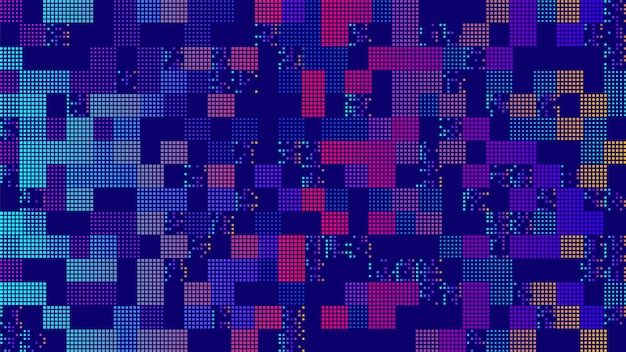
Digitally produced patterns are not defined by a single visual character - the digital process enables any aesthetic, from hand-painted simulation (Procreate brush textures, watercolour digital techniques) to geometric precision impossible by hand (vector-based exact repeat, mathematical distortion). The key visual distinction is not from the appearance of the pattern but from the production process. Certain aesthetics have become associated with digital pattern production: pixel art and bitmap patterns, digital photo manipulation, seamless vector geometric composition, and Photoshop blending modes.
Digital pattern production enables all standard repeat structures (straight, half-drop, brick, mirror, diamond) to be produced and tested efficiently using software tools. Repeat registration - aligning tiles so that elements connect seamlessly across the repeat boundary - is managed automatically by software. This has made complex and large repeat structures more accessible to individual designers.
Not applicable - digital is a creation method, not a motif category. Digitally created patterns cover the full range of surface pattern motif vocabulary.
Not applicable - digital tools enable any colourway, including precise colour management for specific printing processes (digital textile printing, screen printing, POD inkjet). Digital creation supports rapid colourway switching - the same pattern can be tested in multiple colourways before production.
Digital pattern creation emerged with the availability of personal computers and design software in the 1980s and 1990s. Adobe Illustrator (1987) and Photoshop (1990) provided the core tools. Specialist textile design software (Kaledo, Ned Graphics, Lectra) developed for the fashion industry. The 2010s saw the widespread adoption of iPad and Procreate for hand-feel digital painting, enabling designers to produce digitally with a more organic, hand-crafted visual result. Print-on-demand platforms (Spoonflower from 2008) enabled digital textile printing directly from digital files, removing the minimum order quantities that previously gatekept commercial textile production.
Note: The available source for this file (Audaces blog) concerns garment construction pattern-making software - an entirely different discipline from surface pattern design. The content above reflects the SPD-relevant interpretation of "digital pattern" as a creation method category.
The term "digital pattern" is used in two distinct industries with incompatible meanings. In apparel manufacturing, a "digital pattern" means a garment construction pattern (a 2D template for cutting fabric) produced using CAD software - this is the meaning addressed in the available source.
Digitally produced patterns are not defined by a single visual character - the digital process enables any aesthetic, from hand-painted simulation (Procreate brush textures, watercolour digital techniques) to geometric precision impossible by hand (vector-based exact repeat, mathematical distortion).
Fundamentals
Digital pattern production enables all standard repeat structures (straight, half-drop, brick, mirror, diamond) to be produced and tested efficiently using software tools. Repeat registration - aligning tiles so that elements connect seamlessly across the repeat boundary - is managed automatically by software.
Not applicable - digital is a creation method, not a motif category. Digitally created patterns cover the full range of surface pattern motif vocabulary.
Not applicable - digital tools enable any colourway, including precise colour management for specific printing processes (digital textile printing, screen printing, POD inkjet). Digital creation supports rapid colourway switching - the same pattern can be tested in multiple colourways before production.
Digital pattern creation emerged with the availability of personal computers and design software in the 1980s and 1990s. Adobe Illustrator (1987) and Photoshop (1990) provided the core tools. Specialist textile design software (Kaledo, Ned Graphics, Lectra) developed for the fashion industry.
Geometric Pattern and Abstract Pattern