Types
 0In the context of surface pattern design (textiles, wallpaper, packaging), a designer pattern is a continuous, seamless repeat applied to the surfaces of mass-manufactured products. The designer creates a base unit - the motif - and arranges it in a systematic grid or sequence so that the edges tile perfectly when repeated. The discipline's focus is how artwork scales, repeats, and reads across physical products and surfaces. The term "pattern design" also applies in other fields - garment pattern making (structural templates for cutting cloth) and software engineering (reusable architectural blueprints) - but in the surface pattern context, it refers specifically to the visual repeat design discipline.
 0The term "digital pattern" is used in two distinct industries with incompatible meanings. In apparel manufacturing, a "digital pattern" means a garment construction pattern (a 2D template for cutting fabric) produced using CAD software - this is the meaning addressed in the available source. In surface pattern design, "digital pattern" refers to the creation method: repeat patterns designed using software such as Adobe Illustrator, Photoshop, Procreate, or specialist pattern tools rather than by physical media. This page addresses the SPD meaning. Digital creation tools have become the dominant production method in surface pattern design. Most professional pattern designers now work digitally for some or all of their workflow - either creating artwork digitally from the start, or digitising hand-made artwork for repeat production. The rise of digital tools has expanded who can produce commercial surface pattern and has enabled print-on-demand platforms that allow individual designers to sell directly to print customers.
 0Floral pattern is the broadest and commercially most active category in surface pattern design. It encompasses any design in which flowers, foliage, stems, and botanical elements constitute the primary visual subject. The category spans a wide range of sub-types - from dense all-over repeats to spaced individual blooms - and includes distinct historical styles with their own visual languages. Floral pattern has been central to textile design across virtually every culture and era, and remains the highest-volume category in wallpaper, fabric, fashion, and home textiles today.
 0The half-drop repeat is a pattern layout technique, not a visual motif. In a straight block repeat, tiles stack in a simple grid with no offset. In a half-drop, the second column drops down by 50% of the tile height; the third returns to the original position; the fourth drops again. The result is a staggered column arrangement that closely resembles a vertical brick wall layout. Its primary commercial value is concealment: the half-drop breaks the horizontal grid that the human eye naturally detects in straight repeats, making a patterned surface read as continuous rather than as a grid of stamped tiles. It is the industry standard for fashion textiles and residential wallpaper.
 0A logo pattern (also called a brand pattern or monogram repeat) uses a company's logo, monogram, or other brand identifier as the primary repeating element in an all-over surface design. The most commercially established examples - Louis Vuitton's LV monogram, Burberry's chequered check, Gucci's GG pattern, and Adidas's three-stripe mark - demonstrate how a consistently applied repeat pattern can become a brand identity asset as powerful as the logo itself. In surface pattern design, logo patterns represent the intersection of graphic design, brand identity, and textile/product design, and are commercially relevant both as aspirational references for surface designers and as a category for designers working in brand identity and licensing.
 0Pineapple patterns occupy a specific position within the broader tropical and fruit pattern category: they carry a cultural legacy that elevates them beyond generic novelty fruit imagery. Historically, the pineapple represented hospitality, wealth, and exotic status in Colonial America, where the fruit's rarity and expense made it a meaningful gift and decorative statement. This symbolic weight persists in contemporary usage. The pineapple pattern category also encompasses a distinct craft tradition: the crochet pineapple stitch, a recognised lace motif with a characteristic widening-then-narrowing teardrop structure. This craft application has given the pineapple pattern a textural, handmade presence alongside its graphic print applications.
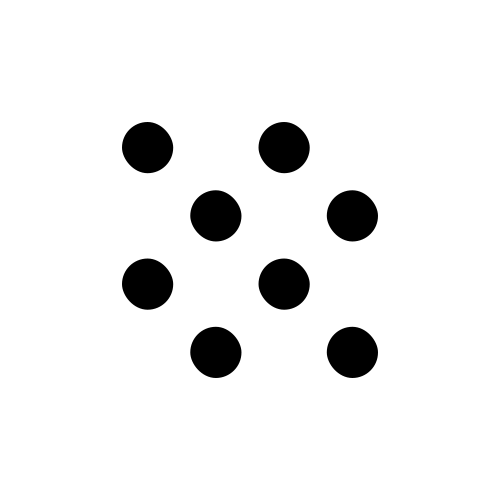 0The polka dot is defined by its simplicity: equal-diameter circles at regular intervals against a contrasting ground. The pattern depends entirely on the interplay of dot size, spacing, and colour contrast rather than any figurative detail. It reads clearly at multiple scales and translates across virtually every product category, from fashion and childrenswear to home textiles and stationery.
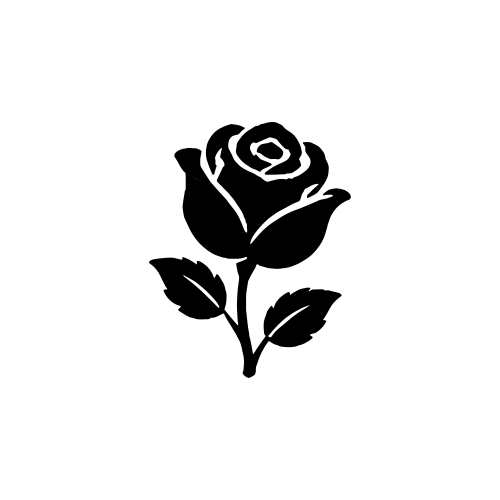 0The rose is among the most widely used motifs in surface pattern design across all major product categories. Rose patterns draw on the flower's deep cultural associations - love, beauty, femininity, celebration - and its strong visual identity: the distinctive layered petal form is instantly readable at any scale. The motif appears across the full range of surface pattern applications, from fine chintz prints to bold digital repeats, and sustains consistent commercial demand particularly in fashion, home textiles, and gifting.
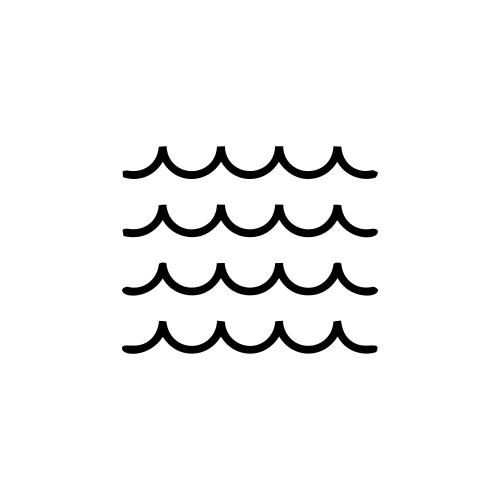 0Sea and marine patterns are among the most commercially durable categories in surface pattern design, driven by consistent seasonal demand in summer, resort, and coastal lifestyle markets. The category encompasses both naturalistic underwater imagery and more abstract or graphic nautical references, ranging from illustrated fish and sea creature patterns to simple anchor-and-rope motifs. The breadth of visual material available - from tropical reef systems to cold-water coastal settings - supports a wide range of aesthetic moods.
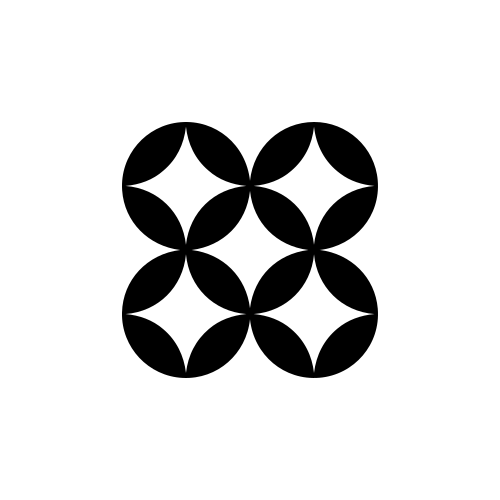 0A seamless pattern is one in which the repeat tile connects to itself at all four edges without any visible seam, break, or mismatch. This is the fundamental technical requirement for patterns applied to surfaces of arbitrary size - fabrics, wallpaper, gift wrap, and digital backgrounds must all tile seamlessly. The term describes a technical property of the pattern rather than a style or motif type. All repeating surface patterns used commercially are, by definition, seamless.
 0A simple repeating pattern is a design in which one or more motifs are systematically duplicated to create an infinitely continuous surface. The repeat unit - the smallest tile that contains the complete design - is placed according to a layout rule that governs how tiles relate to each other spatially. Understanding these layout rules is considered one of the core technical competencies of surface pattern design. Once motifs are established, a designer can produce multiple coordinating patterns by applying different repeat layouts to the same elements.
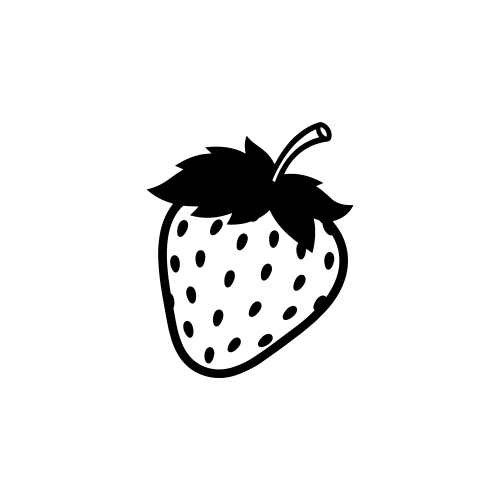 0Strawberry patterns are among the most commercially resilient fruit motifs in surface pattern design, sustained by the strawberry's strong visual identity (vivid red form, distinctive seed texture, bright green calyx and leaves), its seasonal associations with summer and fresh abundance, and its recurring cultural presence in design history. The motif spans a wide stylistic range, from botanical illustration to flat graphic design, and is particularly associated with childrenswear, women's fashion, and decorative homeware.
 0Tropical patterns draw on the visual abundance of tropical and subtropical ecosystems: oversized leaves, bright flowers, vivid birds, and intense colour. The category spans a broad range from the loose, sparse Hawaiian print tradition of the 1950s to the dense, maximalist contemporary interpretations favoured in luxury wallpaper and resort fashion. Tropical patterns sustain strong perennial commercial demand driven by warm-weather travel, resort fashion, summer home collections, and the enduring appeal of lush, escapist botanical imagery.
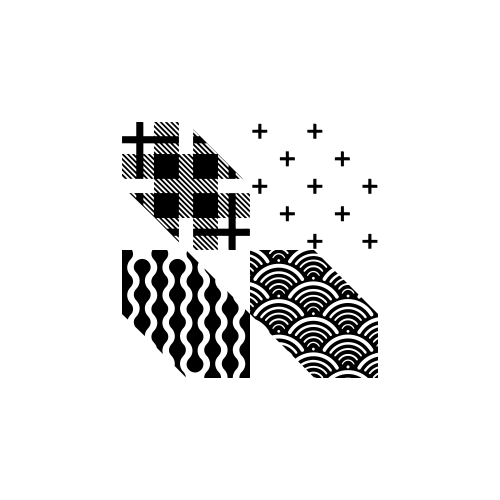 0A repeat pattern is any surface design in which a tile (or repeat unit) tessellates seamlessly across a surface. The type of repeat defines the geometric rule by which tiles relate to each other. Different repeat structures produce distinct visual rhythms and suit different markets and applications. In a pattern collection, multiple repeat types are typically used across the hero pattern and its coordinating designs to create variety and hierarchy within a unified colour and motif vocabulary.
 0In surface pattern design, "vintage" refers to patterns that authentically originate from or are designed to closely replicate the aesthetics of an earlier era, most commonly the 1920s through 1970s. The term is distinct from "retro" - which refers to contemporary designs consciously invoking past aesthetics - though the terms overlap in commercial usage. Vintage patterns carry the design conventions, print technologies, and colour palette limitations of their period of origin, giving them a distinctive quality that is difficult to precisely replicate digitally.
You've reached the end
15 Types