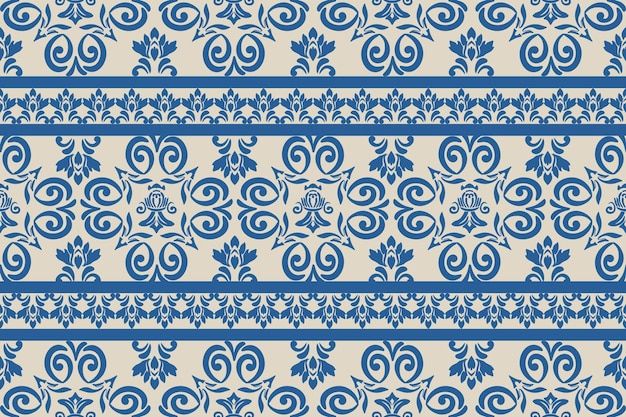
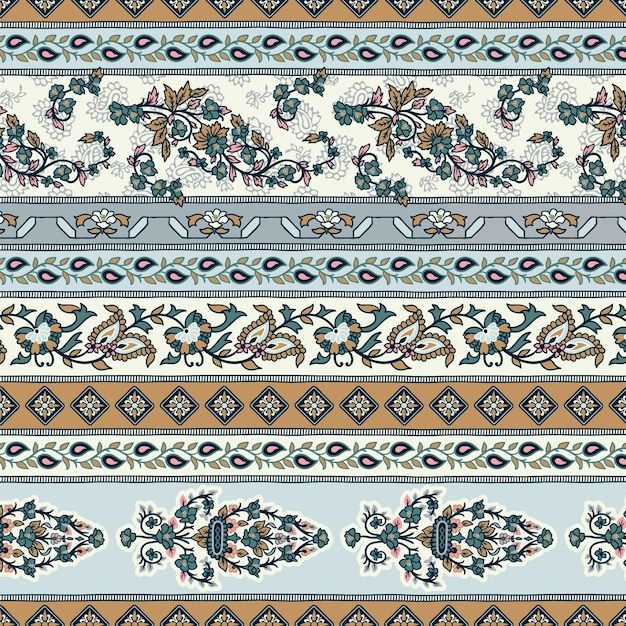
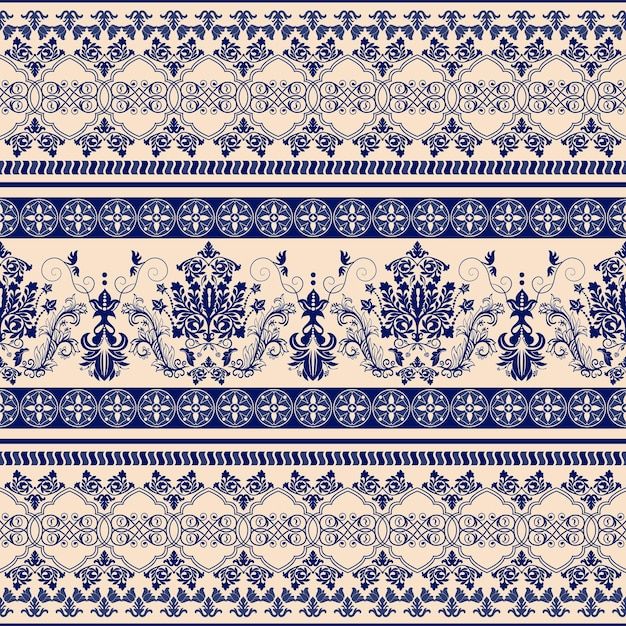
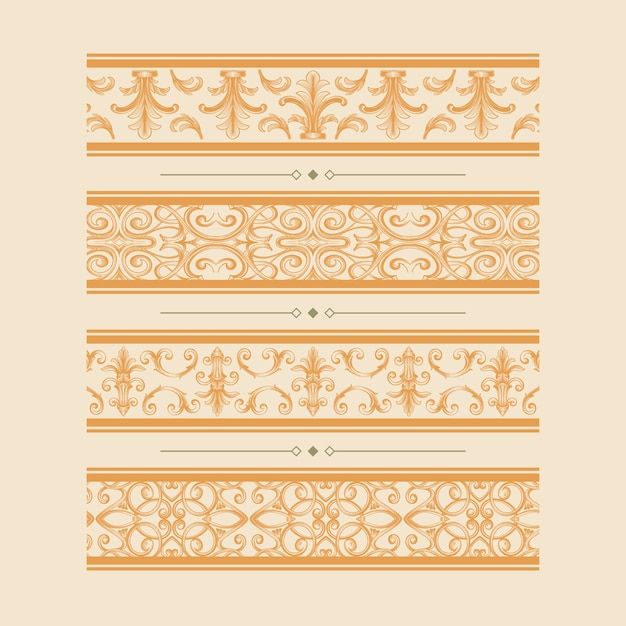
A frieze pattern is any decorative design that repeats continuously along a single axis, forming a horizontal band or strip. The term comes from classical architecture, where a frieze is the continuous horizontal band between the architrave and cornice of a building facade - typically ornamented with continuous sculptural or painted decoration. In surface pattern design and mathematics, "frieze" refers to the formal class of one-dimensional repeating patterns: designs with translational symmetry in exactly one direction. There are exactly seven distinct frieze symmetry groups (the "seven frieze groups"), making this a well-defined structural category with direct relevance to border pattern design.
We use cookies to improve your experience and understand how PatternDesigners is used.
A frieze pattern is any decorative design that repeats continuously along a single axis, forming a horizontal band or strip. The term comes from classical architecture, where a frieze is the continuous horizontal band between the architrave and cornice of a building facade - typically ornamented with continuous sculptural or painted decoration. In surface pattern design and mathematics, "frieze" refers to the formal class of one-dimensional repeating patterns: designs with translational symmetry in exactly one direction. There are exactly seven distinct frieze symmetry groups (the "seven frieze groups"), making this a well-defined structural category with direct relevance to border pattern design.
Frieze patterns are defined by their linear, horizontal composition. Visually, they read as a band or strip of repeating ornament - a border rather than a field. Width is limited; length is infinite (or appears so). Classical frieze patterns use figural or sculptural ornament: running animals, human figures, acanthus scrolls, egg-and-dart moulding, and meander/key patterns. In surface design, frieze patterns can use any motif type - geometric, floral, figurative - provided they are organised in a one-directional repeat strip.
The seven mathematically distinct frieze symmetry groups define all possible structural variations of a frieze pattern:
Understanding which symmetry group a border pattern belongs to allows pattern designers to verify the structural completeness and consistency of the repeat.
Frieze patterns are found across all colour registers - classical stone-coloured monochrome (imitating architectural relief), two-colour geometric, and multicolour decorative. In wallpaper applications, the frieze border is often a coordinated companion to an all-over field paper, designed in matching or complementary palette. Tile frieze borders typically use a contrasting palette to frame the primary tile field.
The architectural frieze has been used as a site for continuous decorative ornament since at least ancient Mesopotamia. Classical Greek architecture formalised the frieze band in temple design - the Elgin Marbles (Parthenon frieze, c. 447-433 BC) are among the most studied examples. Greek pottery from the Geometric period (c. 900-700 BC) uses frieze band compositions for figural and abstract decoration. Indian temple architecture (Khajuraho, Konark) uses elaborate figurative friezes. Persian architectural tile work uses geometric and arabesque frieze bands extensively. In decorative arts and surface design, the frieze format was codified by the Arts and Crafts and Art Nouveau movements, both of which produced extensive ornamental border designs for wallpaper, tile, and textile applications.
A frieze pattern is any decorative design that repeats continuously along a single axis, forming a horizontal band or strip.
Frieze patterns are defined by their linear, horizontal composition. Visually, they read as a band or strip of repeating ornament - a border rather than a field. Width is limited; length is infinite (or appears so).
Fundamentals
Border
Emblem
Frieze patterns are found across all colour registers - classical stone-coloured monochrome (imitating architectural relief), two-colour geometric, and multicolour decorative.
The architectural frieze has been used as a site for continuous decorative ornament since at least ancient Mesopotamia. Classical Greek architecture formalised the frieze band in temple design - the Elgin Marbles (Parthenon frieze, c. 447-433 BC) are among the most studied examples.
Greek Key Pattern, Geometric Pattern, and Arabesque Pattern