Types
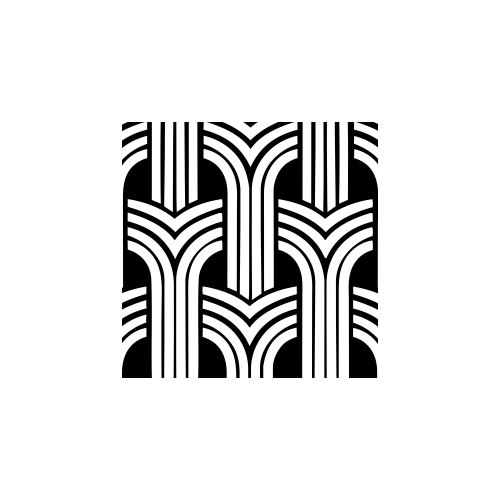
 1Art Deco is one of the most commercially significant historical styles in surface pattern design. Its geometric vocabulary, metallic sensibility, and associations with glamour and modernity make it a perennial category across fashion, interiors, wallpaper, and licensing. The style emerged from a collision of geometric abstraction, exotic ornamental traditions, and a deliberate celebration of contemporary materials and industrial production. It remains among the most recognisable and commercially active historical design movements.
 1Art Nouveau was a complete design movement spanning architecture, furniture, glass, ceramics, jewellery, textiles, and graphic arts. In surface pattern design, it is a foundational historical style with persistent commercial relevance - particularly in premium textiles, wallpaper, and licensing. Its botanical vocabulary, linear elegance, and association with the Belle Époque carry strong heritage value across luxury, interiors, and editorial markets. The style experienced significant revival in the 1960s and has remained commercially active since.
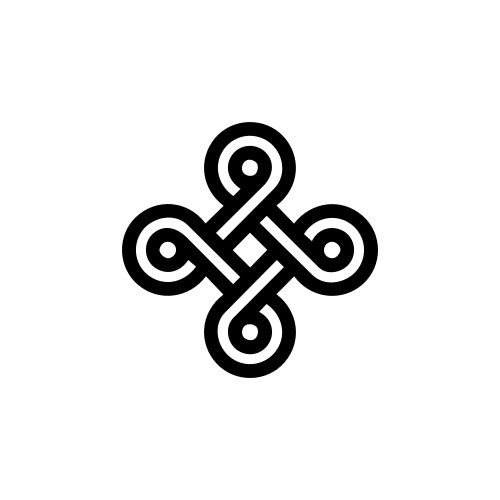
 0Celtic knot pattern draws from a documented historical tradition rooted in the illuminated manuscripts, stone carvings, and metalwork of early medieval Ireland, Scotland, and Northumbria. In surface pattern design, the interlace vocabulary of Celtic knotwork functions as a heritage motif with strong commercial associations across Irish, Scottish, and wider British Isles cultural identity. It is particularly active in jewellery design, luxury textiles, stationery, and licensed heritage products. The endless knot - a strand with no visible beginning or end - carries symbolic weight as a motif of eternity and continuity.
 0A chevron is a V-shaped mark or symbol, often shown inverted (point down). Historically the term refers to a fret in architecture, a badge or insignia denoting military or police rank, and a heraldic ordinary - one of the simple geometric figures forming the basis of many coats of arms. As a surface pattern motif, the chevron's appeal lies in this same simple, high-contrast V-shape geometry, repeated to form a zigzag.
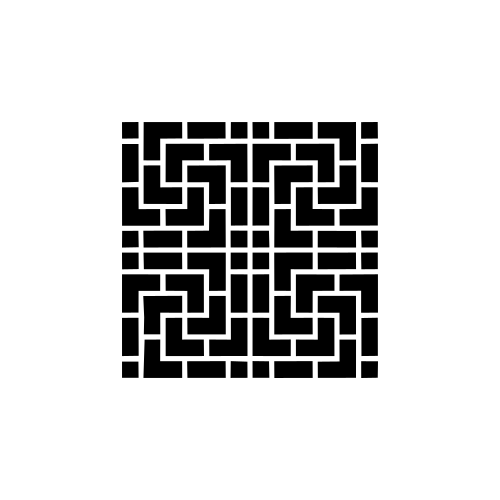 0Chinoiserie is not a direct reproduction of Chinese art but a European fantasy of Chinese aesthetics, filtered through trade goods, diplomatic gifts, and imaginative interpretation. It emerged alongside European fascination with East Asian trade goods and was closely associated with the Rococo movement - sharing Rococo's appetite for exuberance, asymmetry, and decorative invention. In surface pattern design, chinoiserie is particularly active in wallpaper, ceramics, upholstery, and luxury interior textiles, where it carries associations with heritage, grandeur, and sophisticated eccentricity. The style has proven commercially durable from its 17th-century origins through to the present.
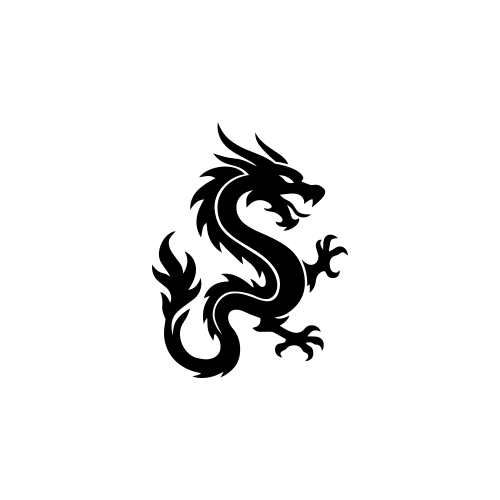 0Dragon pattern in surface design is dominated by East Asian iconographic traditions - particularly the Chinese imperial dragon with its coiled body, five claws, and accompanying symbolic elements (flaming pearl, clouds, waves). This tradition connects to one of the most historically significant applications of surface pattern design: the ceremonial robes of Chinese, Korean, and Japanese imperial courts, in which dragon motifs were encoded symbols of rank and political authority. In contemporary surface design, dragon pattern carries associations with power, mythology, and Asian cultural heritage, and is commercially active across fashion, wallpaper, licensing, and gift products.
 0A frieze pattern is any decorative design that repeats continuously along a single axis, forming a horizontal band or strip. The term comes from classical architecture, where a frieze is the continuous horizontal band between the architrave and cornice of a building facade - typically ornamented with continuous sculptural or painted decoration. In surface pattern design and mathematics, "frieze" refers to the formal class of one-dimensional repeating patterns: designs with translational symmetry in exactly one direction. There are exactly seven distinct frieze symmetry groups (the "seven frieze groups"), making this a well-defined structural category with direct relevance to border pattern design.
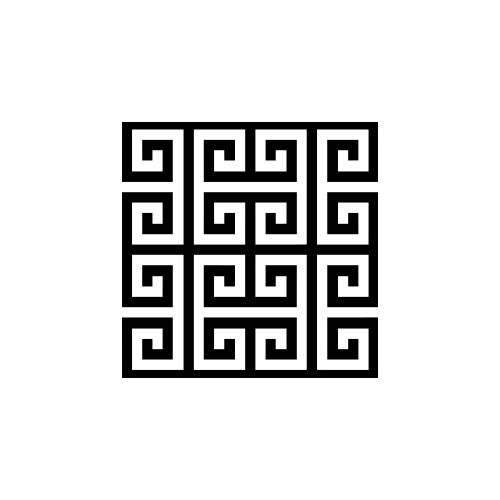 0The Greek key (or meander) is a continuous geometric border motif formed by a single line turning back on itself at right angles to create a square spiral or labyrinthine sequence. It is one of the most historically persistent ornamental motifs in the world, appearing independently in ancient Chinese bronzes, Mesoamerican design, and classical Greek pottery before becoming a defining ornamental element of Neoclassical, Beaux-Arts, and Art Deco design. In surface pattern design, the Greek key is commercially active as a border, stripe, and all-over repeat in luxury interiors, fashion accessories, and licensing.
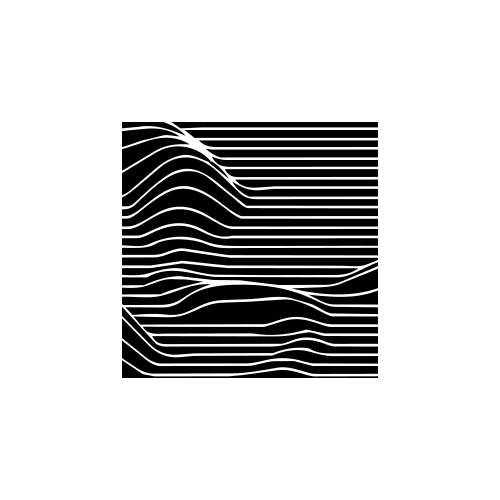 0A landscape pattern is defined by its structural constraint: it has a distinct top and bottom, and tiles only in the horizontal direction. Unlike conventional all-over repeating patterns (which tile in all directions), a landscape pattern is intentionally non-repeating vertically. This makes it unsuitable for applications requiring cut-anywhere fabric but ideal for fixed-dimension surfaces - panels, screens, walls, curtains, and dividers - where the full height of the pattern is visible as a single compositional unit. The term is used by licensing libraries such as Design Pool to categorise a specific type of engineered pattern distinct from geometric (hard-edged) and organic (soft-edged, all-over) categories. The landscape pattern is the third major structural category in this classification system.
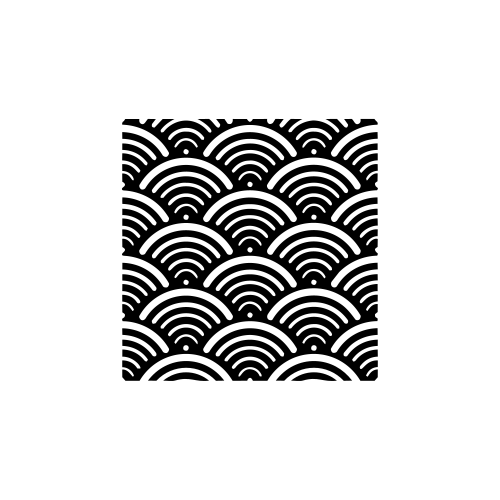 0"Oriental pattern" is an industry umbrella term rather than a precise technical category. In commercial contexts it typically refers to patterns drawing on the visual vocabulary of oriental carpets (Turkish, Persian, Caucasian, Central Asian, and Chinese), on Chinese and Japanese decorative motifs, or on the broader Orientalist aesthetic that shaped European design from the 16th century onwards. The term encompasses designs of considerable complexity and cultural depth - from the strict geometric traditions of Anatolian Seljuq carpet design (13th century) through the floral elaboration of Safavid Persian court carpet to the chinoiserie-influenced surface patterns of 18th-century European textiles. In contemporary commercial use, it typically signals formal, richly decorated, tradition-referencing pattern design. Note on terminology: "Oriental" as a descriptor has been contested in some cultural and academic contexts; "Islamic", "Persian", "Anatolian", "Central Asian", or specific regional names are often more precise when attribution is known.
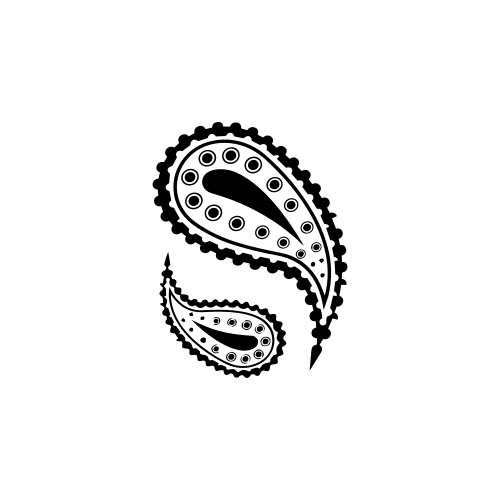 0Paisley is a curved, teardrop-shaped motif with a characteristic bent or curved upper end. The motif originated in Iranian and Persian decorative art - where it is called boteh or buta - and entered the European market through the importation of Kashmir shawls from the 17th century onwards. Its English name comes from Paisley, the Scottish town whose Jacquard-loom weavers became the dominant European producers of paisley-pattern fabric in the 19th century. Paisley is one of the most commercially enduring pattern types in Western fashion, with documented presence from early 19th-century bandanas through to continuous contemporary production. It is known by different names in different cultures: "mango" in most Indian and South Asian languages; "cucumbers" in Russia; "ham hock pattern" in China; "boteh," "cachemire," or "palme" in French design vocabulary.
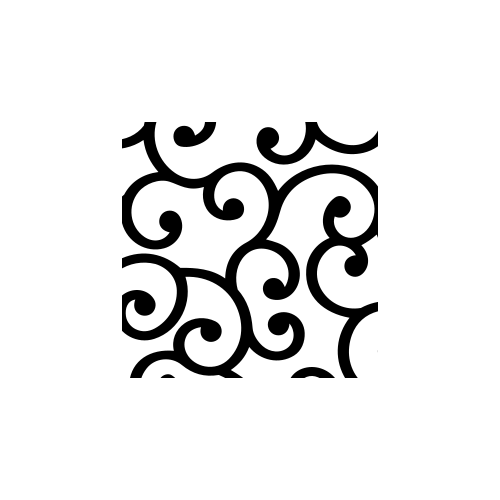 0The scroll pattern is an ornamental system built from the logic of plant growth: a continuous stem that branches, curls, and spirals, producing a flowing, all-over structure that can fill any surface without obvious repeat. Unlike grid-based geometric patterns, scroll patterns follow organic rhythms - mirroring the way vines, tendrils, and climbing plants ramify through space. This structural flexibility has made scroll patterns one of the most versatile and durable motif traditions in decorative history. They appear as architectural borders, woven textile structures, painted ceramic ornament, carved stone relief, and printed wallpaper. In surface pattern design, they translate naturally into all-over repeating structures with strong commercial applications across wallpaper, furnishing fabric, fashion, and heritage design reproduction.
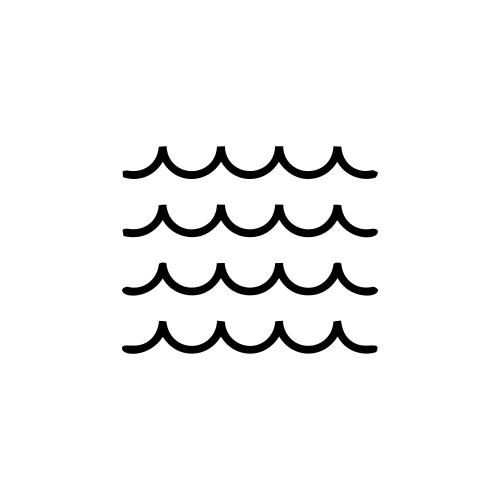 0Sea and marine patterns are among the most commercially durable categories in surface pattern design, driven by consistent seasonal demand in summer, resort, and coastal lifestyle markets. The category encompasses both naturalistic underwater imagery and more abstract or graphic nautical references, ranging from illustrated fish and sea creature patterns to simple anchor-and-rope motifs. The breadth of visual material available - from tropical reef systems to cold-water coastal settings - supports a wide range of aesthetic moods.
You've reached the end
13 Types