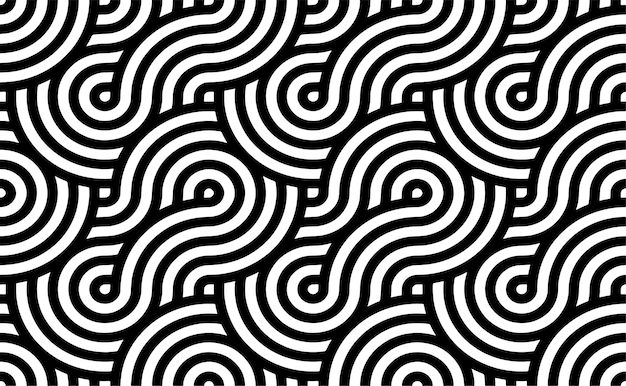
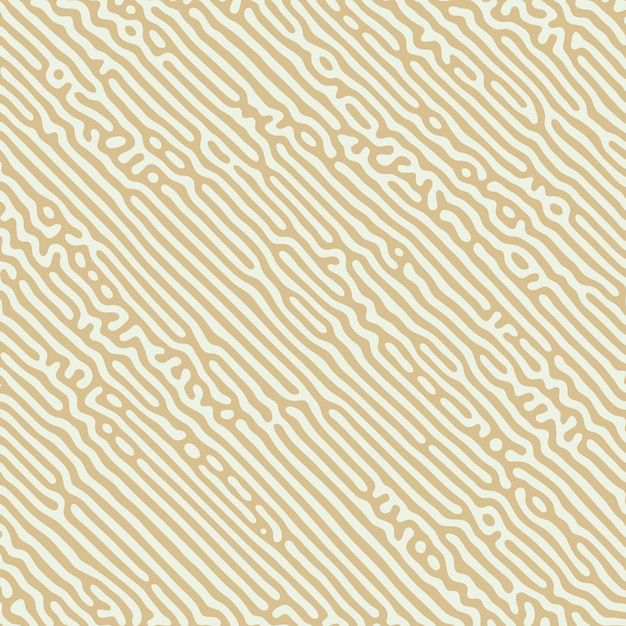
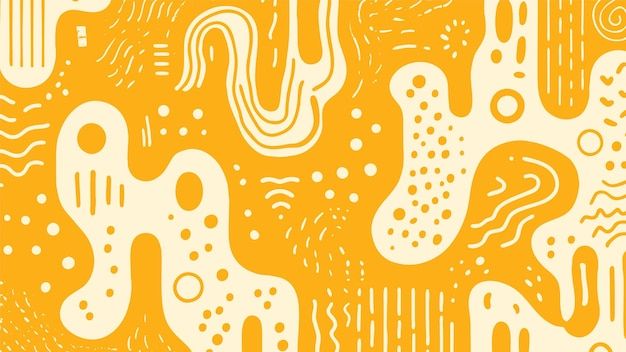
A pattern is any regular, predictable arrangement in which elements repeat according to a consistent rule. In surface pattern design, "pattern" refers specifically to a decorative design applied to a two-dimensional surface through repeating visual elements - the primary working material of the surface pattern designer. The concept unifies highly diverse visual territory: a geometric wallpaper grid, a botanical print repeat, and a houndstooth check are all patterns in the full sense - each is governed by translational symmetry and a defined repeat unit. The word "pattern" in the decorative arts context specifically designates repeating ornamental designs manufactured for surfaces - ceramics, textiles, and wallpaper are the canonical application contexts.
We use cookies to improve your experience and understand how PatternDesigners is used.
A pattern is any regular, predictable arrangement in which elements repeat according to a consistent rule. In surface pattern design, "pattern" refers specifically to a decorative design applied to a two-dimensional surface through repeating visual elements - the primary working material of the surface pattern designer. The concept unifies highly diverse visual territory: a geometric wallpaper grid, a botanical print repeat, and a houndstooth check are all patterns in the full sense - each is governed by translational symmetry and a defined repeat unit. The word "pattern" in the decorative arts context specifically designates repeating ornamental designs manufactured for surfaces - ceramics, textiles, and wallpaper are the canonical application contexts.
Patterns are characterised by visual predictability and regularity - the eye can extrapolate what comes next from what it has already seen. This regularity can be strict (mathematically precise geometric tiling) or organic (naturalistic botanical repeats where the repeat logic is present but the motif variation makes it less immediately obvious). Patterns range from minimal and structural (a simple two-colour stripe) to maximally complex (a dense Mughal textile with hundreds of individual motifs in a single repeat unit). All patterns share the property of translational symmetry - the pattern looks the same when shifted by the repeat unit.
Mathematical pattern analysis identifies several fundamental structural categories relevant to surface design:
Natural patterns documented in the source include: symmetries, spirals (nautilus, phyllotaxis, sunflower), meanders, waves, foams (subject to Plateau's laws governing bubble structure), tilings, cracks, and stripes.
Pattern as a concept encompasses all motif categories. In the context of the decorative arts specifically, the following are noted as canonical examples:
As a meta-category, "pattern" as a concept is colour-neutral - any colour can be used in any pattern structure. Colour choice, motif scale, and repeat density together determine the commercial character and market positioning of a specific pattern.
Pattern recognition is a fundamental cognitive capacity - humans identify patterns in natural phenomena, social behaviour, and abstract systems. In mathematics, the study of pattern includes geometry, number theory, and chaos theory. In the natural world, patterns arise from physical processes: the Fibonacci sequence governs phyllotaxis (the spiral arrangement of seeds and petals); Turing's reaction-diffusion model (1952) explains spot and stripe patterns in animal coats; fractal geometry (Mandelbrot, 1975) describes the self-similar patterns of coastlines, trees, and snowflakes. In decorative arts, pattern-making is one of the oldest human activities - pattern has been used in ceramics, textiles, and building ornament across every culture. The term "pattern" in the decorative arts specifically designates repeating ornamental designs applied to manufactured surfaces.
A pattern is any regular, predictable arrangement in which elements repeat according to a consistent rule.
Patterns are characterised by visual predictability and regularity - the eye can extrapolate what comes next from what it has already seen.
Pattern is the foundational category of surface pattern design - all type pages within this wiki are sub-categories of pattern in the sense defined here
Symmetry and Radial
Pattern as a concept encompasses all motif categories.
As a meta-category, "pattern" as a concept is colour-neutral - any colour can be used in any pattern structure. Colour choice, motif scale, and repeat density together determine the commercial character and market positioning of a specific pattern.
Pattern recognition is a fundamental cognitive capacity - humans identify patterns in natural phenomena, social behaviour, and abstract systems. In mathematics, the study of pattern includes geometry, number theory, and chaos theory.
Geometric Pattern, Floral Pattern, Patterns in nature, Frieze Pattern, and Tessellation Pattern